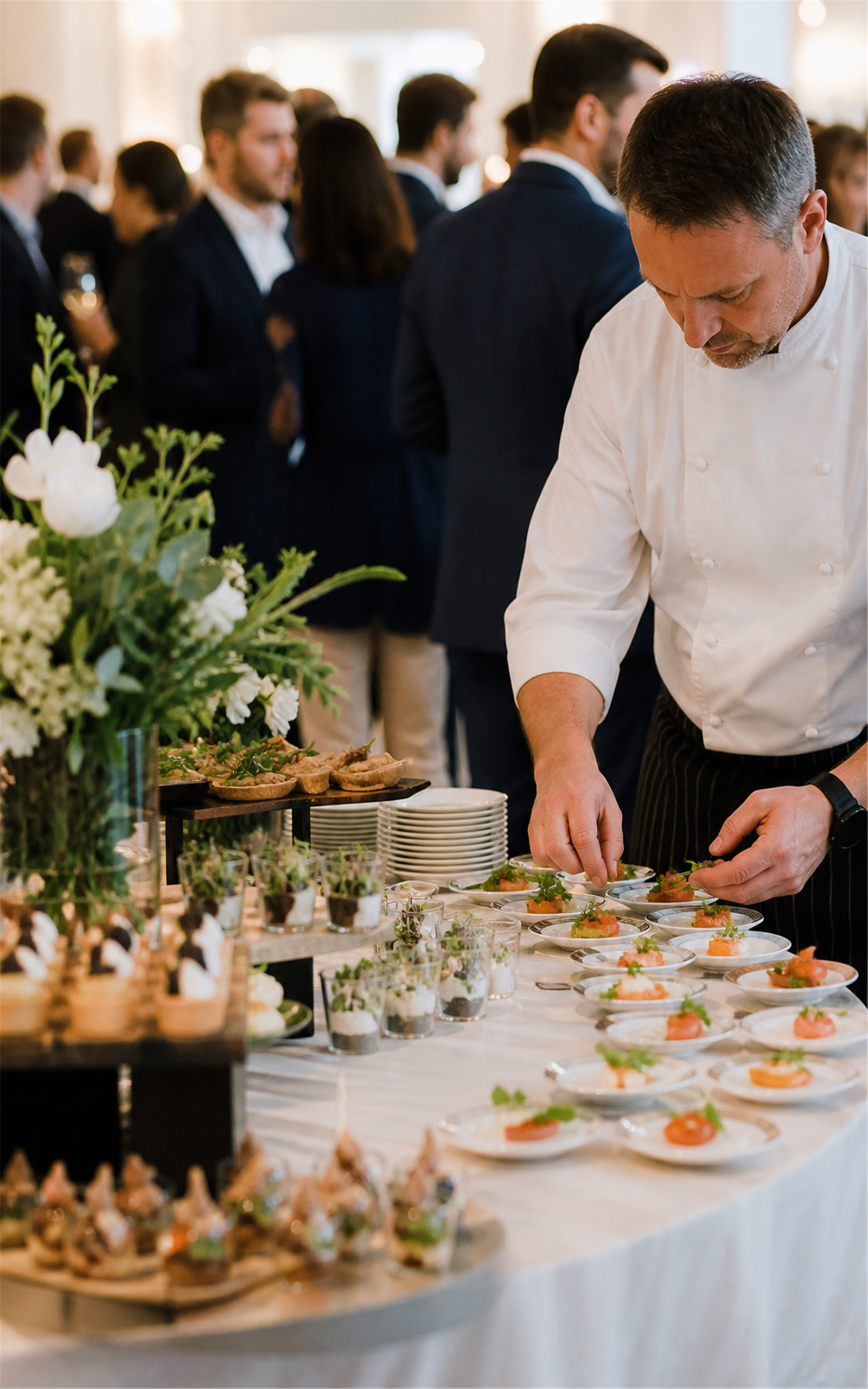
Find the Opportunity
Understand who hires personal chefs and why menu clarity wins trust.
A practical starting point for chefs who want to launch an in-home or private dining service with clearer menu packages, allergen-aware client intake, and dependable kitchen workflow.
This page walks you through how to start a personal chef business as a professional food service—not informal cooking for friends without contracts, intake, or food safety verification. You will learn who hires personal chefs, how to plan menus and document allergens, how to assess client kitchens, how to investigate FDA-aligned and local food safety rules, how to price from real service costs, how clients find you, and how to deliver meals households trust week after week.

Understand who hires personal chefs and why menu clarity wins trust.
Build service menus with allergen documentation and kitchen assessment.
Investigate FDA-aligned and local rules before accepting paid work.
Run menu approval, prep, service, labeling, and cleanup routines.
Quote services from shopping, prep, travel, and overhead labor.
Reach households and small hosts with a controlled launch menu.
Add clients and menu breadth only when workflow stays consistent.
A personal chef business prepares defined menus for clients in their homes or at private venues under written service agreements, allergen-aware intake, and professional food safety practices—not informal cooking without documentation of dietary needs or kitchen limitations. You assess each inquiry, plan menus clients approve, shop and prep efficiently, cook in client kitchens you have evaluated, label and store meals safely, and leave workspaces cleaner than you found them. Buyers pay for clarity about what they will eat, how allergens are handled, when you will arrive, and how long food stays safe in their refrigerator.
That distinction matters. Being a skilled cook is not the same as running a personal chef business. Many capable chefs underprice shopping and cleanup time, skip written allergen intake, or cook in client kitchens they never assessed for equipment gaps or sanitation risks. Busy professionals, aging parents' families, and small private-event hosts continue to hire personal chefs when meal quality and convenience must coexist—but only when they believe the chef will respect dietary restrictions, communicate honestly about cross-contact limits, and arrive prepared with a menu they already approved.
This guide walks you through how to start a personal chef business with professional habits: finding your opportunity, defining menu packages and client intake, investigating FDA-aligned and local food safety requirements, building kitchen workflow and service delivery routines, pricing from real costs, winning first clients, and growing with the operational discipline that defines a credible in-home food service. By the end, you should understand what the business is, what intake and safety steps you need before first service, and what to verify locally before accepting your first booking.
Busy households, health-conscious professionals, and small private-event hosts hire personal chefs when grocery planning, allergen-safe cooking, and time-consuming prep no longer fit their schedules. Your first step is understanding who you serve and what they expect from documented menus—not assuming culinary skill alone creates demand.
Personal chef businesses succeed when clients understand the service before you shop: menu contents, portion counts, allergen handling, service frequency, arrival window, and how meals should be stored and reheated. Buyers are not simply purchasing cooking—they are purchasing confidence that their household dietary needs will be respected with professional food safety habits in their own kitchen.
Often want weekly meal prep with reheat instructions and grocery handled entirely by the chef. They compare on reliability, menu variety within dietary rules, and discreet in-home presence—not only on per-meal price.
Need allergen-aware menus, clear labeling, and honest cross-contact communication. Written intake and approved menus matter more than creative plating when someone in the household has serious food allergies.
Hire for dinner parties, anniversaries, or retreat weekends with defined guest counts and plated or family-style service. Scope includes cleanup expectations, server needs, and whether you partner with front-of-house help.
Observe your local market: who do caterers, meal prep operators, and restaurant private-dining programs serve well, and where do clients still express frustration—menus that ignore allergens, chefs who leave kitchens disorganized, or vague pricing that balloons after shopping? Your opportunity often sits in intake discipline and food safety transparency as much as in culinary talent.
Adjacent food businesses—such as those in the catering business guide, food business from home guide, and charcuterie business guide—show how defined offers and professional intake sustain food revenue. Personal chef work sits between weekly meal prep and event catering; knowing when to refer large events to caterers or specialty boards to charcuterie artisans keeps your scope profitable and safe.
Practical takeaway: Write one paragraph describing your ideal first client and the service type you want most—weekly meal prep, private dinner, or monthly retainer. List three questions they will ask about allergens and kitchen access—and make sure your future intake process answers them.
Before you shop for a client, decide which service packages you offer, how you document dietary restrictions, and how you assess kitchens for safe production. Clients need approved menus they can compare—not open-ended "chef's choice" weeks that ignore allergens or equipment limits.
Defined number of entrees, sides, and portions with labeling, storage instructions, and container policy—client supplies glassware or you provide disposables at stated cost. Specify menu rotation cycle and how many weeks until repeats.
Plated or family-style meal for stated guest count, including menu proposal, grocery procurement, service, and cleanup scope. Clarify whether staff beyond the chef are included.
Fixed number of service days per month with pre-approved dietary parameters and kitchen access windows. Works for executives, aging parents, or vacation-home households with predictable schedules.
Plant-forward, low-sodium, postpartum, or athlete-focused packages when your training supports them—document limits and refer clinical nutrition needs to registered dietitians when appropriate.
Every household member with restrictions should appear on intake forms:
Document honestly what you can and cannot guarantee in a client home. Unless you control every ingredient and surface, avoid "allergen-free" promises; use language like "allergen-aware preparation with documented ingredients" and note residual cross-contact risk where it exists.
Before first paid service, evaluate:
The meal prep business guide emphasizes batch production efficiency; personal chef work adds in-home customization and direct client kitchen variables. Both require written menus and labeling discipline—personal chef intake must go further on kitchen assessment and household allergen documentation.
Practical takeaway: Draft intake forms with allergen fields, kitchen assessment checklist, and menu approval signature line. Run one mock onboarding with a friend’s kitchen before accepting paid clients.
Personal chef services operate under food safety rules that vary widely by jurisdiction. In the United States, the FDA publishes a Food Code model many state and county health departments adopt—but local health departments enforce their own versions, and cottage food or commercial kitchen rules may restrict where you can legally prepare food for pay. Verify locally; do not assume home cooking for friends equals compliant paid service.
Create a checklist and confirm each item with your local health department, business licensing office, and insurance agent:
Even where rules differ, professional personal chefs adopt practices aligned with FDA Food Code principles:
Use calibrated thermometers, respect cold holding and reheating thresholds, and never leave perishable food in the danger zone during long prep or transport.
Separate boards and utensils for allergen-sensitive prep when possible; sanitize surfaces; wash hands between tasks; label containers with dates and contents.
These habits protect clients and support insurance claims if questions arise. They do not replace local licensing—verify what your county actually requires before marketing paid services.
Decline or restructure service when kitchens lack hot water, adequate refrigeration, vermin evidence, or workable cooking equipment—or when you cannot accommodate stated allergens safely. Referring out protects your reputation more than accepting a booking that ends in illness or dispute.
The food business from home guide walks parallel licensing research paths for home-based food operators. Personal chefs often face stricter perishable-meal rules than shelf-stable cottage products—confirm which category your service model triggers locally.
The FDA Food Code is a reference framework, not a substitute for your health department's answer. The SBA guide to launching a business helps with general registration steps alongside food-specific verification.
Practical takeaway: Complete your food safety checklist with dated notes from your health department—not blog summaries. Do not accept paid bookings until you know where you may legally prep and how allergen liability is covered.
A personal chef business runs on menu discipline and repeatable production routines—approved menus drive shopping lists, prep order reduces client-kitchen time, and labeling prevents reheating mistakes. Improvised service erodes margins and allergen safety faster than any competitor's lower rate.
Event-style services add plating timing, course pacing, and optional front-of-house coordination. Document whether you serve, whether clients provide wine service, and when cleanup ends relative to guest departure. Partner with catering operators when guest counts or venue logistics exceed personal chef scope.
Practical takeaway: Cook one full approved menu in a practice kitchen—including shop, label, and cleanup—and time every phase. Adjust package pricing before marketing using real minutes, not guesses.
Clients buy defined menus, grocery handling, and in-home convenience—not vague hourly cooking rates that omit shopping, planning, and cleanup. Pricing should reflect full service scope, not a restaurant line-cook wage applied to a four-hour client-home day.
All-inclusive packages simplify buying for clients. Separate service fee plus grocery reimbursement with receipts suits detail-oriented households. Either way, document the structure on every quote so grocery overruns have a clear policy.
Include deposit requirements for private dinners, cancellation windows, kitchen access failure fees, and menu change deadlines after approval. Last-minute guest additions or menu pivots after shopping belong in change-order language.
Practical takeaway: Build a pricing spreadsheet with planning, shopping, prep, and cleanup hours for your launch packages. Compare estimates to actuals for your first five services and adjust before scaling outreach.
Trust drives hiring decisions in personal chef work. Households choose chefs who document allergens honestly, respect kitchens, and deliver approved menus on schedule—not whoever makes the boldest culinary claims without intake discipline.
Practical takeaway: Land your first three clients through direct outreach to households matching your profile—before paid ads. Refine intake after every discovery call.
Growth means adding clients and menu breadth only when intake accuracy, kitchen assessments, and labeling routines stay consistent—not accepting every dietary request because your calendar has gaps.
Track metrics that matter: shopping-to-service hour ratio, client retention weeks, allergen incident rate (target zero), and referral source. Fix intake or kitchen assessment gaps before marketing harder.
Practical takeaway: After your first ten services, identify your most profitable package and your most common kitchen limitation. Adjust packages and assessment checklist before adding new clients.
Use this four-week outline to move from interest to a controlled first service. Each week builds on the last for a personal chef business launch.
Confirm these essentials before you shop for or cook in a client's kitchen on a paid booking.
A personal chef business prepares defined menus for clients in their homes or at private venues under written service agreements, allergen-aware intake, and professional food safety practices. Success depends on menu planning clients understand, accurate dietary documentation, assessing client kitchens before cooking, and delivering meals on agreed schedules.
Caterers typically serve larger events with batch production, transport, and on-site service staff. Personal chefs focus on recurring or small-group in-home meals, weekly meal prep, and private dinners with menu planning tailored to individual households.
Requirements vary by jurisdiction. In the United States, the FDA Food Code provides a model framework many local health departments adopt, but you must verify rules with your local health department. Verify licensing, permitted preparation locations, and inspection requirements before accepting paid clients.
Document all reported allergies on intake forms, confirm cross-contact risks honestly, and decline jobs you cannot serve safely. Written menu approval before each service period reduces disputes and protects clients.
Evaluate refrigerator space, working appliances, cleanable surfaces, sink access, available cookware, and storage for completed meals before first service. Document limitations that affect menu choices or require you to bring equipment.
Build pricing from ingredient costs, planning and shopping labor, prep and cooking hours, travel, insurance, overhead, and margin. Package pricing by service type works better than vague hourly rates that omit shopping and cleanup time.
Follow a repeatable sequence: inquiry and dietary screening, kitchen assessment, menu proposal and client approval, grocery planning, prep and service, labeling and storage instructions, cleanup, and invoice.
Start with a defined client profile and controlled launch menu. Reach households through referrals, local search, and professional networks. Professional intake forms, visible food safety habits, and sample menus convert interest faster than generic cooking claims.
This personal chef business example was developed using eBook Business Builder—the workflow used to structure the guide, free lead magnet, offer assets, email series, and marketing content you see in the EBB Showroom below.
If you want to create your own eBook business around a topic you know, EBB walks you through research, writing, assets, and launch in a repeatable system. See how business assets fit together and launch marketing for your eBook business to understand the full EBB build model.
Start Building with eBook Business Builder →The flagship guide explains how to start a personal chef service—menu packages, allergen intake, kitchen assessment, food safety verification, pricing, and client communication—in a structured eBook format.
Chapters walk readers through evaluating the opportunity, defining service packages, investigating local food safety rules, building kitchen workflow, pricing from real costs, winning first clients, and growing operations without sacrificing intake discipline.
First Clients & Menu Intake — a lead magnet that helps readers evaluate whether personal chef work fits their skills and identify sensible first intake and menu steps before accepting bookings.
Many skilled cooks accept clients without allergen documentation, kitchen assessment, or food safety verification that protects households and margins.
Foundational client intake, menu approval basics, common early mistakes, and a simple action plan before committing to paid in-home service.
Cooks for friends informally but unsure how to run allergen-aware personal chef service professionally.
Prepared with fundamentals to screen clients, assess kitchens, propose menus, and verify local food safety requirements.
Personal Chef Startup Program
A practical flagship guide for readers ready to move from interest to action—with clear first steps and professional service habits for dependable in-home chef work.
Tools & References