Find the Opportunity
Understand who buys cottage food and where a home-based line fits locally.
A practical starting point for home cooks who want to launch a cottage food operation with clearer product focus, kitchen workflow basics, and order intake habits.
This page walks you through how to start a food business from home as a real cottage food operation—not just sharing recipes with friends. You will learn how to find your opportunity, choose a sales model, build a focused product line, design kitchen and order workflows, price your products, reach first customers, and grow with the compliance discipline that home-based food sales require.
Understand who buys cottage food and where a home-based line fits locally.
Decide how you will sell and what your jurisdiction may allow from home.
Design a focused catalog instead of an overwhelming launch menu.
Build repeatable prep, production, packaging, and intake routines.
Create pricing and packaging that fits how you sell from home.
Launch with a controlled offer, real photos, and local visibility.
Prove the concept, tighten habits, and expand only when workflow holds.
A home food business sells approved cottage food products through defined sales channels—not simply cooking well for people you know. Customers expect consistent quality, clear ordering, dependable pickup or delivery windows, and labeling that matches local rules. Your kitchen becomes a production space with intake deadlines, batch planning, and packaging standards—not an informal favor exchange.
That distinction matters. Baking or cooking skill is not the same as running a cottage food operation. Many home cooks focus on recipes without product line discipline, order cutoff times, or the compliance investigation that home-based food sales require. Buyers continue to purchase local cottage food when freshness, presentation, and reliable service are dependable—but only when the seller operates like a business, not a hobby with occasional sales.
This guide walks you through how to start a food business from home with professional habits: finding your opportunity, choosing a sales model, building a focused product line, designing kitchen and order workflows, pricing and packaging, reaching first customers, and growing with compliance discipline. By the end, you should understand what the business is, what decisions come first, and what to investigate locally before accepting paying orders.
Local buyers, event hosts, and gift purchasers continue to seek cottage food when product quality and ordering clarity are dependable. Your first step is understanding where a home-based food line fits—not assuming demand exists because your friends praise your baking.
Cottage food occupies a specific place in local markets: small-batch, often shelf-stable or low-risk products sold direct to consumers, at permitted venues, or through preorders. That model shapes everything—how many products you can execute well, how you schedule production around family life, and which sales channels your state or province allows from a home kitchen.
Look at your local landscape. Who already sells similar products at farmers markets, online, or through preorders? Are buyers choosing convenience, artisan quality, dietary focus, or gift presentation? Gaps may exist in dependable preorder pickup, a focused flavor identity, or event trays—but you discover gaps by observing, not by guessing.
Your target customer shapes product size, pricing, packaging, and order rhythm. A cottage food business serving weekly preorders needs cutoff times and batch capacity planning. One targeting farmers markets needs portable display, cash or card handling, and inventory that survives a full market day. Event and gift buyers care about presentation, lead time, and whether you can fulfill a set quantity by a deadline.
Neighbors, coworkers, and social followers who reorder when pickup is reliable and the product line stays consistent week to week.
Face-to-face buyers who sample and purchase on site where vendor food rules allow cottage food sales—confirm market requirements first.
Customers purchasing boxes, trays, or seasonal items for holidays, offices, and celebrations with clear order deadlines.
Adjacent bakery guides cover related production habits. The donut business guide, cupcake business guide, and cookie business guide explore focused menus and batch workflows that translate directly to cottage food—where product line discipline matters as much as recipe quality.
Practical takeaway: Spend one week noting where people buy local baked goods or cottage food in your area. Choose one primary customer type for launch and write two sentences explaining why your home-based product line fits that buyer.
There is no single best way to start a food business from home. The right model depends on your product type, schedule, local cottage food rules, and the customer you chose in Section 1.
Customers order by a cutoff time and collect from your home or a agreed pickup point. You control batch size and production days but need clear intake and capacity limits.
Sell directly at permitted markets. Useful for testing demand and gathering feedback—vendor permits and product eligibility vary by location.
Accept orders through a simple form, social messages, or storefront. Requires reliable fulfillment windows and packaging suited to handoff or local delivery where allowed.
Fulfill trays or gift boxes for offices and celebrations. Higher planning overhead per order; lead times and deposit policies matter.
Cottage food and home-kitchen rules vary significantly by jurisdiction. Some states publish explicit cottage food laws listing approved products, revenue caps, and sales channels; others require commercial kitchen use for many items. There is no universal home food business license.
Create an investigation checklist and confirm each item with your state health department, cottage food program office, and local zoning authority:
The FDA Food Code is a model many state and local authorities use—it is not itself your operating permit. The FDA guide for starting a food business and the SBA guide to launching a business help with general planning, but they do not replace your state cottage food rules. Start compliance research early—some registrations take weeks.
Practical takeaway: Write your intended model in one sentence—for example, "Preorder pickup twice weekly for cookies and bars." List every registration, product eligibility, and sales-channel question that model raises, then schedule time to confirm answers locally.
A focused product line protects consistency, simplifies customer choice, and keeps home kitchen production manageable. New cottage food businesses rarely benefit from launching with an enormous catalog.
Every product you add increases ingredient inventory, prep steps, packaging formats, labeling work, and the chance that something sells out before something else is ready. Product line discipline is not about limiting creativity—it is about building a business that can repeat the same quality next week and next season.
Ingredient overlap matters. Three cookie varieties may share one dough base more efficiently than six unrelated recipes. When you draft your line, note which components repeat across items.
Before a product joins your commercial line, test portion consistency, appearance after packaging, production time in your actual kitchen, ingredient cost in your own spreadsheet, and how the product holds during storage and handoff. Do not add an item to launch day because it tested well once—add it because you can produce it reliably within your weekly workflow.
Practical takeaway: Draft a launch line with no more than a handful of core products plus one signature item. For each, list shared ingredients, packaging format, and estimated batch order. Cut anything that breaks your production timeline.
The business must repeatedly deliver consistent product, accurate orders, and dependable pickup or delivery—not depend on last-minute improvisation when orders pile up.
Even in a home kitchen, treat production days professionally. Define dedicated prep surfaces, ingredient storage, cooling areas, packaging stations, and cleaning routines. Separate personal cooking from business production where possible—both for food safety habits and for mental clarity about when you are operating as a business.
Measure ingredients in batch quantities, prepare components ahead, and stage tools before production begins.
Order tasks so items that cool or set first start earliest—protect quality across the full line.
Allow proper set time before packaging; finishing steps should not rush items still too warm to box.
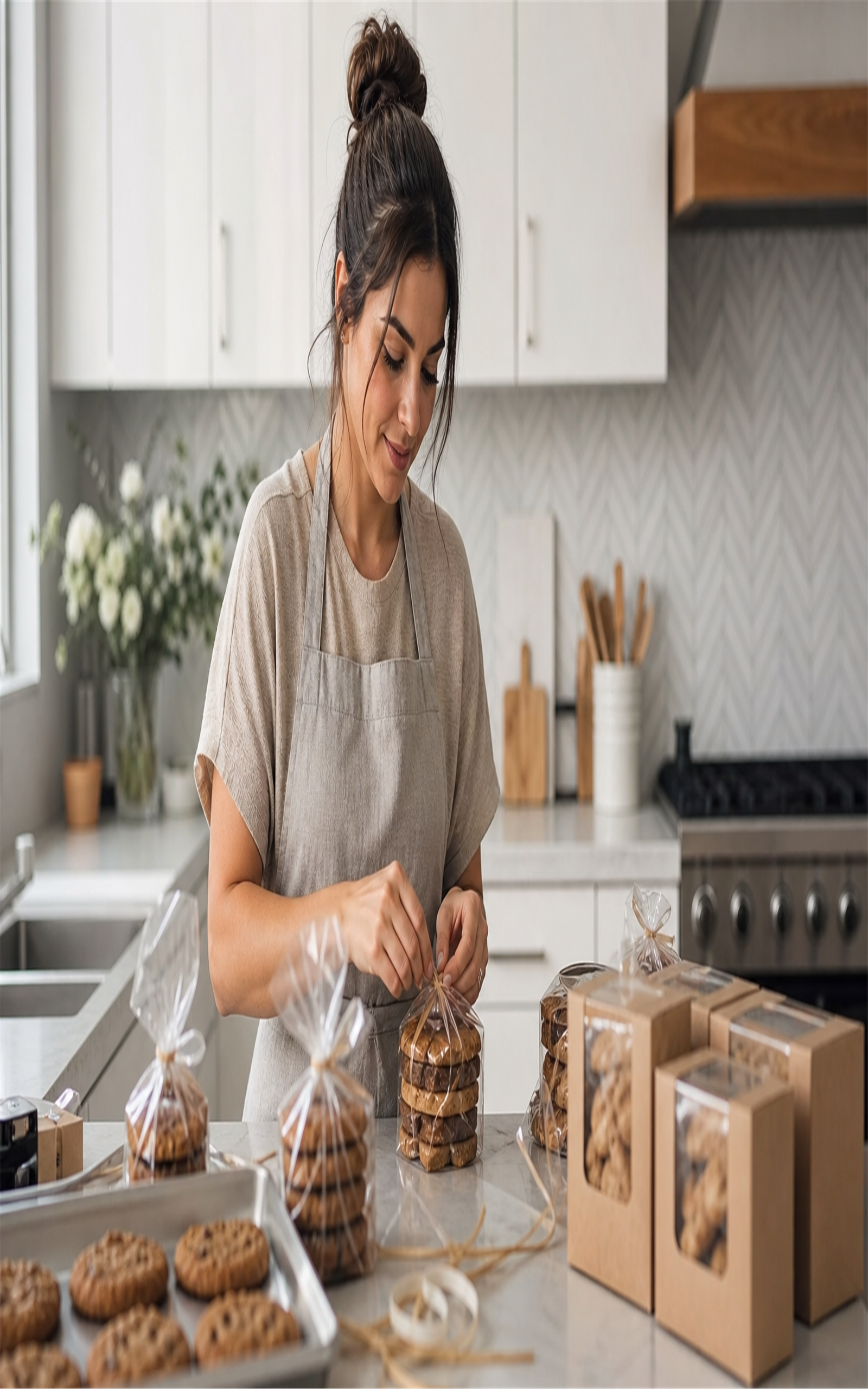
Pack for your sales channel and apply labels that meet local requirements where applicable.
Set maximum order quantities per cycle until your workflow is proven. It is better to sell out consistently than to miss orders because you accepted more than your kitchen can fulfill.
Safe food handling is part of operational credibility. Build habits around sanitation, personal hygiene, safe storage, preventing cross-contamination, and documented procedures. Know the ingredients in every product. If labeling is required, document allergen information accurately—the FDA identifies nine major food allergens; requirements vary by how and where food is sold. Do not make unsupported allergen-free claims.
Practical takeaway: Write your production workflow as a one-page checklist ordered by time of day. Write a separate one-page order intake flow with cutoff rules. Run one test cycle following both exactly before accepting paying orders.
Customers buy dependable quality, clear presentation, and a transaction that fits their routine. Pricing and packaging translate your kitchen work into an offer buyers understand.
Here is an illustrative worksheet example—not an industry benchmark. If your ingredient and packaging cost for one dozen cookies totals $4.20 in your spreadsheet, and you apply a markup that covers labor, overhead, and profit, you might test a retail price of $14.00 and adjust after a few production runs. Your numbers will differ. Price from your costs, then test with real sales data.
Packaging balances food protection, presentation, transport, branding, labeling requirements where applicable, and cost. A gift box that photographs well may differ from a market bag built for quick handoff. Choose formats for how you sell.
Research labeling rules for cottage food in your jurisdiction. Many programs require business name, product name, ingredient list, allergen disclosure, and net quantity on each package. Confirm federal, state, and local requirements rather than copying a label format from another state.
Practical takeaway: Create a one-page pricing worksheet for your top three products. Include every cost you can measure today and leave blank any field you still need to research locally—including labeling requirements.
Excellent product alone will not fill your order calendar. First customers come from a controlled launch, clear ordering, and local visibility that shows real product—not stock photos.
Practical takeaway: Plan a two-week launch with fixed production days, a short product line, and one primary marketing channel. Measure orders fulfilled, items sold out, and one piece of feedback per customer.
Growth in a home food business means proving the concept, tightening consistency, understanding demand, and adding products or channels only when kitchen workflow and compliance habits can support them.
When something fails—a missed cutoff, a mislabeled box, an order that did not match the confirmation—document what broke in the workflow and fix that step before chasing new customers. Repeat business comes from consistent product, accurate orders, dependable handoff, and clear communication.
Practical takeaway: After your first month, list one kitchen workflow improvement, one order-intake improvement, and one product or channel you will not add yet. Growth works best when you can repeat today's quality on tomorrow's larger batch.
Use this four-week outline to move from interest to a controlled cottage food launch. Each week builds on the last using the habits emphasized throughout this guide.
Confirm these essentials before you accept paying orders from home.
A home food business is a food operation that sells approved products through defined sales channels from a home kitchen—not simply cooking for friends without clear terms. Success depends on product line discipline, repeatable kitchen workflows, dependable order intake, clear pricing, and compliance habits that match how and where you sell.
No. Cottage food and home-kitchen rules vary widely by state, county, and city. Many jurisdictions limit which products may be produced at home, how they may be sold, annual revenue caps, labeling requirements, and whether wholesale or restaurant sales are permitted. Research your local cottage food program and health department rules before planning your product line.
Start with a small core product line rather than a full bakery catalog. Each product adds ingredients, prep steps, packaging, and labeling complexity. A focused line protects consistency, simplifies customer choice, and makes kitchen workflow manageable while you prove demand.
There is no single universal cottage food license. Requirements depend on your jurisdiction and sales model. You may need to investigate business registration, cottage food registration or permit, food-handler training, sales tax setup, zoning or home-business rules, labeling requirements, and insurance. Confirm requirements with your state and local health authority.
Build a pricing model from your own costs: ingredients, packaging, labels, labor, kitchen time, delivery or pickup overhead, waste, and desired margin. Use a simple spreadsheet to test prices—not unverified industry averages from another market.
Define a clear order intake process: how customers place orders, cutoff times, pickup or delivery windows, payment method, and confirmation messages. A controlled launch with limited order slots prevents overcommitting before your kitchen workflow is repeatable.
Both are valid, but they change your workflow. Preorders let you produce to confirmed demand with predictable batch sizes. Farmers markets require inventory planning, display setup, and on-site sales skills. Most new operators prove one channel first, then add the second when production and compliance habits are stable.
Treating home cooking talent as a business without product line discipline, order intake structure, or local compliance research. Great recipes in small batches do not automatically become a sustainable cottage food operation without workflow and sales-channel clarity.
This home food business example was developed using eBook Business Builder—the workflow used to structure the guide, free lead magnet, offer assets, email series, and marketing content you see in the EBB Showroom below.
If you want to create your own eBook business around a topic you know, EBB walks you through research, writing, assets, and launch in a repeatable system.
Start Building with eBook Business Builder →The flagship guide covers home food business startup fundamentals—cottage food basics, product line design, kitchen workflow, order intake, pricing, and compliance investigation—in a structured eBook format.
Chapters walk readers through evaluating the opportunity, choosing a sales model, building a focused product line, designing kitchen and order workflows, pricing and packaging, reaching first customers, and growing with compliance discipline.
First Products & Kitchen Setup — a lead magnet that helps readers evaluate whether a cottage food operation fits their goals and identify sensible first steps before accepting orders.
Many home cooks focus on recipes without product line discipline, order cutoff times, or the compliance investigation that home-based food sales require.
Foundational first steps, common early mistakes to avoid, and a simple action plan readers can use before committing to a product line or sales channel.
Home Food Startup Program
A practical flagship guide for readers ready to move from interest to action—with clear first steps and professional habits for cottage food production and sales from home.
Tools & References