
Find the Opportunity
Understand catering as event service—not just large-batch cooking—and define your niche.
A practical starting point for food entrepreneurs who want to launch a catering service with clearer menus, event intake, and kitchen workflow basics.
This page walks you through how to start a catering business as a real event food service—not just cooking for a crowd. You will learn catering essentials, menu development, client intake, event logistics, pricing, marketing, production workflow, feedback habits, financial management, and the practices that turn one-time events into repeat bookings.
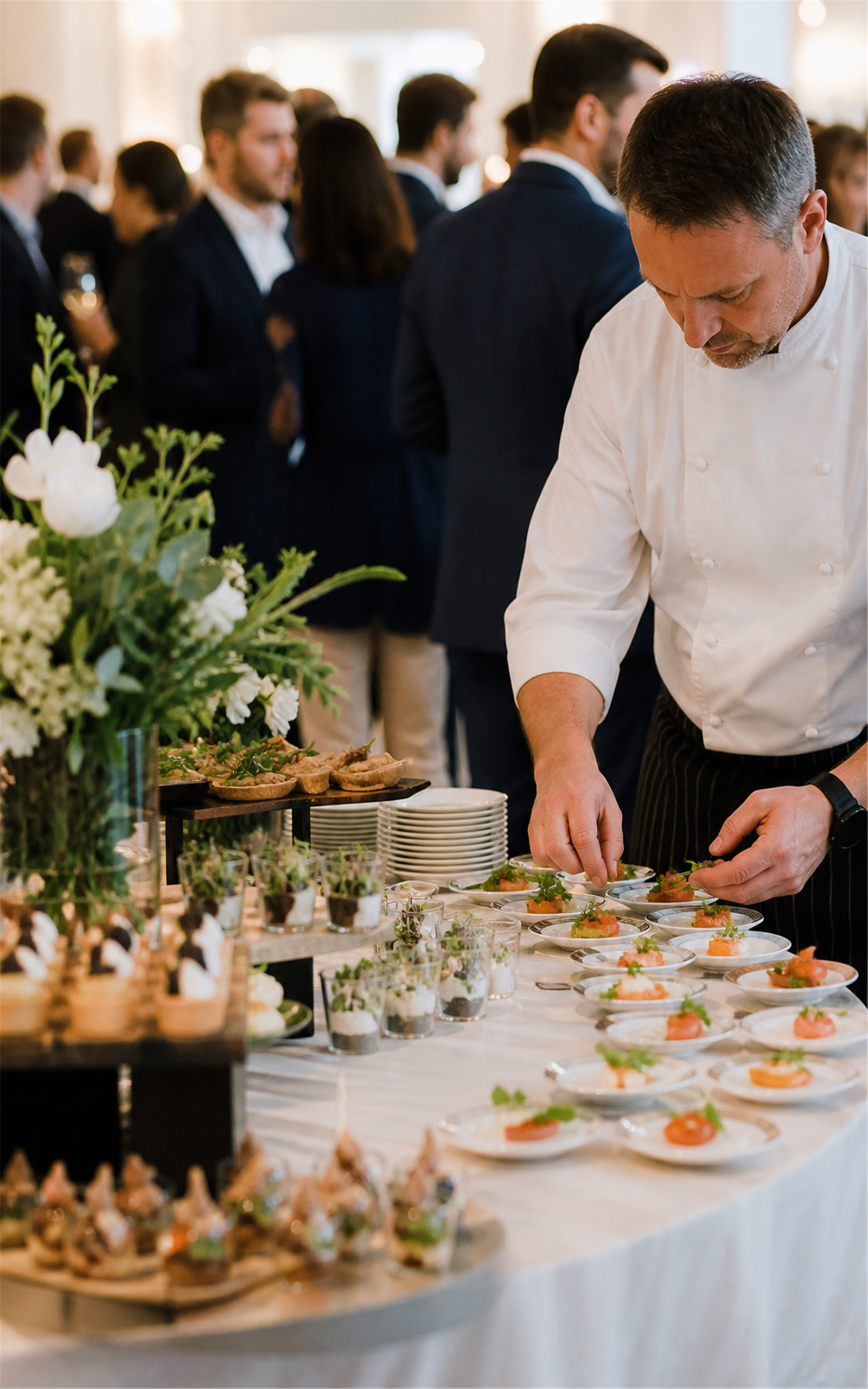
Understand catering as event service—not just large-batch cooking—and define your niche.
Build budgeting and expense-tracking habits that keep events profitable as bookings grow.
Develop seasonal, balanced menus that clients can choose from with clarity.
Price catering services from real costs, market context, and the value you deliver.
Run thorough client intake and market your catering service beyond word of mouth.
Manage event timelines, transport, staffing, and tailored kitchen workflows on event day.
Turn feedback into improvement, manage finances intentionally, and scale with a plan.
[object Object]
[object Object]
[object Object]
Cooking for a crowd is only part of the job. Your first step is recognizing catering as a multi-faceted event service—where client expectations, menu clarity, and the experience you create matter as much as the food on the table.
Many aspiring caterers enter the field believing success is mostly about preparing food for large groups. That partial truth leads to frustration when events feel chaotic despite delicious dishes. Catering is an interplay of planning, service, and execution. You become an event manager, problem solver, and customer service expert—not only a cook.
Consider a backyard gathering where everything appears effortless. What guests often miss is the orchestration behind display, welcome, service flow, and timing. Your goal is to transform meals into memorable experiences that clients and their guests talk about long after the last plate is cleared.
Each event type carries different expectations. A wedding couple may want a romantic plated dinner with a curated menu. A company hosting a conference may need efficient service with variety for busy professionals. A casual reunion might suit a build-your-own taco bar that keeps prep manageable while letting guests customize plates. Understanding these nuances lets you design menus and service styles that exceed expectations.
[object Object]
[object Object]
Practical takeaway: Write down your niche, two sample menus, and the guest experience you want to deliver. Catering succeeds when service and execution match the quality of your cooking.
Compliments after a successful event do not guarantee profitability. Planning means tracking expenses, projecting revenues, and reviewing budgets so every catering job contributes to a sustainable business.
After a wedding reception runs smoothly and guests rave about the meal, sitting down to tally costs can reveal an uncomfortable truth if numbers were ignored throughout the process. Understanding your budget is not just knowing how much you spent—it is knowing how much you can spend while keeping each event profitable.
Budgeting is often dismissed as tedious work reserved for larger companies. That belief creates serious pitfalls for smaller catering operations. As a caterer you wear many hats—chef, planner, marketer, and financial manager. Approaching finances with discipline supports long-term sustainability.
Your budget is only as good as the information behind it. Track all costs associated with catering events—not only ingredients but staff wages, equipment rentals, transportation, and marketing. On the revenue side, note what you earned from each event and whether pricing covered costs with room for profit.
Practical takeaway: Create a simple budget spreadsheet for your next three events before accepting another booking. Financial awareness is a pathway to freedom—not a limitation on your creativity in the kitchen.
Your menu is the foundation of every catering offer. A focused, seasonal, balanced menu helps clients choose confidently while keeping your kitchen operations manageable.
Designing a catering menu is more than listing everything you can cook. Showing every dish you know leads to overwhelming choices and diluted themes. The goal is a cohesive menu that tells a story, reflects client preferences, and remains viable to produce at event scale.
Engage clients about foods they love, family recipes they cherish, and the atmosphere they want to create. For weddings, consider the couple's tastes plus guest dietary needs—vegan, gluten-free, and allergy concerns included. These conversations demonstrate commitment to their vision and prevent mismatched menus.
Seasonal produce is often fresher, more flavorful, and more cost-efficient. A spring menu might feature asparagus, peas, or strawberries across salads, appetizers, and desserts. Working with ingredients in abundance helps you keep pricing competitive while delivering quality.
[object Object]
[object Object]
Draft a seasonal menu for a hypothetical event in your niche—appetizers, mains, and desserts that work together thematically. Notice how each dish supports the others and how seasonal ingredients tie the menu together. This exercise internalizes the balance and variety successful catering menus require.
Practical takeaway: Create one complete sample menu for your primary event type before your next client conversation. Menus should resonate with clients—not merely display your full recipe repertoire.
Pricing communicates value as much as it covers expenses. Build catering prices from ingredient, labor, overhead, and transport costs—then align them with the market and the experience you deliver.
Many aspiring caterers assume lower prices automatically attract more clients. Underpricing can signal lesser value and undermine sustainability. Customers often associate higher prices with superior quality and service—and that perception influences booking decisions.
Take a sample menu—appetizers, main course, and dessert for a wedding-style event—and calculate total cost across these categories. Once you have the total, decide on a profit margin that reflects your niche and market. The manuscript notes that marking up total costs is a common approach readers use in their own calculations—it is an illustration for your worksheet, not a universal rate to copy.
Study what competitors charge for similar services in your area without basing your prices solely on theirs. Ask whether you provide unique menu creations, exceptional service, or expertise with special dietary needs that justify your positioning. Highlight those differentiators in proposals so pricing reflects the value clients receive.
Practical takeaway: Calculate a full cost breakdown for one complete event menu before quoting your next client. Price to communicate quality and sustainability—not to win every inquiry on the lowest number alone.
Excellent menus alone will not fill your calendar. Thorough client intake and visible marketing connect your catering service with hosts who need dependable event food production.
Initial consultations are where you clarify expectations, explore client desires, and establish mutual understanding—not where you simply hand over a menu PDF. Many caterers skip detailed intake, assuming good food speaks for itself. Without understanding client vision, even excellent dishes can miss the mark.
Develop an intake form that captures essential information and starts a real conversation. Include event details, client vision, menu preferences, service style, and budget considerations. Practice with mock consultations so questions feel natural and confident.
Compliments at a charity event feel great, but relying solely on word of mouth leaves your business vulnerable. Social media platforms let you showcase culinary creations and connect with potential clients through visual storytelling. Post high-quality food photos, behind-the-scenes preparation, and content that helps hosts envision your service at their events.
Networking complements online visibility. Attend local events, join community organizations, and participate in food festivals. Relationships with wedding planners, venue coordinators, and event vendors can yield referrals over time. Establish referral habits—such as a thank-you incentive for new clients brought by past ones—as structures you can adapt to your business.
Outline goals, channels, content types, and a timeline. Decide whether you will prioritize organic social reach, networking, referral programs, or a combination. Consistency matters as much as creativity—regular posting and follow-through build the visibility that turns interest into inquiries.
Practical takeaway: Draft your intake form and choose one marketing channel to activate this week. Every inquiry should meet a clear path from consultation through confirmed event details.
Event day exposes weak logistics immediately. Detailed timelines, transport planning, staffing, and tailored kitchen workflows turn catering into a professional service hosts recommend.
Create a detailed timeline from food prep through setup, service, and breakdown. If an event starts at noon, work backward from marinating and baking needs, packing, loading, travel, venue arrival, final plating, and guest service. Build buffer time for traffic, missing ingredients, or client questions so you are not scrambling at the last minute.
[object Object]
[object Object]
Every catering operation is unique. A one-size-fits-all workflow often fails because events, teams, and equipment differ. Map your process from ingredient arrival through cooking, serving, and cleanup. Identify key stages, list tasks under each, assign roles, estimate durations, and visualize how steps connect.
At the venue, use a layout plan, checklists, and delegated tasks for efficient setup. After service, plan breakdown, leftover handling, and rental equipment return—leaving the venue in good condition supports repeat bookings.
Practical takeaway: Draft an event-day timeline and workflow map before your first paid booking. Test both on a practice run so production day feels controlled—not improvised.
The event ends, but the relationship should not. Feedback habits, financial discipline, and intentional growth planning turn one-time catering jobs into referrals and a resilient business.
Negative feedback can feel personal, but it often reveals exactly where service can improve. Reframe critiques as a roadmap—clients want to know their voices matter. Introduce post-event surveys asking about food quality, service timing, and overall experience. When concerns arise, acknowledge them, empathize, explain corrective steps, and follow up after changes are made.
Capture positive testimonials with permission for your website and social media. Proactive feedback—not only reactive responses—helps you catch issues before they escalate and builds a culture of continuous improvement.
Growth can plateau even when early bookings felt strong. Relying on organic expansion alone is unpredictable. Identify new market segments by analyzing your existing client base—vegan catering, meal prep for busy families, sports events, or themed festival menus may open revenue streams beyond your current focus.
Stay attuned to market shifts and consumer trends through networking, client conversations, and periodic research. Draft a growth plan with specific objectives, required resources, and metrics to review regularly. Diversification—such as baking classes or event consulting related to your core expertise—can add revenue without abandoning your catering identity.
Practical takeaway: Schedule a follow-up survey after every event and draft a one-year growth outline with three milestones. Review one milestone each quarter instead of expanding without a plan.
Use this four-week outline to move from skilled cook to structured catering operator. Each week builds on the last using steps supported by the Catering Business guide.
Confirm these essentials before you accept a paid catering booking.
A catering business is an event food service that plans menus, intakes clients, produces food at scale, and delivers service on event day—not simply cooking large batches for friends. Success depends on menu clarity, client intake, logistics, pricing discipline, and production workflows from first inquiry through cleanup.
Catering centers on event production—matching menus and service style to occasions such as weddings, corporate lunches, and reunions. Unlike product-focused food businesses built around a single item or display format, catering requires intake conversations, event timelines, staffing, transport, and on-site execution coordinated around a specific guest count and schedule.
Engage clients about preferences and dietary needs, use seasonal ingredients for quality and efficiency, and structure balanced menus with appetizers, mains, and desserts. Limit choices to roughly three options per course so guests decide easily and your kitchen stays manageable. Draft a sample seasonal menu as practice before client meetings.
Use initial consultations and an intake form to capture event details, client vision, menu preferences, service style, and budget range. Ask follow-up questions that uncover traditions and expectations—not only surface menu picks. Practice mock consultations so intake feels conversational rather than a sterile checklist.
Calculate ingredient, labor, overhead, and transportation costs for each event menu, then add a profit margin that reflects your market and value. Research competitor pricing without copying it. Avoid competing only on the lowest price if it prevents you from covering costs or delivering reliable event service.
Build a detailed timeline from prep through breakdown, plan staffing for your service style and guest count, ensure transport maintains food temperatures, and use layout plans and checklists at the venue. Buffer time for travel and last-minute issues keeps service on schedule.
Combine thorough intake with visible marketing. Showcase events on social media, network with planners and venues, participate in community food events, and establish referral habits for satisfied clients. Word of mouth helps, but active promotion builds consistent inquiry flow.
Treat feedback as a tool for improvement, review event budgets regularly, and draft a growth plan with specific objectives and milestones. Explore new market segments and related services thoughtfully—expand when current menus, logistics, and production workflows run consistently well.
This catering business example was developed using eBook Business Builder—the workflow used to structure the guide, free lead magnet, offer assets, email series, and marketing content you see in the EBB Showroom below.
If you want to create your own eBook business around a topic you know, EBB walks you through research, writing, assets, and launch in a repeatable system.
Start Building with eBook Business Builder →The flagship guide covers catering startup fundamentals—menu design, event intake, prep workflow, staffing basics, and client communication—in a structured eBook format.
[object Object]
A lead magnet helps readers evaluate whether catering fits their skills and identify sensible first steps before committing to their first paid event.
Many aspiring caterers focus on recipes first without event intake forms, production timelines, or pricing that accounts for labor and logistics.
Foundational first steps, common early mistakes to avoid, and a simple action plan readers can use before committing to equipment or clients.
Catering Startup Program
A practical flagship guide for readers ready to move from interest to action—with clear first steps and professional event workflows for catering businesses.
Tools & References