
Find the Opportunity
Understand who buys craft hot sauce and why flavor consistency wins repeat orders.
A practical starting point for makers who want to launch a hot sauce brand with clearer recipe development, production workflows, bottling habits, and retail or online sales basics.
This page walks you through how to start a hot sauce business as a professional food brand—not just sharing bottles with friends without recipe or compliance clarity. You will learn who buys craft hot sauce, how to develop a focused flavor line, how to plan small-batch production and bottling, how to investigate labeling and food-safety rules locally, how to choose sales channels, how to price from real batch costs, and how to grow without sacrificing consistency.
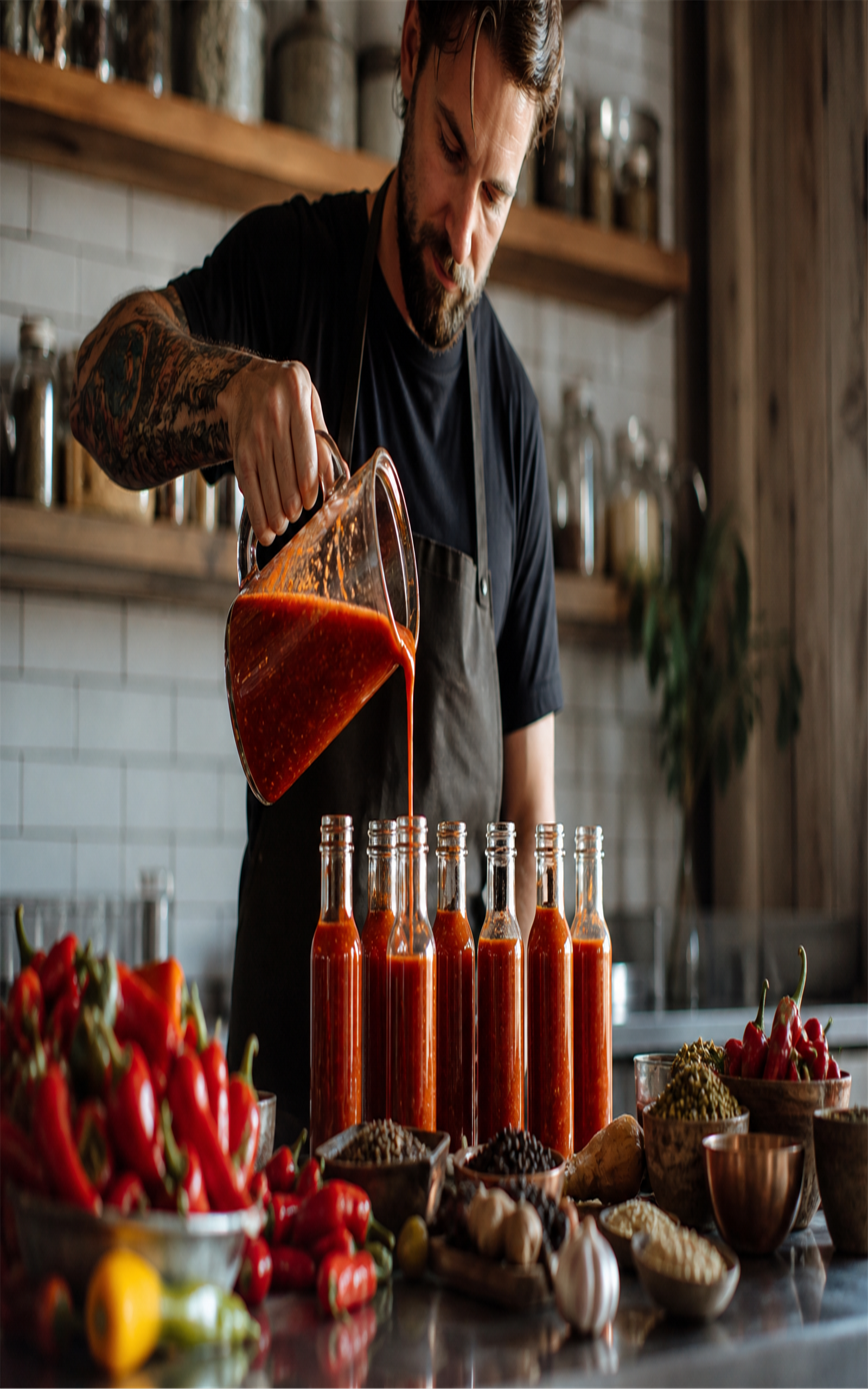
Understand who buys craft hot sauce and why flavor consistency wins repeat orders.
Build a small core line with measured heat, acidity, and shelf-stability habits.
Turn test batches into repeatable cook, blend, and hold workflows.
Fill, cap, and pack bottles with food-safe equipment and batch records.
Investigate local food rules, nutrition panels, and allergen disclosures.
Choose markets, retail, and online paths matched to your batch capacity.
Improve batch accuracy and expand SKUs only when production holds.
A hot sauce business sells defined flavor profiles in labeled bottles through chosen sales channels—not improvised batches whenever peppers ripen. You develop recipes with documented ingredients and process steps, produce at a scale your kitchen or commissary supports, bottle with food-safe habits, investigate labeling and compliance locally, price from real batch costs, and deliver sauce buyers can trust batch to batch. Buyers pay for recognizable heat and flavor, consistent quality, clear ingredient lists, and reliable availability—not mystery bottles from an unlabeled cooler.
That distinction matters. Making excellent sauce at home is not the same as running a hot sauce business. Many capable makers scale too fast without recipe documentation, skip acidity and pH habits that affect shelf stability, underprice ingredients and labor, or sell through channels their batch size cannot support. Heat lovers and gift buyers continue to purchase craft hot sauce at markets, specialty shops, and online—but only when they believe the brand will taste the same next month and meet basic labeling expectations.
This guide walks you through how to start a hot sauce business with professional habits: finding your opportunity, developing a focused recipe line, planning production and bottling, investigating labeling compliance, choosing sales channels, winning first customers, and growing with the operational discipline that defines a credible food brand. By the end, you should understand what the business is, what you need to prepare, and what to verify locally before your first labeled sale.
Heat lovers, foodies, and gift buyers purchase craft hot sauce when flavor feels distinct and bottles look trustworthy on shelf or market tables. Your first step is understanding who you serve and what they expect from a professional brand—not assuming your best recipe alone creates demand.
Hot sauce businesses succeed when buyers understand the product before purchase: heat level, flavor profile, ingredient transparency, bottle size, and whether the sauce tastes the same next month. Buyers are not simply purchasing spice—they are purchasing a brand they can recommend, gift, and reorder when a favorite dish needs a specific kick.
Different buyers bring different price sensitivity, channel preferences, and repeat potential. Choose one primary profile for launch:
Often buy at farmers markets, specialty shops, and online when flavor stories and pepper sourcing feel authentic. They compare on taste consistency, heat accuracy, and label clarity—not always on the lowest price per ounce.
Choose bottles with strong label design and regional identity at markets and tourist shops. Packaging durability and shelf appearance matter as much as Scoville claims.
Need reliable reorder cadence, wholesale pricing, labeled nutrition panels when required, and delivery on schedule. Consistency beats novelty once a account places your sauce on shelf or tables.
Observe your local market: which sauce brands win shelf space, and where do buyers still express frustration—mushy heat without flavor, inconsistent batches, vague labels, or brands that disappear after one season? Your opportunity often sits in operational clarity as much as in recipe talent.
Home food businesses with overlapping compliance habits show how defined product lines sustain revenue. The food business from home guide covers cottage food investigation that applies before you scale beyond gifts. The home bakery business guide, donut business guide, cookie business guide, and cupcake business guide each demonstrate how focused menus, batch scheduling, and order intake protect small producers from overcommitting early.
Practical takeaway: Write one paragraph describing your ideal first buyer and the flavor profile you want known for—smoky medium, tropical hot, vinegar-forward, or mild craft. List three questions they will ask before buying—and make sure your future label and sales copy answer them.
Before you bottle for sale, convert kitchen experiments into documented recipes with measured ingredients, controlled heat, and batch notes you can repeat. Buyers experience your brand as consistency—not one brilliant batch they cannot find again.
Start with two to three core sauces rather than a pepper warehouse catalog:
The flavor you want reviewers and repeat buyers to remember—defined pepper blend, acid balance, salt level, and optional fruit or smoke notes documented by weight.
A second sauce that shares your brand voice but shifts heat level—helps buyers choose without guessing Scoville from label art alone.
Optional third SKU when a pepper harvest or collaboration justifies a short run—only after your core recipes batch consistently.
Replace cup-only notes with weights, cook times, and blend steps:
Recipe development for commercial sale differs from dinner-table tweaking. When a farmers market customer reorders, they expect the same balance—not a batch you adjusted because one pepper lot ran hotter. Bakeries solve this with gram measurements and timed steps; sauce makers need the same discipline. The cookie business guide shows how small product lines stay manageable when each SKU has a written formula.
Run at least three consecutive batches of each core recipe using your documented formula. Note variance in pepper heat, cook-down time, and final bottle count. Adjust the formula—not your memory—when yields drift. Keep a batch log from the first test; it becomes your quality record when you scale.
Practical takeaway: Pick your signature sauce and write the recipe so someone else could follow it without watching you cook. Run three batches from that document only—if heat or thickness drifts, fix the formula before designing labels.
Production turns documented recipes into labeled inventory on a schedule your kitchen or commissary can support. Without batch planning, makers overproduce perishable inventory or underproduce for market day—both erode margin.
Professional hot sauce production follows a repeatable sequence from ingredient prep through cooled fill-ready sauce—not ad hoc cooking whenever peppers arrive.
Calculate production from confirmed demand—not optimism:
The home bakery business guide emphasizes production scheduling tied to confirmed orders; hot sauce makers face the same constraint when fresh peppers, bottle supply, and label runs must align. The food business from home guide helps you investigate whether your planned batch size fits legal production limits in your jurisdiction.
Even small batches deserve professional habits: sanitized surfaces, dedicated utensils for raw and finished phases, gloves when required, hair restraints, and clear separation between household cooking and commercial batch days. Document your cleaning routine at the end of each production run—it supports compliance conversations and protects flavor from cross-contamination.
Practical takeaway: Schedule your next batch backward from sales day—include pepper prep, cook, cool, bottle, and label time. If the calendar cannot fit without rushing cool-down, reduce batch size before increasing marketing.
Bottling is where buyers first touch your brand—fill level, cap seal, label straightness, and box padding signal whether you run a business or a hobby. Weak seals and inconsistent fills create leaks, refunds, and retail rejection.
Market bags, retail shippers, and wholesale cases each stress bottles differently. Test one case packed the way you will deliver to your hardest channel—usually mail order or car transport on hot days. Leaking bottles destroy margin faster than any ingredient cost spike.
Specialty food operators like those in the donut business guide and cupcake business guide learn early that packaging is part of the product promise. Sauce makers selling gift-oriented bottles face the same lesson when labels scuff or caps loosen before the customer arrives home.
Practical takeaway: Bottle one test case, store it overnight inverted on a towel, and transport it in your vehicle. Fix fill, cap, or padding issues before printing hundreds of labels.
Hot sauce sits at the intersection of food safety, labeling law, and retail buyer rules. Your investigation framework matters as much as your recipe—verify locally before printing labels or pitching wholesale accounts.
Confirm each item with your state health department, cottage food office, or commercial kitchen regulator—not forum posts:
Brand name, flavor descriptor, net weight statement, and heat hint that matches actual taste—not marketing exaggeration that triggers refund requests.
Ingredients in descending weight order; declare common allergens clearly when present. Generic pepper names beat vague spice blends when buyers ask about sourcing.
Legal business name and address where required; contact method for quality questions supports retail trust.
The food business from home guide walks through cottage food investigation habits that hot sauce makers need before assuming home production is allowed. Rules differ sharply when vinegar ratios, fermentation, or oil content push a sauce outside cottage eligibility.
Keep dated notes from official sources in your business files. Label reprints are expensive; discovering a missing allergen line after five hundred bottles are filled is worse.
Practical takeaway: Complete your compliance checklist with dated answers from official agencies. Do not print final labels or pitch retail until production location and label content are confirmed for your specific recipes.
Sales channels determine batch size, label requirements, pricing tiers, and delivery rhythm. Match channels to capacity—a market table you can stock beats three unfinished wholesale conversations.
Best for direct feedback, gift sales, and tasting samples. Requires weekly production rhythm, booth fees, and weather-ready packaging.
Needs wholesale pricing, reorder reliability, and labels retail buyers accept. Start with one local account before regional expansion.
Expands geography but adds shipping cost, breakage risk, and state sales tax complexity. Pre-orders align production with paid demand.
Volume or custom heat profiles may differ from retail SKUs—define whether table bottles use the same recipe or a food-service batch.
Food brands with strong channel discipline—like those described in the home bakery business guide—grow by mastering one fulfillment path before adding another. Hot sauce makers who chase wholesale, online, and three markets simultaneously often miss batch dates and lose accounts permanently.
Practical takeaway: Pick your first channel and write the maximum bottles you can produce per cycle without skipping cool-down or label review. Sell to that cap before adding a second channel.
Growth means adding SKUs and channels only when recipe accuracy, bottling quality, and compliance habits stay consistent—not launching ten flavors because one market day sold out.
Track metrics that matter: batch yield variance, cost per bottle, reorder rate, sample-to-sale conversion, and leak or return rate—not vanity social metrics alone. Fix production documentation before chasing press coverage.
When you outgrow home production, the food business from home guide transition habits—documented recipes, label files, and batch traceability—make co-packer conversations faster and cheaper.
Practical takeaway: After ten production runs, identify your largest source of waste—overproduction, peel-off labels, or pepper variance—and fix it before launching a fourth flavor or second state shipping zone.
Use this four-week outline to move from interest to a controlled first labeled batch sale. Each week builds on the last for a hot sauce business launch.
Confirm these essentials before you bottle a commercial batch or accept payment for labeled hot sauce.
A hot sauce business is a food brand that sells defined flavor profiles in labeled bottles through chosen sales channels—not improvised batches without recipe documentation or compliance research. Success depends on repeatable recipes, safe production and bottling habits, accurate labeling, and sales channels matched to batch capacity.
Rules vary widely by state, county, and city. Some jurisdictions allow certain shelf-stable sauces under cottage food programs; others require commercial kitchen production, acidified food process approval, or co-packer relationships. Research your local health department and cottage food rules before planning production—not every hot sauce qualifies for home production.
Start with two to three core flavors rather than a full catalog. Each SKU adds ingredients, label versions, inventory complexity, and production changeover time. A focused line protects consistency and simplifies buyer choice while you prove demand.
Requirements depend on jurisdiction and sales channel, but labels typically need a product name, ingredient list in descending order, net weight or volume, producer name and address, allergen disclosures where applicable, and sometimes nutrition facts. Verify federal, state, and retail buyer requirements before printing—not every market accepts the same label format.
Document ingredients by weight, control acidity and pH according to food-safety guidance for your product type, cook and blend with repeatable times and temperatures, and test batches for flavor consistency before scaling. Many makers consult acidified food processing resources or a food scientist when moving beyond small gifts to commercial sale.
Build pricing from ingredient costs, bottles, caps, labels, labor for prep and bottling, kitchen or commissary fees, waste, delivery or market fees, overhead, and sustainable margin. Wholesale and retail tiers need different price floors. Test prices in a spreadsheet using your batch yields—not unverified shelf prices from another region.
Farmers markets, direct pre-orders, specialty food shops, online storefronts, and local restaurants each impose different volume, labeling, and delivery expectations. Choose one or two channels your batch size and compliance status can support reliably before expanding.
Scaling recipe experiments to labeled sales without documentation, pH awareness, or labeling compliance research. Great taste in a small jar does not automatically become a sustainable hot sauce business without production workflow and legal sale paths.
This hot sauce business example was developed using eBook Business Builder—the workflow used to structure the guide, free lead magnet, offer assets, email series, and marketing content you see in the EBB Showroom below.
If you want to create your own eBook business around a topic you know, EBB walks you through research, writing, assets, and launch in a repeatable system. See how business assets fit together and launch marketing for your eBook business to understand the full EBB build model.
Start Building with eBook Business Builder →The flagship guide explains how to start a hot sauce brand—recipe development, production, bottling, labeling compliance, sales channels, and pricing—in a structured eBook format.
Chapters walk readers through evaluating the opportunity, building a focused flavor line, planning small-batch production, bottling safely, investigating labeling and food rules, choosing sales channels, winning first customers, and growing operations without sacrificing batch consistency.
First Recipes & Bottling Setup — a lead magnet that helps readers evaluate whether hot sauce entrepreneurship fits their kitchen capacity and identify sensible first steps before commercial sales.
Many makers bottle sauce without recipe documentation, compliance research, or sales-channel planning that protects consistency and legal sale paths.
Foundational recipe and bottling steps, common early mistakes to avoid, and a simple action plan readers can use before committing to labeled production or market sales.
Makes excellent hot sauce for friends but unsure how to document recipes, investigate compliance, and run a sauce brand professionally.
Prepared with the fundamentals needed to develop recipes, plan batches, investigate labeling rules, and sell through a controlled first channel.
Hot Sauce Startup Program
A practical flagship guide for readers ready to move from interest to action—with clear first steps and professional production habits for dependable hot sauce brands.
Tools & References