Find the Opportunity
Define your passion, purpose, and signature flavor identity for a competitive cupcake market.
A practical starting point for bakers who want to launch a cupcake business with clearer flavor lines, event packages, and order workflow basics.
This page walks you through how to start a cupcake business as an event-ready bakery operation—not just baking for friends. You will learn passion-driven purpose, signature flavor identity, strategic pricing, batch production for large orders, packaging and presentation, marketing, customer service excellence, legal setup, scaling, and launch planning.
Define your passion, purpose, and signature flavor identity for a competitive cupcake market.
Research cottage food laws, business structure, licenses, and liability insurance for your area.
Invest in packaging and presentation that elevates cupcakes from treat to event centerpiece.
Price cupcakes from COGS, markup strategy, and the perceived value your event packages deliver.
Market through social media, local advertising, and community engagement that builds awareness.
Run batch production schedules and customer service habits that event clients can rely on.
Launch with a timeline, retain clients through service excellence, and scale when demand outgrows your kitchen.
[object Object]
[object Object]
[object Object]
Before you pipe a single swirl of frosting for pay, pause to define why you bake cupcakes and what makes your flavors unmistakably yours. Passion without purpose leaves you lost when supply chain stress and demanding event clients arrive.
Many bakers assume a great recipe or eye-catching design is enough to launch a business. The reality is that understanding your passion and purpose—who you serve and what makes your cupcakes special—significantly influences your success. A gluten-free specialty, gourmet flavor combinations, or whimsical celebration designs each attract different event buyers.
Reflect on what drew you to cupcakes, who you want to serve, and what you want to achieve. A mission statement does not need to be perfect—it guides you when challenges arise and helps customers connect with the story behind your baking.
Quality over quantity wins in a crowded market. The manuscript describes a baker who narrowed from fifteen flavors to five signature options—each with a story like lemon raspberry inspired by summer picnics. Customers stopped feeling overwhelmed and sales became more consistent. Aim for at least five signature flavors with stories that connect emotionally.
[object Object]
[object Object]
Practical takeaway: Write a personal mission statement and draft a menu of five signature flavors with the story behind each. Use both as filters when designing event packages.
Operating a cupcake business carries legal responsibilities that vary by location. Researching cottage food laws, business structure, licenses, and insurance before your first event order protects your reputation and your future.
Underestimating legal compliance is a common pitfall. Regulations exist to protect you and your customers. Ignoring them can lead to fines, closures, or lost trust—especially when event clients expect professional standards.
Some areas allow home-based businesses under cottage food laws; others require commercial kitchen space. Your state or local health department is the starting point for understanding registration, labeling, and health standards that apply to cupcake sales.
Practical takeaway: Create a legal compliance checklist covering food regulations, business structure, licenses, and insurance. Research your local health department requirements before accepting a paid event order.
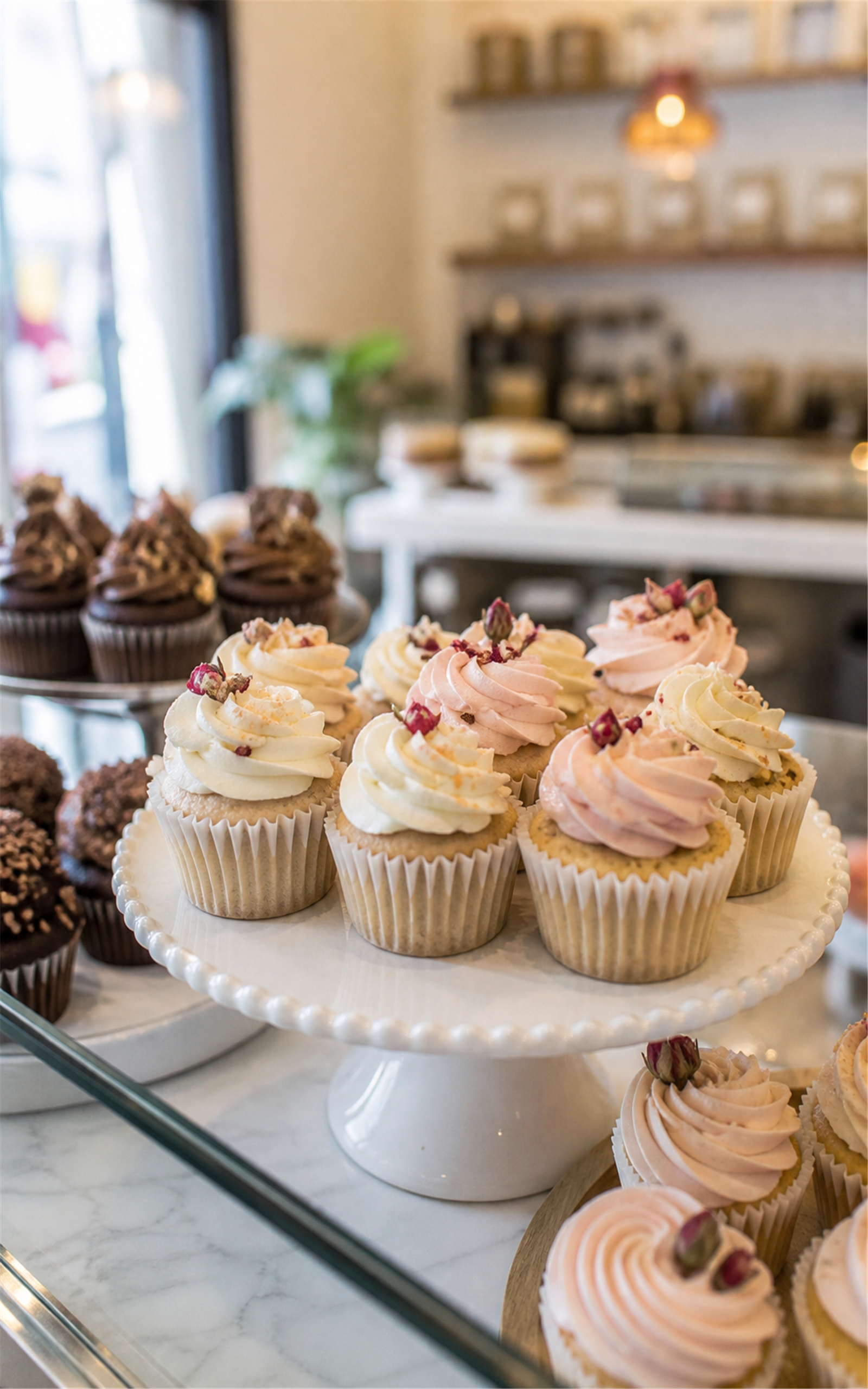
At a wedding dessert table or farmers market booth, presentation decides whether guests stop or walk past. Packaging protects cupcakes in transit and transforms them from a treat into a brand experience worth photographing.
Many bakers overlook presentation, displaying cupcakes in plain paper liners while competitors use branded boxes with transparent windows showing swirled frosting and colors. The manuscript describes a baker whose sales jumped after debuting custom boxes with logo, bright colors, and a window revealing the cupcakes inside.
Consider eco-friendly biodegradable materials if sustainability aligns with your brand. Use whimsical designs for fun celebration cupcakes or elegant typography for gourmet flavors. Packaging should match the emotions you want customers to feel.
Practical takeaway: Sketch packaging for your top event package including box design, window placement, and booth display plan. Test whether cupcakes survive transport in your prototype before a large event order.
Matching a nearby bakery's prices without knowing your costs is like sailing without a compass. Pricing from COGS and perceived value ensures your event packages sustain the business, not just the celebration.
Cost of Goods Sold includes every ingredient, packaging item, and share of utilities for each cupcake. The manuscript illustrates cost-plus pricing where a $2 COGS with 50% markup yields a $3 selling price, and a batch costing $24 across twelve cupcakes with a 40% profit margin suggests $2.80 per cupcake—or higher with perceived value pricing for gourmet offerings.
Cost-plus pricing adds markup to COGS for straightforward profit. Perceived value pricing charges based on what customers believe your cupcakes are worth—gourmet salted caramel or high-quality ingredients justify premiums. Competitive pricing informs your position but should not be your only strategy when your event packages are distinct.
Event clients need package clarity—flavor selections, quantity tiers, delivery timing, and presentation options. Build prices from calculated recipe costs including boxes, labels, and your time, then adjust for wholesale café orders versus full-price celebration packages.
[object Object]
[object Object]
Practical takeaway: Calculate COGS for your top three signature flavors and set prices using cost-plus and perceived value approaches. Draft one event package with quantity, flavors, and total price before your next quote.
Great taste alone will not fill your event calendar. Marketing bridges your cupcakes and the clients planning weddings, birthdays, and corporate gatherings who need to discover you first.
Social media became the lifeline for one baker whose Instagram posts attracted local influencers and filled her inbox with orders. Platforms like Instagram, Facebook, and TikTok showcase cupcakes visually—behind-the-scenes baking, customer testimonials, and whimsical designs build community around your brand.
Local advertising through flyers, farmers markets, and community events introduces your product to nearby buyers. Partner with coffee shops by leaving sample cupcakes. Word-of-mouth and referral discounts turn satisfied event clients into advocates.
Practical takeaway: Choose one social platform and one local channel this week. Plan three posts showcasing signature flavors and list one community event or business for cross-promotion.
A wedding order for dozens of cupcakes cannot be winged one tray at a time. Batch baking, production schedules, and organized kitchen workflow turn event fulfillment from chaos into a repeatable system.
The manuscript walks through a four-day production plan for a large catering order: day one bakes two flavors, day two adds another flavor and prepares frostings, day three handles decoration, day four covers packaging and delivery. Breaking orders into daily tasks prevents last-minute scrambles.
Keep tools and ingredients within reach of your mixer. Track inventory with a chalkboard or app so you never run out of flour mid-batch. Running out of supplies during a hundred-cupcake order derails the entire schedule.
Exceptional product alone does not guarantee return clients. Listen to feedback, personalize experiences using flavor preferences, handle complaints gracefully with replacements or refunds, and consider loyalty programs. The manuscript notes a 30% increase in returning customers after introducing a repeat-visit discount—treat that figure as an illustrative example you can adapt.
Practical takeaway: Draft a production schedule for your next event order listing daily bake, frost, decorate, and delivery tasks. Create a simple customer feedback form to send after each event delivery.
A successful launch creates community anticipation—not just opening day sales. Follow-up service, growth planning, and intentional scaling turn one celebration into referrals and a cupcake business that grows without losing quality.
Without a solid launch plan, the dream of a thriving cupcake business can crumble. A well-planned launch spans six to eight weeks with a timeline covering recipe finalization, social media setup, community tasting events, and promotional offers.
Signs you may be ready include regularly turning down event orders, increasing wait times, and feeling stretched in a home kitchen. Scaling may mean researching commercial kitchen rental, gathering customer feedback on desired new offerings, and outlining a budget for kitchen rental and marketing.
[object Object]
[object Object]
Practical takeaway: Sketch a six-week launch timeline with three community engagement steps and a post-launch feedback plan. Draft three scaling actions—commercial kitchen research, customer survey, and budget outline—for when event demand exceeds home capacity.
Use this four-week outline to move from home baker to structured cupcake business operator. Each week builds on the last using steps supported by the Cupcake Business guide.
Confirm these essentials before you accept a wedding, party, or market cupcake commission.
A cupcake business is an event-ready bakery operation where clients hire you for celebrations, markets, and retail—not simply sharing cupcakes with friends. Success depends on signature flavor identity, clear event packages, fair pricing, batch production schedules, standout presentation, and reliable customer service.
Focus on five or fewer signature flavors rather than an overwhelming menu. The manuscript shows that narrowing from fifteen flavors to five improved consistency, simplified customer choices, and strengthened brand recognition. Each flavor should tell a story that connects with event buyers.
Start with COGS—ingredients, packaging, utilities, and time—then apply markup for profit. The manuscript's $2 COGS with 50% markup yielding $3 per cupcake is an illustration for your own chart. Structure event packages with clear quantity tiers and adjust for wholesale versus celebration pricing.
Create a production schedule breaking the order into daily tasks—baking flavors in batches, preparing frostings, decorating, packaging, and delivering on separate days. Optimize kitchen layout and track inventory so supplies never run out mid-order.
Presentation influences snap purchase decisions at markets and events. Branded boxes with transparent windows protect cupcakes in transit, elevate perceived quality, and make your booth the one guests photograph and remember.
Combine social media—Instagram for visual showcase—with local advertising at farmers markets, flyers, and business partnerships. Define a consistent brand voice, create engaging content, and monitor what drives orders rather than relying on taste alone.
Requirements vary by location. Research cottage food laws, business structure options, required licenses, product labeling, and liability insurance. Consult your local health department rather than assuming home baking is automatically permitted.
Listen to feedback, personalize outreach using flavor preferences, handle complaints gracefully, and consider a loyalty incentive for repeat visits. Customer experience—not just cupcake quality—turns one-time celebration buyers into advocates who refer you for the next event.
This cupcake business example was developed using eBook Business Builder—the workflow used to structure the guide, free lead magnet, offer assets, email series, and marketing content you see in the EBB Showroom below.
If you want to create your own eBook business around a topic you know, EBB walks you through research, writing, assets, and launch in a repeatable system.
Start Building with eBook Business Builder →The flagship guide covers cupcake business startup fundamentals—passion and purpose, flavor identity, pricing, production, packaging, marketing, customer service, legalities, scaling, and launch—in a structured eBook format.
[object Object]
A lead magnet helps readers evaluate whether cupcake event work fits their skills and identify sensible first steps before accepting celebration orders.
Many talented bakers underprice event packages, skip batch production planning, or display cupcakes in plain liners that fail to compete at markets.
Foundational first steps, common early mistakes to avoid, and a simple action plan readers can use before committing to equipment or event clients.
Cupcake Startup Program
A practical flagship guide for readers ready to move from interest to action—with clear first steps and professional event package and batch production habits for cupcake businesses.
Tools & References