
Find the Opportunity
Understand who buys donuts and why freshness and consistency create demand.
A practical starting point for bakers who want to launch a donut business with clearer flavor lines, production schedules, and retail or wholesale workflow basics.
This page walks you through how to start a donut business as a real food operation—not just perfecting recipes in your kitchen. You will learn how to find your opportunity, choose a business model, build a focused menu, plan production, price your products, reach first customers, and grow with the consistency that morning buyers and wholesale accounts expect.
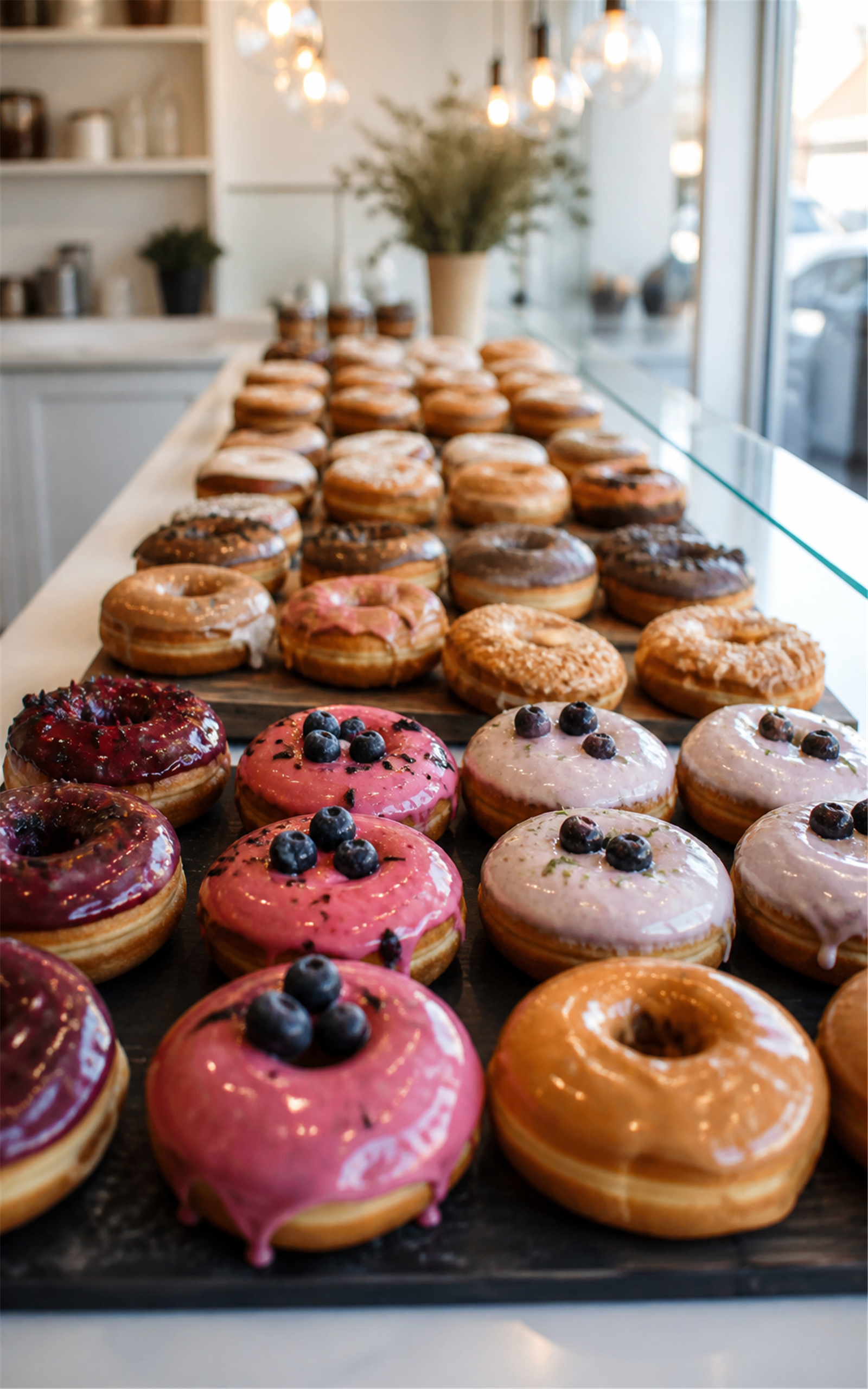
Understand who buys donuts and why freshness and consistency create demand.
Decide how and where you will sell—retail, wholesale, events, or preorders.
Design a focused flavor line instead of an overwhelming launch menu.
Build repeatable workflows from prep through packaging and handoff.
Create a pricing model and packaging that fits how you sell.
Launch with a controlled offer, real photos, and local visibility.
Prove the concept, tighten consistency, and add channels deliberately.
Donuts look simple from the customer side—a fresh box on a counter, a reliable morning treat, a tray delivered to a café before the lunch rush. If you bake well, it is easy to assume great recipes are enough. They are not. Donut businesses thrive on consistency and timing. Customers expect fresh product, recognizable flavors, and dependable opening or delivery routines whether you sell retail or wholesale.
That distinction matters. Making excellent donuts in small batches is not the same as running a donut business. Great product without menu focus, production timing, and a clear sales channel does not automatically become a sustainable operation. Many aspiring donut makers focus on recipes without early-morning production schedules, flavor line discipline, or a sales model that supports fresh daily output.
This guide walks you through how to start a donut business with professional habits: finding your opportunity among morning customers, coffee shops, and event buyers; choosing a business model; building a focused menu; planning production and operations; pricing and packaging; reaching first customers; and growing with discipline. By the end, you should understand what the business is, what decisions come first, and what to investigate before committing to equipment or clients.
Morning customers, coffee shops, and event buyers continue to purchase donuts when freshness and flavor consistency are dependable. Your first step is understanding where a new donut operation fits—not assuming demand exists because you make good product.
Donuts occupy a specific place in the food market: a fresh daily product people buy on routine, often in the morning, often alongside coffee. That rhythm shapes everything that follows—production start times, delivery windows, and how many flavors you can execute well before customers arrive.
Look at your local landscape with that rhythm in mind. Who already sells donuts nearby? Are buyers choosing convenience, artisan quality, price, or a specific flavor identity? Gaps may exist in dependable wholesale supply for cafés, event trays for offices, or a focused retail line with shorter wait times—but you discover gaps by observing, not by guessing.
Your target customer shapes menu size, pricing, packaging, and hours. A donut business serving morning commuters needs fast counter service and a recognizable core lineup. One targeting coffee shops needs wholesale packaging, reliable delivery, and batch consistency across weeks of orders. Event and catering buyers care about presentation, order lead time, and whether you can fulfill a set quantity on a deadline.
Write down one primary customer type for your launch—not everyone at once. You can add channels later, but a confused offer at the start makes production and marketing harder than they need to be.
Local consumers, families, and walk-in morning customers who value fresh product and dependable opening hours.
Cafés, restaurants, and specialty retailers that reorder on schedule when flavor and delivery are reliable.
Offices, parties, weddings, and planners who need trays or custom quantities by a set date and time.
Practical takeaway: Spend one week noting when and where people buy donuts in your area. Choose one primary customer type for launch and write two sentences explaining why your fresh daily product fits that buyer better than a generic bakery line.
There is no single best way to start a donut business. The right model depends on your production capacity, schedule, local rules, and the customer you chose in Section 1.
Before you buy equipment or print labels, map how donuts will reach buyers. Each model changes your mornings, your margins, and what you must get right operationally.
Sell from a storefront, pop-up, or preorder-and-pickup window. You control presentation and customer experience but need dependable hours and a location buyers can reach.
Test demand with a controlled menu and face-to-face feedback. Useful for proving product before committing to wholesale or a shop—but market rules and vendor permits vary by location.
Deliver fresh batches to coffee shops and restaurants on a schedule. Lower per-unit price than retail, but predictable volume when consistency is strong.
Fulfill tray orders for offices, parties, and celebrations. Higher planning overhead per order; presentation and reliable timing matter as much as flavor.
May be permitted in some areas under cottage-food or home-bakery rules—but eligibility, product restrictions, and sales channels vary widely. Research local requirements before assuming you can sell fried or wholesale product from home.
Full retail presence with the highest overhead and the clearest walk-in offer. Usually requires commercial kitchen compliance, staffing plans, and a production schedule built for daily volume.
There is no universal donut business license. Requirements depend on jurisdiction and how you sell. Before committing, investigate what may apply in your area:
The FDA Food Code is a model many state and local authorities use to develop food-safety rules—it is not itself a business license. Confirm what your state, county, and city require by contacting your local health authority and reviewing official small-business resources such as the FDA guide for starting a food business and your state small business development resources.
Practical takeaway: Write your intended model in one sentence—for example, "Preorder pickup three mornings per week" or "Wholesale delivery to two coffee shops." Then list every registration, facility, and permit question that model raises and schedule time to confirm answers locally.
The business is not simply about making great donuts. It must repeatedly deliver consistent product, accurate orders, dependable pickup or delivery, and clean presentation—on the schedule your customers expect.
Your equipment list depends on whether you fry, bake, or combine both. Do not treat a generic shopping list as universal. Instead, plan by category and confirm what your concept and local regulations require:
Mixers, scales, measuring tools, prep surfaces, and ingredient storage suited to your batch sizes.
Fryers and shortening management for fried lines; ovens and trays for baked or cake-style donuts—match equipment to your menu, not the other way around.
Cooling racks, glazing stations, filling tools, and decorating equipment for toppings and presentation.
Food-safe containers, boxes or bags for your sales channel, and transport gear for wholesale or event delivery.
Sanitation supplies and procedures that keep your production environment appropriate for food handling.
Organize each production day around the same sequence so nothing depends on memory alone:
Safe food handling is part of operational credibility—not a separate checklist you add later. Build habits around sanitation, personal hygiene, safe storage, preventing cross-contamination, and documented procedures your future self can repeat when tired at 4 a.m. State and local authorities often base retail food rules on the FDA Food Code model; confirm the specific requirements that apply where you operate.
Know the ingredients in every product you sell. If you package donuts for retail or wholesale, labeling and allergen obligations may apply. The FDA identifies nine major food allergens—milk, egg, fish, crustacean shellfish, tree nuts, peanuts, wheat, soy, and sesame. Requirements vary according to how and where food is sold, so verify federal, state, and local labeling rules rather than assuming one format fits every situation. Do not make unsupported allergen-free claims.
Practical takeaway: Write your production workflow as a one-page checklist ordered by time of day. Run one test batch following it exactly and note where steps overlap, stall, or need more space before you accept paying orders.
Customers buy more than flavor—they buy dependable freshness, clear presentation, and a transaction that fits their routine. Pricing and packaging translate your production work into an offer buyers understand.
Do not copy a donut price you saw online and hope it works. Build a simple model from costs you can verify in your own kitchen:
Here is an illustrative worksheet example—not an industry benchmark. If your ingredient and packaging cost for one glazed donut totals $0.85 in your spreadsheet, and you apply a markup that covers labor, overhead, and profit, you might test a retail price of $2.50 and adjust after a few production runs. Your numbers will differ. The point is to price from your costs, then test with real sales data.
Wholesale accounts—such as coffee shops—usually expect a lower per-unit price in exchange for larger, recurring orders. Before pitching a café, understand how wholesale affects your model:
Do not assume a standard wholesale discount percentage. Calculate whether the volume and efficiency actually work for your production schedule.
Packaging balances food protection, presentation, transport, branding, labeling requirements where applicable, and cost. A retail box that photographs well for social media may differ from a wholesale carton built for stackable delivery. Choose formats for how you sell—not an abstract ideal package type.
Practical takeaway: Create a one-page pricing worksheet for your top three menu items with separate columns for retail and wholesale. Include every cost you can measure today and leave blank any field you still need to research locally.
Excellent donuts alone will not fill your schedule. First customers come from a controlled launch, clear ordering, and local visibility that shows real product—not stock photos.
Generic "post on social media" advice misses what makes donuts visual and habitual. Focus on channels where your product and schedule are visible:
If your launch targets coffee shops, prepare a brief wholesale sheet: flavors offered, delivery days, minimum order, packaging format, and how to place the first trial order. Samples often communicate quality faster than a price list alone.
Practical takeaway: Plan a two-week launch with fixed production days, a short menu, and one primary marketing channel. Measure orders fulfilled, items sold out, and one piece of feedback per customer—not vanity metrics alone.
Growth in a donut business means proving the concept, tightening consistency, understanding demand, and adding channels only when production can support them—not scaling immediately because sales felt encouraging for one weekend.
A sensible progression looks like this:
Repeat business comes from the operational basics this guide emphasizes: consistent product, accurate orders, dependable pickup or delivery, clean presentation, and clear communication. When something fails—a late delivery, a sold-out signature flavor, a tray that did not match the order—document what broke in the workflow and fix that step before chasing new customers.
Many operators compare notes with related food businesses when planning growth. If you are also exploring broader bakery models, the home bakery business guide and cupcake business guide cover adjacent production and event-sales habits that may inform your next channel.
Practical takeaway: After your first month, list one production improvement, one customer-facing improvement, and one channel you will not add yet. Growth works best when you can repeat today's quality on tomorrow's larger order.
Use this four-week outline to move from interest to a controlled launch. Each week builds on the last using the habits emphasized throughout this guide.
Confirm these essentials before you accept paying orders or wholesale accounts.
A donut business is a food operation that sells fresh donuts through defined sales channels—not simply making donuts at home for friends. Success depends on a focused menu, repeatable production schedules, consistent quality, clear pricing, and dependable service whether you sell retail, wholesale, at events, or through preorders.
Home-based production may be possible in some areas under cottage-food or home-bakery rules, but requirements vary widely by state, county, and city. Some jurisdictions restrict fried foods, wholesale sales, or certain products from home kitchens. Research your local health department, cottage-food program, and zoning rules before planning a home-based donut business.
Start with a small core lineup of signature flavors rather than an enormous menu. Each flavor adds production steps, ingredients, and complexity. A focused menu protects consistency, simplifies customer choice, and makes early-morning production more manageable while you prove demand.
Equipment depends on your concept. Fried donut operations typically need mixing and preparation tools, frying equipment, cooling racks, finishing tools, food-safe storage, packaging, and cleaning supplies. Baked-donut concepts rely on oven-based production instead of fryers. List categories first, then research what your chosen model and local regulations require.
Build a pricing model from your own costs: ingredients, packaging, labor, production time, overhead, delivery or transport, waste, and desired margin. Wholesale usually means a lower per-unit price offset by larger volume and stricter consistency requirements. Use a simple spreadsheet to test prices—not industry averages you cannot verify.
There is no single universal donut business license. Requirements depend on your jurisdiction and business model. You may need to investigate business registration, food establishment rules, health department permits, food-handler training, cottage-food eligibility, zoning, sales tax registration, and insurance. Confirm requirements with your state and local health authority and other applicable agencies.
Both are valid, but they change your mornings and your economics. Retail and preorders give you direct customer relationships and higher per-unit pricing. Wholesale to cafés demands delivery reliability and batch consistency at lower per-unit prices. Most new operators prove one channel first, then add the second when production can support it without sacrificing quality.
Focusing on recipes without early-morning production schedules, flavor line discipline, or a sales model that supports fresh daily output. Great donuts in small batches do not automatically become a business without menu focus, production timing, and a clear sales channel.
This donut business example was developed using eBook Business Builder—the workflow used to structure the guide, free lead magnet, offer assets, email series, and marketing content you see in the EBB Showroom below.
If you want to create your own eBook business around a topic you know, EBB walks you through research, writing, assets, and launch in a repeatable system.
Start Building with eBook Business Builder →The flagship guide covers donut business startup fundamentals—menu design, production scheduling, shop or kitchen setup, and retail or wholesale sales—in a structured eBook format.
Chapters walk readers through evaluating the opportunity, choosing a business model, building a focused flavor line, planning batch production, pricing for retail and wholesale, reaching first customers, and growing with operational discipline.
First Flavors & Production Schedule — a lead magnet that helps readers evaluate whether a donut operation fits their goals and identify sensible first steps before opening or taking wholesale accounts.
Many aspiring donut makers focus on recipes without early-morning production schedules, flavor line discipline, or a sales model that supports fresh daily output.
Foundational first steps, common early mistakes to avoid, and a simple action plan readers can use before committing to equipment or clients.
Donut Startup Program
A practical flagship guide for readers ready to move from interest to action—with clear first steps and professional habits for fresh daily donut production and sales.
Tools & References