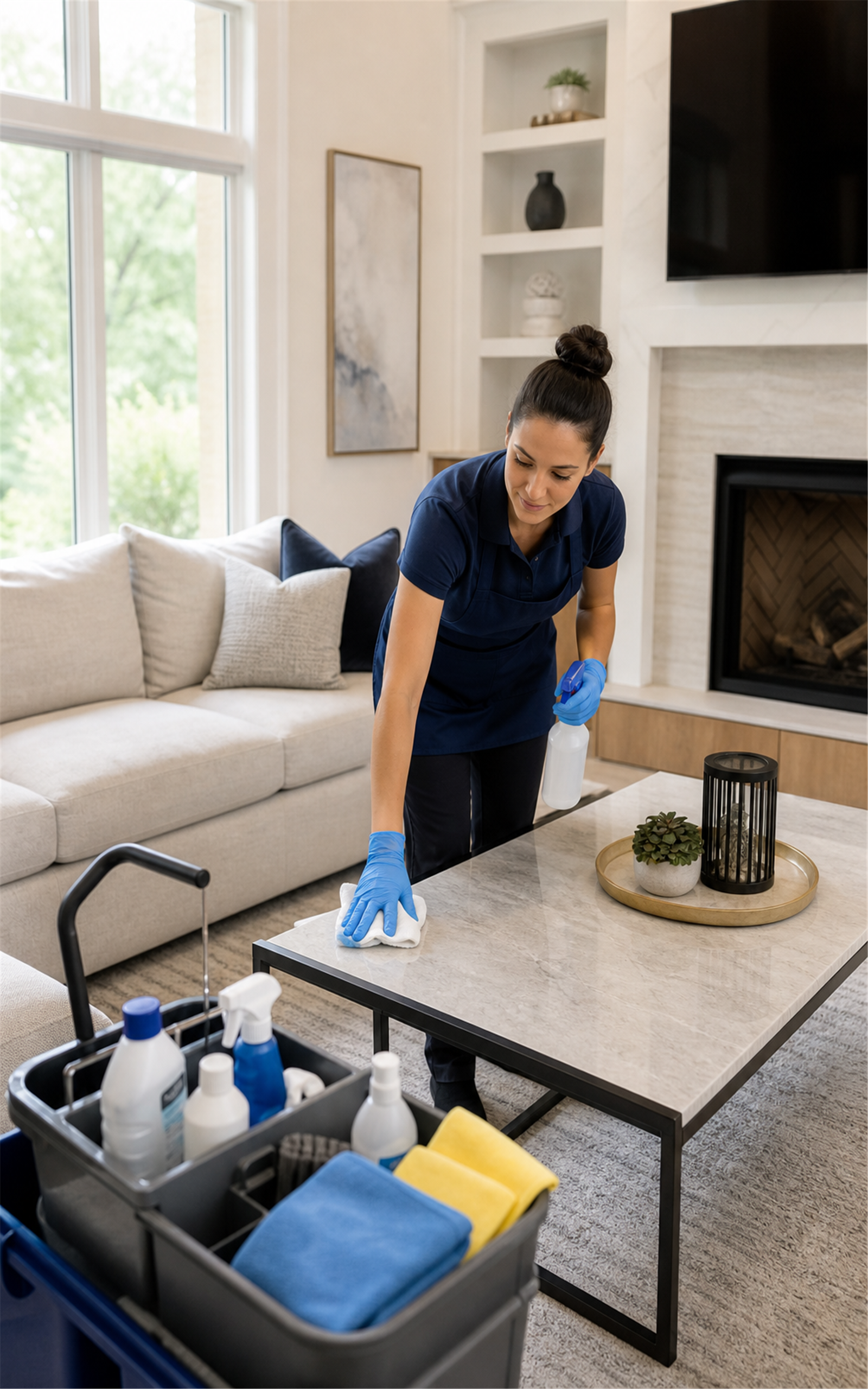
Find the Opportunity
Understand who hires window cleaners and why route clarity wins repeat work.
A practical starting point for operators who want to launch a window cleaning service with clearer quoting, equipment choices, and route workflow basics.
This page walks you through how to start a window cleaning business as a professional home and small-commercial service—not just squeegee work for neighbors without route clarity. You will learn who hires window cleaners, how to design geographic routes and service packages, how to assess access and safety before every job, how to build equipment and on-site workflow matched to your menu, how to quote from measured pane counts and real costs, how clients find you, and how to grow recurring route revenue property owners trust. Whether you launch solo with a ladder and squeegee kit or plan a two-person route truck later, the same fundamentals apply: dense geography, honest access assessment, package clarity, and streak-free delivery clients can see from the street.

Understand who hires window cleaners and why route clarity wins repeat work.
Build service tiers and geographic runs that keep crews productive.
Assess ladder placement, pole reach, and hazards before every job.
Stage squeegees, poles, and solutions for repeatable on-site routines.
Price window jobs from pane counts, stories, and route economics.
Reach homeowners and storefronts with a controlled launch.
Improve route density and add capacity only when workflows hold.
A window cleaning business sells professional glass care under written scope boundaries—exterior panes, interior surfaces, screens, tracks, or hard-water treatment as defined on each estimate—not informal squeegee work whenever a neighbor asks. You assess access on site, decide what equipment fits each roofline, quote from measured pane counts and story height, follow route schedules that protect margins, and deliver streak-free results clients can see from the curb. Buyers pay for clarity about what will be cleaned, how crews reach second-story glass safely, when the route visits again, and what happens if weather makes exterior work unsafe today.
That distinction matters. Cleaning your own windows well is not the same as running a window cleaning business. Many capable operators underquote travel between scattered jobs, buy pole systems before their menu justifies them, skip access assessments on steep landscaping, or promise interior and exterior bundles without timing that fits occupied homes. Homeowners and small businesses continue to hire window cleaners when curb appeal matters, storefront glass shows smudges daily, or quarterly maintenance beats fighting ladders themselves—but only when they believe the operator will arrive on the route day, respect property access, and finish glass they can inspect in daylight.
This guide walks you through how to start a window cleaning business with professional habits: finding your opportunity, designing routes and service packages, assessing access and safety, building equipment and on-site workflow, quoting from real job costs, winning first clients, and growing with the route discipline that defines a credible local service. By the end, you should understand what the business is, what you need to prepare, and what to verify locally before accepting your first booking.
Whether you launch solo with a ladder and squeegee kit or plan a two-person route truck later, the same fundamentals apply: dense geography, honest access assessment, package clarity, and streak-free delivery clients can see from the street. Route businesses compound when maintenance clients renew—treat every stop as part of a schedule worth protecting, not a one-off favor between unrelated errands.
Homeowners and small businesses hire window cleaners when glass visibility affects daily life—curb appeal before guests arrive, storefront presentation, sun glare in home offices, or deferred exterior maintenance they no longer want to climb for. Your first step is understanding who you serve and what they expect from a professional package—not assuming squeegee skill alone creates demand.
Window cleaning businesses succeed when clients understand the job before work starts: exterior only or interior included, pane count or window-unit basis, screen removal, track wiping, hard-water spot treatment, frequency on a maintenance plan, and how crews access second-story glass. Buyers are not simply purchasing wet glass—they are purchasing confidence that results will be streak-free, landscaping will be protected, and the same reliable crew can return on schedule.
Different clients bring different expectations, access constraints, and repeat potential. Choose one primary profile for launch:
Often hire on a quarterly or biannual rhythm when exterior glass dulls curb appeal or interior smudges accumulate in busy households. They compare on reliability, visible streak-free results, respect for landscaping, and route reminders—not always on the lowest per-pane rate alone.
Need predictable exterior cleans before business hours or during low-traffic windows. Clear scope about signage areas, door glass, and frequency matters more than custom hand-holding on every visit.
Prioritize vendors who invoice cleanly, document access issues, and complete common-area or multi-unit glass on schedule. Standardized packages and route density support recurring contracts once trust is established.
Observe your local market: who do existing window and exterior-service operators serve well, and where do clients still express frustration—no-shows outside route windows, ladder marks on siding, interior work scheduled when no one is home, or crews who cannot safely reach third-story dormers? Your opportunity often sits in operational clarity and route reliability as much as in technique.
Adjacent exterior services with similar client-trust dynamics—such as those in the gutter cleaning business guide, pressure washing business guide, and cleaning business guide—show how defined packages and professional intake sustain service revenue. Window work adds glass-specific technique, access methods, and recurring route scheduling on top of those patterns.
Window demand fluctuates with seasons and local climate. Spring pollen and construction dust drive exterior cleans after winter. Summer sun can dry solution too quickly on large commercial panes if you schedule mid-day without shade planning. Fall leaf debris and winter salt spray near roads affect ground-level storefront glass. Build route calendars that cluster maintenance clients before predictable peaks—holiday gatherings, spring open houses, retail holiday displays—and keep weather-flex days open for exterior-only backlog when wind or freezing rain makes ladder work unsafe. Clients who understand your weather reschedule policy upfront trust you more than operators who no-show without communication.
Practical takeaway: Write one paragraph describing your ideal first client and the job type you want most—single-story exterior maintenance, two-story full service, or storefront route work. List three questions they will ask before hiring—and make sure your future intake process answers them.
Before you quote scattered window jobs across town, decide how your service packages and geographic routes work together. Clients need tiers they can compare—and you need density that keeps windshield time from eating margins on every sunny day.
Each package should list specific inclusions, exclusions, and access assumptions:
Wash exterior glass reachable by ladder or water-fed pole, squeegee dry, detail edges, and wipe accessible sill surfaces. Best for recurring residential maintenance on typical rooflines.
Exterior clean plus interior pane access when client provides occupancy windows, screen removal as scoped, light track wipe, and furniture protection as agreed. Requires scheduling coordination and longer on-site time.
Ground-level and entry glass, door handles area as scoped, before-hours or low-traffic timing, and frequency plan—weekly, biweekly, or monthly. Suited to retail and office clients on dense routes.
Pre-scheduled visits on a quarterly or biannual route with modest loyalty pricing and reminder outreach before each cycle. Converts one-time buyers into predictable route stops.
Route design is a margin decision, not a calendar afterthought:
The gutter cleaning business guide emphasizes the same discipline: seasonal route density beats scattered heroics. Window cleaners who treat every address as a standalone trip often discover their effective hourly rate collapses even when squeegee technique is flawless.
Residential quoting improves when you standardize measurement: count panes or window units on site or from detailed photos, note story height and divided lites, and apply modifiers for screen removal, interior access, hard-water treatment, or post-construction debris. Commercial quoting often uses frequency contracts—document whether both entry doors, sidelights, and transoms are included so monthly invoices match expectations. Always separate travel outside your core route zone so clients understand why a one-off distant stop costs more than a neighbor on the same route day.
Practical takeaway: Draft a one-page service menu with at least four packages and note which require ladder versus pole access. Map ten hypothetical addresses in one neighborhood and estimate drive time between them—if the route cannot support at least four stops in a half day, tighten geography before publishing prices.
Window cleaning at height is access work first and squeegee work second. Your safety framework should investigate conditions on each property—not reuse yesterday's ladder setup because the technique felt fine on a different roofline.
Walk the property before you unload equipment and document what you find:
Investigate OSHA ladder guidance and any local rules that apply to your work, then build written habits your crew follows:
Check ladder feet, locks, and rails before each route day. Replace worn feet and labels that exceed manufacturer guidance. Do not climb on improvised platforms or furniture.
Maintain stable body position on ladders; carry tools on belt or hoist lines rather than climbing with full squeegee setups in hand when possible.
Define when you reschedule: sustained high wind, lightning risk, unstable soil after rain, client refusal of safe placement, or rooflines beyond your training and insurance scope.
Saying "we need to reschedule for safe access" builds more long-term trust than finishing a job that leaves ladder dents in siding or sends a crew member to the emergency room. Document abort decisions with photos and brief notes—property managers especially appreciate records when HOA boards ask why exterior work moved.
Second-story exterior work often chooses between ladder placement and water-fed pole systems. Poles reduce ladder time on straightforward facades but struggle with cut-up rooflines, deep overhangs, or delicate landscaping below drip zones. Ladders allow closer detail work but increase fall risk and setup time. Match method to property on the access form—not every job gets the same approach. Train crews on both methods if your menu includes two-story residential and low commercial glass so route days stay efficient without defaulting to unsafe shortcuts.
Practical takeaway: Create a one-page access assessment form with photo slots. Use it on your next five estimates—even practice properties—and note any quote you would change after walking the full perimeter.
A window cleaning business runs on equipment matched to your accepted scope and a workflow that turns route stops into streak-free results without rewashing panes or leaving tool marks on frames. Under-equipped arrivals and improvised routines erode margins faster than any competitor's lower per-pane rate.
Track rubber blade and cloth replacement in your pricing model. Worn squeegee rubber causes rewashes—that is production cost, not personal overhead you absorb silently.
Intake should capture pane counts or photos, story height, screen removal, interior scheduling windows, water source availability for pole systems, and parking constraints. Surprises on arrival—locked access, undisclosed third-story dormers, or construction tape on every pane—are schedule killers on route days.
Streak-free results come from consistent technique: apply solution evenly, use sharp squeegee rubber sized to pane width, detail edges and corners with microfiber before client walkthrough, and inspect from multiple angles in daylight. Hard-water stains and construction adhesive require scoped add-ons—attempting them without agreement creates disputes. Photograph completed work from the client's preferred viewing angle when permission allows; those images support maintenance renewals and dispute resolution if a rainstorm hits before they inspect.
Practical takeaway: Pack a go-kit for your most common half-day residential route and run one real or practice job through your full workflow checklist. Note any second trip caused by missing pole sections or skipped intake questions—and fix those before your next quote.
Clients buy scoped glass care and dependable route scheduling—not vague per-window guesses that change when screens, tracks, or third-story dormers appear. Pricing should reflect measured scope and the full cost of serving that stop on your route—not a rate copied from a forum post in another city.
Per-pane pricing works when counts are verified on site or from detailed photos. Per-window-unit pricing simplifies sales when clients think in "windows" rather than individual lites. Flat route packages suit maintenance plans where scope repeats each visit. Always separate add-ons—screen removal, track wipe, hard-water treatment, post-construction scrape—as line items so buyers understand what changed the total.
Small stops carry disproportionate travel cost. A four-pane side entrance twenty minutes from your last job is not priced like four panes next door. Minimum route-stop fees or geographic zones cover mobilization honestly—clients prefer transparent minimums over artificially low per-pane rates that balloon with trip charges later.
Track actual minutes and consumable use on every early job against your estimate. Adjust production assumptions before scaling marketing. The pressure washing business guide applies the same discipline: accurate quotes come from documented job costs and professional intake, not competitor guessing.
Include payment terms, weather reschedule windows, interior access no-show fees, and what happens when undisclosed pane counts exceed intake photos. Maintenance plans should state renewal cadence and price adjustment rules so quarterly routes stay profitable when fuel or consumable costs shift. Property managers appreciate invoices that map line items to package names they approved at contract start—reduce verbal-only add-ons that become disputes at month end.
Practical takeaway: Build a pricing spreadsheet with pane rates, story modifiers, travel allowances, and overhead allocation. Complete it for your next three estimates, then compare projected costs to actuals after each job closes. Refine before expanding your route geography.
Trust drives hiring decisions in window cleaning. Homeowners and storefront managers choose operators who communicate clearly, respect access boundaries, and arrive on the route day promised—not whoever sends the vaguest low estimate.
Avoid advertising without route discipline behind it. Photos of streak-free results, clear access language, and reliable scheduling windows demonstrate professionalism better than discount messaging alone.
Real-estate agents need fast exterior glass before photos—build a small listing-prep package with 24–48 hour turnaround in dense neighborhoods. Storefront routes succeed when you walk the same district weekly and offer consistent before-hours timing; one reliable block of five shops beats ten scattered one-offs. Ask every satisfied client which neighbor or adjacent business might need service—referrals in the same zip code strengthen route density faster than broad online ads alone.
Practical takeaway: Land your first three jobs through direct outreach to homeowners or storefronts that match your target route geography—before spending on ads. Document every access question they raise and refine your templates after each conversation.
Growth means adding stops and capacity only when access assessment, equipment readiness, and route density stay consistent—not accepting every address because your calendar has room.
Adding helpers introduces quality control. Document squeegee standards with photo examples, ride along on early route days together, and review estimate-to-actual minute variance monthly. One streaky storefront door or ladder mark on siding can damage the reputation that took seasons to build.
Track metrics that matter: drive time per route day, estimate-to-actual minute variance, maintenance renewal rate, referral source, and stops completed at your agreed standard—not vanity metrics like total leads. Fix access screening and route geography before marketing harder.
When you add a second crew, duplicate access forms and quality checklists—not just verbal standards. Ride along on early route days, review photos weekly, and cap new geography until drive time per stop stays within your model. Maintenance plans should renew automatically with reminder emails tied to last service date; manual follow-up alone loses recurring revenue when routes get busy in peak season.
Practical takeaway: After your first ten completed route days, identify your most common access miss and your strongest referral source. Fix the intake or equipment issue before adding a second technician or expanding into a new neighborhood.
Use this four-week outline to move from interest to a controlled first route booking. Each week builds on the last for a window cleaning business launch.
Confirm these essentials before you accept a booking or load equipment for your first paid window cleaning job.
A window cleaning business is a professional exterior and interior home-service operation that delivers streak-free glass under written scope boundaries—not informal squeegee work for neighbors without route discipline or safety assessment. Success depends on route planning, access evaluation, equipment matched to job types, quoting from measured pane counts and stories, and communication that makes recurring bookings predictable.
General house cleaning focuses on recurring interior packages, room checklists, and team scheduling across living spaces. Window cleaning is specialized glass work centered on access methods, ladder or water-fed pole use, streak-free technique, exterior height, and often route-based scheduling tied to quarterly or seasonal visits. This guide addresses window-specific routes, access assessment, safety, and quoting—not whole-home recurring cleaning routines.
Business registration and licensing requirements vary significantly by country, state, county, and city. Some jurisdictions require a general business license for home services; others add rules for ladder work at height, commercial vehicle use, or water runoff. Verify requirements with your local business licensing office before accepting paid window jobs.
Group jobs by geography and service tier so crews move efficiently between nearby properties on the same day. Build route days with similar story heights and access conditions when possible, leave buffer time for weather delays, and offer maintenance plans that bring clients back on a predictable schedule. Dense routes reduce windshield time and make per-pane pricing more profitable than scattered one-off calls.
Treat access and safety as site-specific decisions. Assess each property for ladder placement, ground stability, overhead hazards, landscaping obstacles, and whether water-fed pole work is safer than climbing. Investigate OSHA ladder guidance and any local rules that apply, inspect equipment before each job, maintain three points of contact on ladders, and abort work when wind, wet surfaces, or unstable soil make access unsafe.
Count panes or measure window units and note story height, access difficulty, interior versus exterior scope, screen removal, hard-water treatment, and travel between route stops. Build pricing from your own labor hours, solution and consumable costs, equipment wear, overhead, and margin—using a spreadsheet with your production rates, not unverified competitor numbers.
Build a core kit matched to your launch menu: squeegees and channels sized for typical residential panes, scrubbers, extension poles, buckets, professional solution, microfiber cloths, ladder rated for your typical jobs, and optional water-fed pole system when repeated second-story work justifies the investment. Stage equipment by route day and track consumable replacement in your pricing model.
Start with a defined client profile and controlled geographic launch. Reach local buyers through search listings, real-estate connections, adjacent trade referrals, and storefront prospecting where your route can absorb new stops. Professional scope documents, visible results photos, and reliable route scheduling convert interest faster than vague low bids.
This window cleaning business example was developed using eBook Business Builder—the workflow used to structure the guide, free lead magnet, offer assets, email series, and marketing content you see in the EBB Showroom below.
If you want to create your own eBook business around a topic you know, EBB walks you through research, writing, assets, and launch in a repeatable system. See how business assets fit together and launch marketing for your eBook business to understand the full EBB build model.
Start Building with eBook Business Builder →The flagship guide explains how to start a window cleaning service—residential and commercial basics, quoting, equipment, safety, and route planning—in a structured eBook format.
Chapters walk readers through evaluating the opportunity, designing routes and packages, assessing access and safety, building equipment and workflow, pricing from real job costs, winning first clients, and growing recurring route revenue without sacrificing quality.
First Routes & Quoting — a lead magnet that helps readers evaluate whether window cleaning is a fit and identify sensible first steps before buying equipment or taking jobs.
Many new operators underquote jobs, buy the wrong tools first, or lack a route plan that makes recurring residential work profitable.
Foundational first steps, common early mistakes to avoid, and a simple action plan readers can use before committing to equipment or clients.
Able to clean windows but unsure how to quote jobs and run a window cleaning business with route discipline.
Prepared with the fundamentals needed to plan routes, assess access, assemble equipment, and deliver scoped work on schedule.
Window Cleaning Startup Program
A practical flagship guide for readers ready to move from interest to action—with clear first steps and professional service habits for dependable window cleaning and route growth.
Tools & References