
Find the Opportunity
Understand residential, commercial, and niche segments—and where your cleaning service fits locally.
A practical starting point for operators who want to launch a cleaning service with defined packages, checklists, and client workflows they can repeat.
This page walks you through how to start a cleaning business as a real operations-driven service—not just cleaning well on your own. You will learn market positioning, service package design, cost-based quoting, team staffing and training, scheduling systems, quality checklists, client management, marketing, financial tracking, technology tools, and sustainable growth habits.
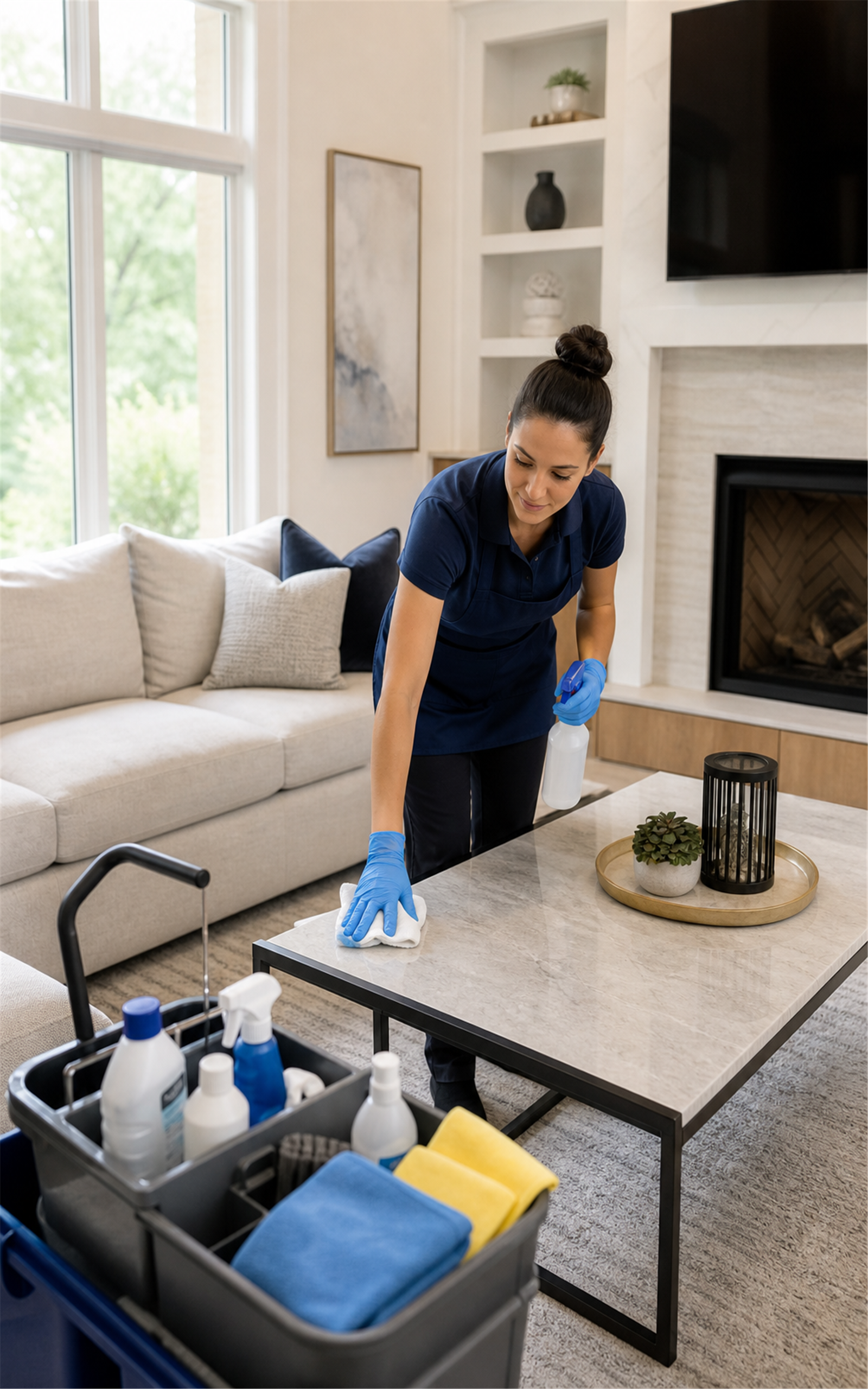
Understand residential, commercial, and niche segments—and where your cleaning service fits locally.
Build budgeting, cash flow, and expense-tracking habits before hidden costs erode margins.
Recruit reliable cleaners and choose scheduling and client-management tools that scale.
Design tiered service packages and set prices from real costs and market context.
Build brand identity, online presence, and local marketing that attracts ideal clients.
Run scheduling, training checklists, and client communication that keep cleans consistent.
Retain clients, analyze profitability, and scale services with intentional planning.
[object Object]
[object Object]
[object Object]
Strong cleaning skills alone do not guarantee a steady client base. Your first step is understanding the market—residential, commercial, and niche segments—and how competitors price and position their services.
Many aspiring cleaning operators assume expertise with a mop and attention to detail will translate directly into business success. The reality is more nuanced. The cleaning industry is diverse, encompassing residential maintenance, commercial workspace cleaning, and specialized niches such as post-construction or eco-friendly services. Each segment carries different customer expectations and competitive dynamics.
Residential cleaning typically covers routine tasks—dusting, vacuuming, and bathroom sanitation. Commercial cleaning often requires floor care, window washing, and workspace sanitizing. Niche markets cater to specific needs. Identifying which segment you want to target lets you tailor services and appeal to ideal customers rather than offering a generic menu.
Market analysis means researching local competitors, their pricing strategies, and unique services. Create a list of competitors and investigate what sets each apart. Are they offering specialized services you are not? What are their pricing structures? This exercise reveals market gaps and informs your own package and pricing decisions.
[object Object]
[object Object]
Insurance and regulatory knowledge protects your investment. Many new owners overlook legal requirements, but understanding local regulations and obtaining appropriate insurance safeguards against property damage, on-site accidents, and unforeseen compliance issues.
Practical takeaway: Create a competitor research list noting services, pricing, and gaps in your local market. Choose one primary segment—residential, commercial, or niche—to focus your first packages.
Exceptional cleaning alone does not keep a business solvent. Planning means budgeting from day one, tracking cash flow timing, and reviewing expenses before supply costs quietly erode profit.
Many aspiring entrepreneurs enter cleaning believing great service makes financial management secondary. That mindset is tempting but risky. Without measuring expenses, revenue, and profits, you can end each month with more bills than income—even while clients praise your work.
Structured budgeting is a roadmap, not a one-time exercise. Start by identifying startup costs—cleaning supplies, equipment, transportation, marketing materials, and licensing fees. Then estimate ongoing monthly expenses: vehicle maintenance, supply restocks, utilities, and employee wages if you plan to hire.
Cash flow is the movement of money in and out. A client who pays at month end does not help if supplies must be purchased at the beginning. Watch income and expense timing carefully. Consider upfront payment discounts or deposits on larger jobs so you have cash on hand when costs arrive.
Expense tracking reveals patterns—perhaps you are spending too much on supplies because you are not buying in bulk. Profitability analysis shows which service types generate the most revenue relative to effort and cost, helping you focus marketing on lucrative offerings.
Practical takeaway: Draft a three-month budget listing startup costs, monthly expenses, and projected revenue. Review it monthly and adjust pricing or spending before margins disappear.
As bookings grow, informal help from friends and family creates chaos. Structured recruitment, training, and scheduling tools turn one person's skill into a service clients can depend on.
During busy seasons, demand can exceed what one person can deliver. Relying on ad-hoc referrals feels convenient but often leads to miscommunication and inconsistent results. A reliable team—supported by the right operational tools—is the backbone of scalable cleaning service.
Craft a job description outlining key responsibilities, required skills, and values you prioritize. A residential cleaner role might include performing dusting, vacuuming, and sanitizing; communicating with clients about preferences; following standard operating procedures; and maintaining supplies. Attention to detail, reliability, and customer-service mindset should be front and center.
Use online job boards, social media, local community groups, and networking for recruitment. During interviews, assess cultural fit with open-ended and situational questions—not just qualifications.
Technology is not reserved for large corporations. Customer Relationship Management systems organize client information, streamline scheduling, automate reminders, and facilitate payments. Scheduling software shows team availability at a glance, assigns jobs by location and skill, and sends appointment reminders that reduce no-shows.
The manuscript references tools like Jobber and Housecall Pro as examples of scheduling software that supports job assignment and client communication. Treat these as illustrative options to research—not mandatory platform choices.
[object Object]
[object Object]
Practical takeaway: Draft a job description for your first hire and list three software tools that could streamline scheduling, client records, or payments. Research one this week before your next booking surge.
Clients choose cleaning services partly on clarity—what is included, what it costs, and why your packages fit their needs. Pricing from real costs transforms cleaning from side work into a sustainable business.
Many newcomers assume all cleaning services should charge similar rates. That overlooks client needs, service quality, and competitive positioning. Your aim is a pricing strategy that is competitive and attractive while covering every cost you carry to the job.
List all expenses—cleaning supplies, equipment, transportation, and overhead. That total is your foundation for minimum pricing. The manuscript illustrates this with monthly expenses of around $1,500 plus a $1,000 profit goal across 20 working days, suggesting roughly $125 per day as a break-even starting point. Use that arithmetic as a worksheet example for your own numbers—not a universal rate.
Outline services such as standard residential cleaning, deep cleaning, move-in/move-out cleaning, and specialty add-ons. Then create tiered packages clients can compare easily.
Research competitor offerings and pricing. Identify gaps you can fill with unique services or techniques. Conduct informal surveys to learn whether clients value reliability, thoroughness, or eco-friendly products—and tailor packages accordingly.
Discount structures for long-term or bulk bookings encourage loyalty and provide steady income. Pricing reflects value, not just cost coverage—adjust packages as you learn what resonates in your market.
Practical takeaway: Draft Basic, Premium, and Deluxe packages with task lists and draft prices based on your actual supply and travel costs. Compare against three local competitors before quoting your first job.
Effective marketing does not require a massive budget. Strong branding, a simple online presence, and genuine community connections attract clients who value consistent, professional cleaning.
In a crowded market, branding helps you stand out. Your identity conveys trust, quality, and the unique value you bring—whether that is eco-friendly products, reliable scheduling, or meticulous checklists. One manuscript example describes a cleaner who focused on sustainability to differentiate from generic competitors.
Identify ideal clients—busy professionals, families with children, or local businesses. Each group has distinct needs. Informal surveys and social conversations reveal what matters most, letting you tailor messaging and services.
Create a simple website outlining services, pricing, and contact information. Use social media to share before-and-after photos, client testimonials, and cleaning tips. Claim your Google My Business listing so local searches surface your business on maps and results pages. Encourage satisfied clients to leave reviews.
Attend local events, join community groups, and collaborate with complementary businesses. Partnerships with real estate agents or property managers can provide steady referral streams. Face-to-face relationships often generate opportunities advertising alone cannot.
Practical takeaway: Define your brand angle, claim your Google My Business listing, and identify one local partnership target this week. Draft a one-month marketing plan with specific goals and channels.
Client satisfaction depends on what happens before, during, and after each visit—scheduling that respects travel time, training checklists your team follows, and communication that handles concerns professionally.
Scheduling is more than filling calendar slots. Effective systems balance client needs, team availability, and travel efficiency. Group geographically close jobs to minimize drive time. Assign team members based on skills—a detail-oriented cleaner for deep cleans rather than simple maintenance. Build buffer time for sick calls and last-minute changes.
Quality control begins before the crew arrives. Document SOPs for each task—equipment use, supplies for different surfaces, and techniques your best cleaners employ. A training manual is the recipe that keeps results consistent across team members. Pair new hires with experienced mentors and schedule regular feedback using client satisfaction input.
When concerns arise, respond empathetically: acknowledge feelings, ask clarifying questions, and offer solutions. Follow up days after service to confirm satisfaction. Create a follow-up script your team uses consistently. Tailor products for clients with allergies, collect feedback through simple forms, and implement loyalty incentives such as discounts after a set number of services.
Practical takeaway: Draft SOPs for your three most common cleaning tasks and outline a weekly schedule framework with route grouping. Prepare a follow-up script before your next completed job.
Smooth operations today do not guarantee growth tomorrow. Retention, profitability review, and strategic planning turn a busy calendar into a business that expands without sacrificing quality.
Many owners assume that once the business runs smoothly, growth happens naturally. That comfort can lead to stagnation. Growth requires strategic planning—understanding market demand, competition, and economic conditions that affect your ability to scale.
Assess Strengths, Weaknesses, Opportunities, and Threats. You might excel at customer service while marketing needs attention. Opportunities could include expanding into commercial cleaning. Threats might be new competitors entering your area. This exercise creates a roadmap aligned with your capabilities and market conditions.
Growth strategies include diversifying services—adding carpet cleaning, window washing, or organizing—and expanding into neighboring markets with unmet demand. Invest in marketing as you grow, hire and train additional staff who share your standards, and maintain strong relationships with existing clients through check-ins and loyalty programs.
[object Object]
[object Object]
Practical takeaway: Complete a SWOT analysis and draft a growth plan with three specific opportunities, timelines, and resources needed. Review one milestone each quarter.
Use this four-week outline to move from skilled cleaner to structured cleaning business operator. Each week builds on the last using steps supported by The Cleaning Business Launch Guide.
Confirm these essentials before you accept a paying client and send a team to the job.
A cleaning business is an operations-driven service where clients hire you for defined packages—not just occasional help from someone who cleans well. Success depends on clear service tiers, cost-based quoting, supply tracking, team checklists, reliable scheduling, and professional client communication from first inquiry through follow-up.
General cleaning focuses on recurring residential or commercial packages, team staffing, scheduling systems, and SOP checklists across whole properties. Carpet cleaning centers on equipment, stain assessment, and on-site extraction workflows for floors and upholstery. This guide addresses package design, quoting, team training, and client intake—not machine selection or chemical treatment routines.
Start with core services—standard cleaning, deep cleaning, move-in/move-out, and specialty add-ons—then organize them into tiers such as Basic, Premium, and Deluxe. Each tier should list specific tasks so clients know exactly what they are buying and your team has a repeatable checklist.
List all expenses including supplies, equipment, transportation, and overhead. Determine the minimum you must earn per day or job to cover costs and profit goals. The manuscript's $1,500 monthly expenses plus $1,000 profit across 20 days illustrates roughly $125 per day as a worksheet starting point—not a fixed market rate.
Quality control starts before the crew arrives. Standard Operating Procedures document how each task should be performed, which supplies to use, and what finished work looks like. Without written standards, team members deliver inconsistent results and client complaints increase.
Treat scheduling as strategic planning—not just filling slots. List client frequency needs, match team availability, group nearby jobs to reduce travel, build buffer time for changes, and review weekly to fix bottlenecks.
CRM systems organize client history and communication. Scheduling tools assign jobs by location and skill while sending appointment reminders. Mobile payment options streamline collections. Research tools that fit your current volume rather than assuming technology is only for large companies.
Conduct a SWOT analysis, plan service diversification or geographic expansion deliberately, invest in marketing as demand grows, hire with clear job descriptions and SOP training, and maintain client relationships through follow-ups and loyalty programs. Growth should be intentional—not assumed because the calendar is full.
This cleaning business example was developed using eBook Business Builder—the workflow used to structure the guide, free lead magnet, offer assets, email series, and marketing content you see in the EBB Showroom below.
If you want to create your own eBook business around a topic you know, EBB walks you through research, writing, assets, and launch in a repeatable system.
Start Building with eBook Business Builder →The flagship guide covers cleaning business startup fundamentals—market landscape, service offerings, staffing, scheduling, quality assurance, client retention, marketing, technology, financial management, and scaling—in a structured eBook format.
[object Object]
A lead magnet helps readers evaluate whether a cleaning service fits their market and identify sensible first steps before quoting jobs or building a team.
Many skilled cleaners underquote jobs, skip supply cost tracking, or accept clients without checklists that make service quality repeatable across visits.
Foundational first steps, common early mistakes to avoid, and a simple action plan readers can use before committing to packages or their first paid job.
Cleaning Startup Program
A practical flagship guide for readers ready to move from interest to action—with clear first steps and professional package, quoting, and client intake habits for cleaning businesses.
Tools & References