
Find the Opportunity
Understand who hires mobile oil change operators and why package clarity wins.
A practical starting point for operators who want to launch a mobile oil change service with clearer service packages, fluid verification habits, and route workflow basics.
This page walks you through how to start a mobile oil change business as a professional on-location service—not informal driveway oil swaps without package clarity or disposal discipline. You will learn who hires mobile oil change operators, how to define service packages clients can compare, how to verify fluid specifications and prevent spills, how to investigate used-oil disposal locally, how to plan efficient routes, how to price from real job costs, and how to deliver dependable maintenance at driveways, office lots, and fleet yards.
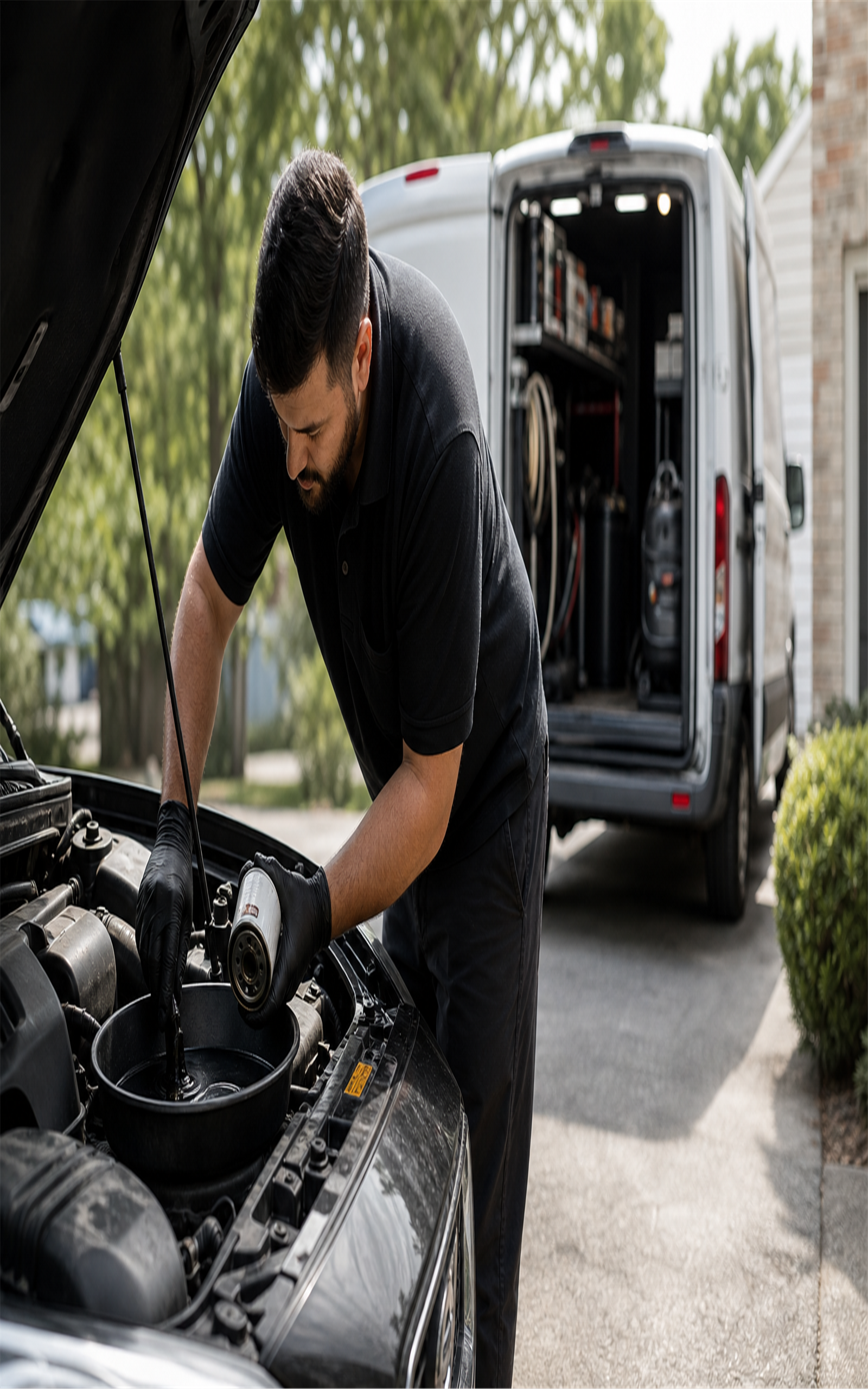
Understand who hires mobile oil change operators and why package clarity wins.
Decide what you offer, what you refer out, and how you document every quote.
Verify fluid specs, prevent spills, and investigate used-oil handling locally.
Plan efficient stops and repeatable on-location production routines.
Quote packages from measured labor, travel, fluid, and disposal costs.
Reach professionals, fleets, and property managers with a controlled launch.
Improve route density and add capacity only when workflows hold.
A mobile oil change business delivers defined fluid maintenance packages at the client's location under written service menus and on-site workflow standards—not informal oil swaps without spec verification or disposal discipline. You assess each inquiry, confirm fluid specifications from documented sources, quote from real costs, carry the tools and fluids your packages require, prevent spills with containment habits, handle used oil per local rules, and finish jobs clients can sign off on. Buyers pay for clarity about which service tier is included, what fluids will be used, when you will arrive, and how you handle waste at their site.
That distinction matters. Knowing how to change oil is not the same as running a mobile oil change business. Many capable operators accept jobs without verifying specifications, underprice travel and setup time, skip spill prevention at sensitive sites, or store used oil without understanding local collection requirements. Busy professionals, fleet managers, and property operators continue to hire mobile oil change services when convenience and dependable maintenance feel trustworthy—but only when they believe the operator will use correct fluids, protect their driveway or lot, and arrive within promised route windows.
This guide walks you through how to start a mobile oil change business with professional habits: finding your opportunity, defining service packages, verifying fluid specifications and preventing spills, investigating used-oil disposal locally, planning routes and on-location workflow, pricing from real job costs, winning first routes, and growing with the operational discipline that defines a credible local service. By the end, you should understand what the business is, what you need to prepare, and what to verify locally before accepting your first booking.
Busy professionals, fleet managers, and property operators hire mobile oil change services when driving to a quick-lube bay is impractical and on-location convenience must still meet manufacturer fluid standards. Your first step is understanding who you serve and what they expect from defined packages—not assuming your mechanical skill alone creates demand.
Mobile oil change businesses succeed when clients understand the job before you arrive: package tier, synthetic or conventional fluid class, filter inclusion, estimated duration, parking or access requirements, and what happens if specifications cannot be verified on site. Buyers are not simply purchasing fresh oil—they are purchasing confidence that the correct maintenance will be performed responsibly at their driveway, office lot, or fleet yard.
Different clients bring different expectations, booking frequency, and route potential. Choose one primary profile for launch:
Often book maintenance packages at home or work while they stay inside. They compare on reliability, clear pricing by vehicle and fluid tier, and respect for the property—not always on the lowest single-service rate alone.
Need recurring oil changes across multiple vehicles at predictable intervals—delivery vans, sales fleets, or contractor trucks. Route density, invoicing clarity, and consistent spec documentation matter more than one-off convenience.
Coordinate on-site maintenance days for tenants or employees in parking structures and office lots. Written site agreements, insurance certificates, and spill-aware setup habits support recurring contracts once trust is established.
Observe your local market: who do existing mobile mechanics and quick-lube shops serve well, and where do clients still express frustration—wrong fluid used, oil stains on pavement, no-shows, or operators who expand jobs into brake or diagnostic work without scope clarity? Your opportunity often sits in operational clarity and spec discipline as much as in mechanical ability.
Related vehicle-service businesses—such as those in the mobile mechanic business guide, mobile car wash business guide, fleet washing business guide, and headlight restoration business guide—show how defined packages and professional intake sustain on-location revenue. Mobile oil change work sits alongside those services; knowing when to handle maintenance yourself versus refer mechanical diagnosis or cosmetic work is part of the business model.
Before investing in equipment and marketing, spend time understanding whether your geography supports a mobile oil change model. Suburban neighborhoods with driveways, office parks with employee parking, apartment complexes with surface lots, and small fleet yards clustered within a twenty-minute drive radius are strong starting territories. Rural areas with long distances between stops can work only when clients accept higher minimum fees or when fleet contracts batch enough vehicles to justify travel.
Scan local search results, franchise quick-lube locations, dealership service lanes, and independent mobile operators. Note what they charge, how they describe packages, whether they document fluid specs on invoices, and what reviews complain about—wrong products installed, oil stains on pavement, missed appointments, or upsell pressure. Gaps in spec documentation and route reliability are openings for a disciplined operator even in competitive markets.
Talk to five to ten people who match your target profile before launching. Ask when they last changed oil, what stopped them from visiting a shop, what would make at-home service trustworthy, and whether fleet or property coordination interests them. Their answers shape your first package menu more accurately than assumptions drawn from national industry averages.
Practical takeaway: Write one paragraph describing your ideal first client and the job type you want most—single driveway changes, office-lot maintenance days, or recurring fleet routes. List three questions they will ask before hiring—and make sure your future intake process answers them.
Before you quote mobile oil change jobs, decide what you offer, what you refer out, and how you document both on every estimate. Clients need packages they can compare—not open-ended "oil change whatever you need" labor that expands into brake jobs or engine diagnostics.
Each tier on your menu should list specific inclusions, fluid class, filter policy, and referral triggers:
Conventional oil up to stated capacity, standard filter, fluid level check, and basic under-hood visual inspection within defined scope—not full diagnostic scanning unless priced separately.
Higher-tier fluids priced separately with manufacturer-spec verification documented on the work order. Best when clients want longer intervals and are willing to pay for correct premium fluids.
Recurring packages for multiple vehicles at one stop—defined fluid tier by vehicle class, batch pricing, and invoicing mapped to fleet asset lists.
Check-engine diagnosis, brake work, transmission service, exotic or classic vehicles requiring specialist fluids, and vehicles with stripped drain plugs or severe leaks. Naming these upfront protects clients and margins.
The mobile mechanic business guide emphasizes scope boundaries for on-location mechanical work—a lesson that applies directly here. Oil change packages should not silently become full inspections unless your menu and price account for that time.
Many oil change packages include a visual inspection—tire tread glance, fluid level check, obvious leak scan. Define exactly what your inspection covers and what triggers a referral conversation rather than implied repair authorization. Clients appreciate transparency; vague "free inspection" language invites scope creep when you discover worn belts, seeping gaskets, or low coolant and feel pressured to quote on the spot without preparation.
Keep your launch menu focused, but plan add-on categories clients will request once they trust you:
Each add-on should appear on your menu with a stated price and time impact on the route. Surprises at the vehicle feel less professional than add-ons clients saw during booking.
Practical takeaway: Draft a one-page package menu with at least three named fluid tiers and five services you refer out. Read it aloud—if a fleet manager would still ask "does that include cabin air filters?", add clearer language or referral notes before publishing prices.
Mobile oil change work touches regulated fluids and waste. Fluid specification errors damage engines; spills damage client relationships and sites; improper used-oil handling creates legal exposure. Your investigation framework matters as much as your wrench set—verify locally before marketing paid jobs.
Never guess oil viscosity, filter part numbers, or capacity. Confirm from at least one authoritative source before draining:
Exotic, diesel, and turbocharged applications often require specific standards—do not assume one synthetic tier covers every vehicle on your route.
Be prepared to explain—not just install—the specifications relevant to your packages:
When a client requests a product you believe is incorrect for their engine, decline politely and explain why in plain language—or offer a written waiver only if local law and your insurance allow non-spec service. Protecting the vehicle protects your reputation more than agreeing to whatever is cheapest on the shelf.
Position drip pan or containment mat; confirm drain plug condition; have absorbent ready; avoid starting on steep slopes when possible.
Control funnel and filter removal to minimize drips; cap used filter promptly; never leave open containers unattended on client property.
Contain immediately with absorbent; clean affected surface per site expectations; document incident if property manager or fleet client requires reporting.
Used motor oil and often oil filters are regulated waste in most jurisdictions. Rules about storage duration, transport, and approved collectors vary by location—they are not uniform nationwide. Build a repeatable research habit:
Mobile operators face a practical challenge fixed shops solve with large collection tanks: you must carry waste from stop to stop until you reach an approved drop point. Design your vehicle setup accordingly:
Build recycler visits into your weekly rhythm the same way you plan supply runs. Running out of storage mid-route forces unsafe shortcuts—leaving oil with clients, overfilling containers, or delaying pickup until waste sits in your vehicle longer than local rules allow.
The fleet washing business guide addresses related on-site environmental themes—site agreements and responsible handling at commercial lots. Mobile oil change operators working fleet yards benefit from building those research habits early alongside fluid and waste rules.
The SBA guide to launching a business helps with general registration and planning steps, but it does not replace local used-oil or mobile-vendor rules. Start your research early—some approvals take weeks, and operating without required coverage can invalidate insurance claims.
Practical takeaway: Complete your used-oil disposal checklist with dated notes from official sources or approved recyclers—not assumptions. Do not publish prices or accept fleet contracts until general liability coverage, spec verification habits, and waste handling plans are in place.
A mobile oil change business runs on routes that cluster profitable stops and a job workflow that turns quotes into finished packages without wasted drive time or missed spec checks. Inefficient routing and improvised on-site routines erode margins faster than any competitor's lower package price.
Track oil, filter, and absorbent replacement cost in your pricing model. Consumables consumed on every stop are production cost, not personal overhead you absorb silently.
Not every parking spot supports safe mobile oil change work. Screen during intake for ground clearance on lowered vehicles, steep driveway slopes that make containment unreliable, hot engine and exhaust proximity, rounded or stripped drain plugs, and filter access that exceeds your launch package time allowance. Document access limitations on the work order when a client insists on a marginal site. Professional operators reschedule rather than proceed when containment or ergonomics are unsafe.
The mobile car wash business guide and headlight restoration business guide share route-density lessons for on-location vehicle services. Batch stops geographically before expanding radius.
Practical takeaway: Map a practice route with three nearby stops and run it on paper first—then in the field. Compare planned drive and service time to actuals, and fix scheduling assumptions before accepting a full day of paid bookings.
Clients buy defined package completion and dependable route scheduling—not vague prices that ignore travel time, fluid tier cost, or disposal handling. Pricing should reflect the full cost of the documented package and the route that delivers it.
Mobile packages carry disproportionate travel and setup cost. Build minimum job fees, fluid tier pricing, and fleet route assumptions that cover mobilization honestly.
Fixed tiers work for residential stops. Per-vehicle fleet pricing or monthly route contracts suit managers who need predictable billing. Include policies for excessive capacity vehicles, specialty filters, and second trips caused by client misinformation about vehicle type.
Track actual hours, fluid cost, and drive time on every early job against your estimate. Adjust templates based on real results. The mobile mechanic business guide emphasizes the same estimate-to-actual discipline for on-location mechanical revenue.
Use a worksheet—not competitor signs—to build your first tiers. A simplified illustration for planning purposes:
Run the same calculation for a synthetic tier with higher material cost and for a fleet block where travel is divided across six vehicles on one lot. If fleet block pricing does not beat six individual drive-time quotes, your route model needs adjustment—not your marketing spend.
Practical takeaway: Build a pricing spreadsheet with labor rates, fluid cost per tier, drive-time allocation, and disposal fees. Complete it for your next three quotes, then compare projected costs to actuals after each job closes. Refine before scaling marketing.
Trust drives hiring decisions in mobile maintenance work. Fleet managers and busy professionals choose operators who communicate clearly, verify specs correctly, and handle fluids responsibly—not whoever sends the vaguest low estimate.
Vehicle-service businesses with similar trust dynamics—such as those in the mobile car wash business guide, fleet washing business guide, and headlight restoration business guide—show how documented packages and repeat referral systems sustain on-location revenue.
Your earliest routes should prioritize geographic clustering over maximum revenue per stop:
Direct outreach beats passive waiting when you need first routes. Keep messages short and specific: introduce your defined maintenance-day offer to property managers, ask small fleet operators how they handle oil changes today, and offer reciprocal referrals to mobile car wash partners when clients need complementary services.
Practical takeaway: Land your first three stops through direct outreach to fleet operators or property managers who match your target profile—before spending on ads. Document every vehicle and site question they raise and refine your templates after each conversation.
Growth means adding stops and capacity only when spec accuracy, spill prevention, and route density stay consistent—not accepting every request because your calendar has room.
Track metrics that matter: revenue per mile, jobs per route block, spec verification failures, spill incidents, callback rate, and repeat fleet bookings. Fix routing and compliance gaps before marketing harder.
Adding helpers or second units introduces quality control. Document package standards with checklists and photo examples, ride along on early routes together, and review estimate-to-actual time variance monthly. One wrong fluid spec, missed spill cleanup, or inconsistent service record on a fleet lot can damage the reputation that took seasons to build.
Once core oil change operations are stable, adjacent services often follow the same route and client relationships: cabin and engine air filter replacement as defined add-on packages; coordinated service days with mobile car wash or fleet washing partners for property events; referral revenue from mobile mechanic work you choose not to perform in-house; and cosmetic upsell referrals to headlight restoration specialists when clients ask about visibility or appearance. Expand into adjacent work only when your core package delivery stays consistent.
Practical takeaway: After your first ten completed stops, identify your most common spec surprise and your strongest referral source. Fix the intake or inventory issue before adding a second technician or expanding your service area.
Use this four-week outline to move from interest to a controlled first route. Each week builds on the last for a mobile oil change business launch.
Confirm these essentials before you accept a booking or load equipment for your first paid mobile oil change stop.
A mobile oil change business delivers defined fluid maintenance packages at the client's location under written service menus and on-site workflow standards. Success depends on verifying correct fluid specifications, preventing spills, handling used oil responsibly per local rules, and communicating arrival windows clients can trust.
Fixed shops rely on bay infrastructure and centralized waste collection you control. Mobile operators travel to each vehicle, carry their own equipment and fluids, and adapt workflow to each site's access and local restrictions.
Using incorrect oil viscosity, filter type, or capacity can damage engines and create liability. Verify specifications from documented sources—not guesses—and decline work when specifications cannot be confirmed.
Build a local investigation framework with your environmental authority and approved recyclers. Store used oil in sealed containers, schedule regular drop-off or pickup, and never dump oil on the ground or into storm drains.
List specific packages with stated fluid tiers, filter inclusion, and vehicle categories. Document exclusions on every quote. Written packages prevent jobs from expanding into undefined mechanical work.
Cluster appointments by geography and time block, account for setup and drive time, and start with a tight service radius. Track actual route performance against estimates before expanding zones.
Build pricing from labor hours, travel time, fluid and filter cost by tier, disposal handling, equipment wear, insurance, overhead, and margin. Use minimum job fees tested in a spreadsheet with your production rates.
Start with a defined client profile and controlled launch packages. Reach busy professionals, fleet managers, and property managers through local search, direct outreach, and referral partnerships.
This mobile oil change business example was developed using eBook Business Builder—the workflow used to structure the guide, free lead magnet, offer assets, email series, and marketing content you see in the EBB Showroom below.
If you want to create your own eBook business around a topic you know, EBB walks you through research, writing, assets, and launch in a repeatable system. See how business assets fit together and launch marketing for your eBook business to understand the full EBB build model.
Start Building with eBook Business Builder →The flagship guide explains how to start a mobile oil change service—service packages, fluid spec verification, spill prevention, used-oil disposal research, route planning, and client communication—in a structured eBook format.
Chapters walk readers through evaluating the opportunity, defining what you offer and refer out, investigating fluid and waste handling locally, planning routes and on-site workflow, pricing from real job costs, winning first routes, and growing operations without sacrificing package clarity.
First Routes & Package Setup — a lead magnet that helps readers evaluate whether mobile oil change work fits their goals and identify sensible first steps before accepting bookings.
Many operators accept mobile oil change jobs without service packages, spec verification, or disposal research habits that protect margins and local compliance expectations.
Foundational first steps, common early mistakes to avoid, and a simple action plan readers can use before committing to client routes or service launches.
Good at oil changes but unsure how to define packages and run a mobile route business professionally.
Prepared with the fundamentals needed to verify specs, prevent spills, plan routes, and deliver scoped packages on schedule.
Mobile Oil Change Startup Program
A practical flagship guide for readers ready to move from interest to action—with clear first steps and professional service habits for dependable on-location oil change work.
Tools & References