Find the Opportunity
Understand who hires headlight restoration specialists and why process clarity wins jobs.
A practical starting point for operators who want to launch a headlight restoration service with clearer lens assessment, service tiers, UV sealant standards, and client durability communication.
This page walks you through how to start a headlight restoration business as a professional automotive appearance service—not just buffing cloudy lenses for friends without process clarity. You will learn who hires restoration specialists, how to assess lens condition and design service tiers, how to build a repeatable restoration process with UV sealant standards, how to choose mobile versus shop setup, how to set realistic durability expectations, how to price from real job costs, how clients find you, and how to grow with the operational discipline that defines a credible automotive service.
Understand who hires headlight restoration specialists and why process clarity wins jobs.
Grade oxidation and damage levels before designing service tiers.
Build repeatable sanding, polishing, and sealant application standards.
Choose field workflow or fixed bay capacity for your market.
Communicate realistic clarity timelines and maintenance limits.
Quote restoration jobs from measured labor, consumables, and sealant.
Reach drivers, dealers, and fleet accounts with a controlled launch.
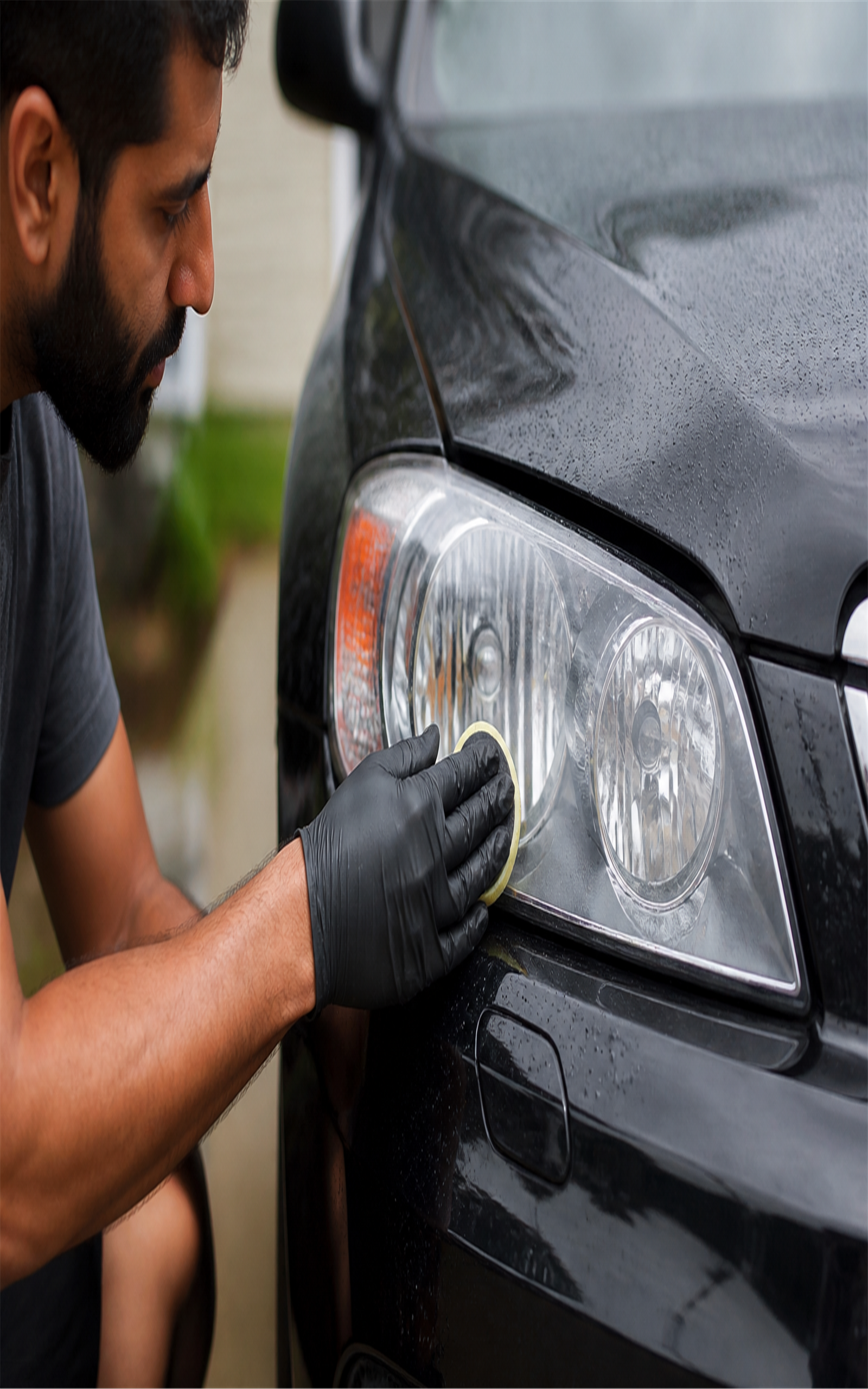
A headlight restoration business sells professional lens condition assessment, multi-stage correction, UV-protective sealant application, and honest durability communication—not just running a buffer over yellowed plastic until it looks acceptable in the driveway shade. You inspect lenses before quoting, define service tiers by oxidation grade, follow documented sanding and polishing sequences, apply sealant that matches your warranty language, and explain how long clarity should last under real sun exposure. Clients pay for confidence that headlights will pass inspection, improve night visibility, and hold up for a defined period—not for a temporary shine that fades before the next season.
That distinction matters. Restoring headlights well is not the same as running a headlight restoration business. Many capable technicians quote jobs without condition grades, skip proper sealant cure time, or promise permanent results on lenses with deep pitting or internal moisture. Vehicle owners continue to hire restoration specialists when state inspections fail, used-car listings need cosmetic improvement, or fleet managers standardize front-end appearance—but only when they can see how assessment, process tiers, and durability language fit together before work starts.
This guide walks you through how to start a headlight restoration business with professional habits: finding your opportunity, assessing lens condition and service tiers, building restoration process and UV sealant standards, choosing mobile versus shop setup, setting client expectations on durability, pricing from real job costs, winning first clients, and growing with the operational discipline that defines a credible automotive appearance service. By the end, you should understand what the business is, what you need to prepare, and what to verify locally before accepting your first booking.
Drivers, dealers, and fleet managers hire headlight restoration when cloudy lenses affect safety, inspections, or resale presentation. Your first step is understanding who you serve and what they expect from a professional package—not assuming your buffing skill alone creates demand.
Headlight restoration businesses succeed when clients understand the job before work starts: condition grade, tier selected, sealant type, realistic durability timeline, warranty scope, and whether replacement is the better recommendation. Buyers are not simply purchasing clearer plastic—they are purchasing confidence that night visibility improves, inspection issues resolve, and results will last long enough to justify the spend.
Different clients bring different expectations, price sensitivity, and repeat potential. Choose one primary profile for launch:
Often hire when yellowed or hazy lenses trigger state safety inspections or reduce confidence driving at night. They compare on price clarity, same-day turnaround, and whether you explain durability honestly—not always on the lowest bid alone.
Need fast cosmetic improvement before photos and test drives. Consistent tier pricing, batch scheduling, and predictable finish quality matter more than custom artistry on exotic vehicles.
Prioritize standardized appearance across many units, volume pricing, and documented process so results look uniform on every truck or van in the yard. Repeat contracts reward reliability over one-off perfection.
Observe your local market: who do existing detailers and mobile appearance operators serve well, and where do vehicle owners still express frustration—restorations that re-yellow in weeks, lenses that look clear until direct sun hits them, or operators who buff through thin plastic? Your opportunity often sits in process discipline and honest condition grading as much as in sanding technique.
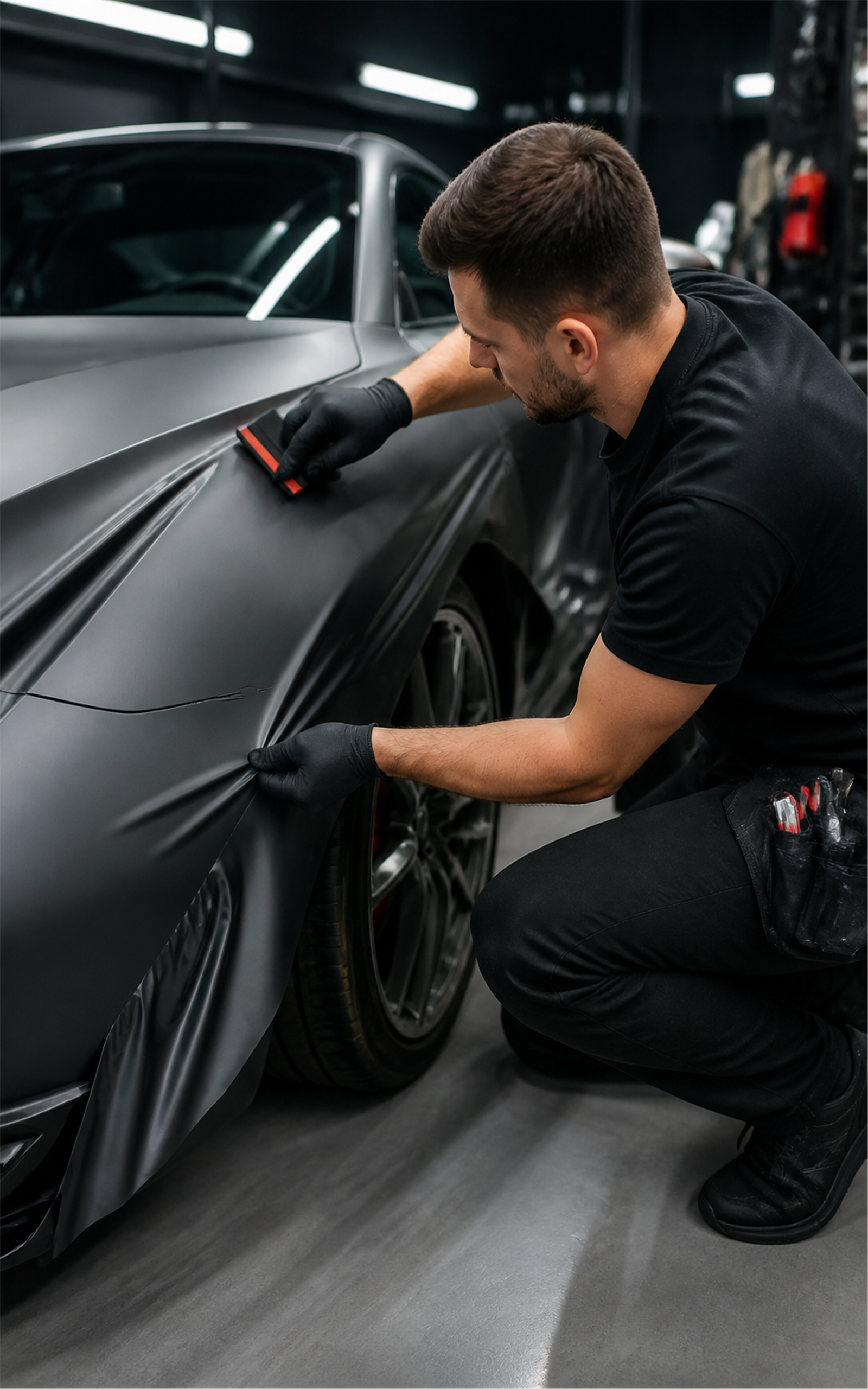
Automotive appearance businesses with defined service packages—such as those in the car wrapping business guide—show how scope clarity and professional intake sustain vehicle-service revenue. Headlight restoration adds lens assessment and UV sealant standards on top of those patterns.
Practical takeaway: Write one paragraph describing your ideal first client and the job type you want most—single-pair consumer restoration, dealer lot batches, or fleet yard volume. List three questions they will ask before hiring—and make sure your future intake process answers them.
Before you quote any restoration, grade each lens for oxidation depth, surface damage, and structural limits. Clients need tiers they can compare—not open-ended buffing labor with unpredictable outcomes.
Every job should be assessed in person or through detailed photos under consistent lighting. Document:
Skipping assessment is how operators underbid heavily oxidized pairs that need full wet-sand stages—or over-promise on lenses that should be replaced. A condition grade document protects both you and the client.
Each tier should list specific process stages, sealant type, and exclusions:
Light compound polish for early-stage haze with minimal sanding. Includes clean, mask, polish, and standard UV sealant. Best when oxidation is surface-level and plastic thickness is intact.
Progressive wet sand through defined grits, compound polish, and UV clear coat application. For moderate to heavy yellowing where deeper correction is required.
Full correction plus premium ceramic or extended-warranty UV sealant. Positions higher durability expectations with documented aftercare and maintenance visit options.
When pitting, moisture, or thin plastic makes restoration unsafe or short-lived. Honest upsell to units or referral partnership protects your reputation over forcing a buff job.
Each model changes your overhead, scheduling, and growth path:
Business registration, mobile service rules, and environmental disposal for compounds vary significantly by jurisdiction. Insurance requirements for automotive work on client property also differ by state and province.
Create an investigation checklist and confirm each item with your local business licensing office:
The SBA guide to launching a business helps with general registration and planning steps, but it does not replace local automotive-service and environmental rules. Start your research early—some approvals take weeks.
Practical takeaway: Draft three service tiers on one page with condition grades, process stages, sealant type, and exclusions for each. Read them aloud—if a vehicle owner would still ask "will this pass inspection?", tighten the language before publishing prices.
A headlight restoration business lives or dies on repeatable process quality. Documented sanding sequences, polish steps, and UV sealant application determine whether clarity lasts months or fails before your client finishes thanking you.
Professional restoration follows a repeatable workflow—not improvising grits on each job:
Skipping grit progression or rushing sealant cure creates swirl marks, uneven haze, or premature re-yellowing. Write the sequence for each tier and train every helper to the same standard.
Polished polycarbonate without UV protection begins oxidizing again almost immediately in sun-exposed markets. Your sealant choice and application method are part of the product—not an optional upsell:
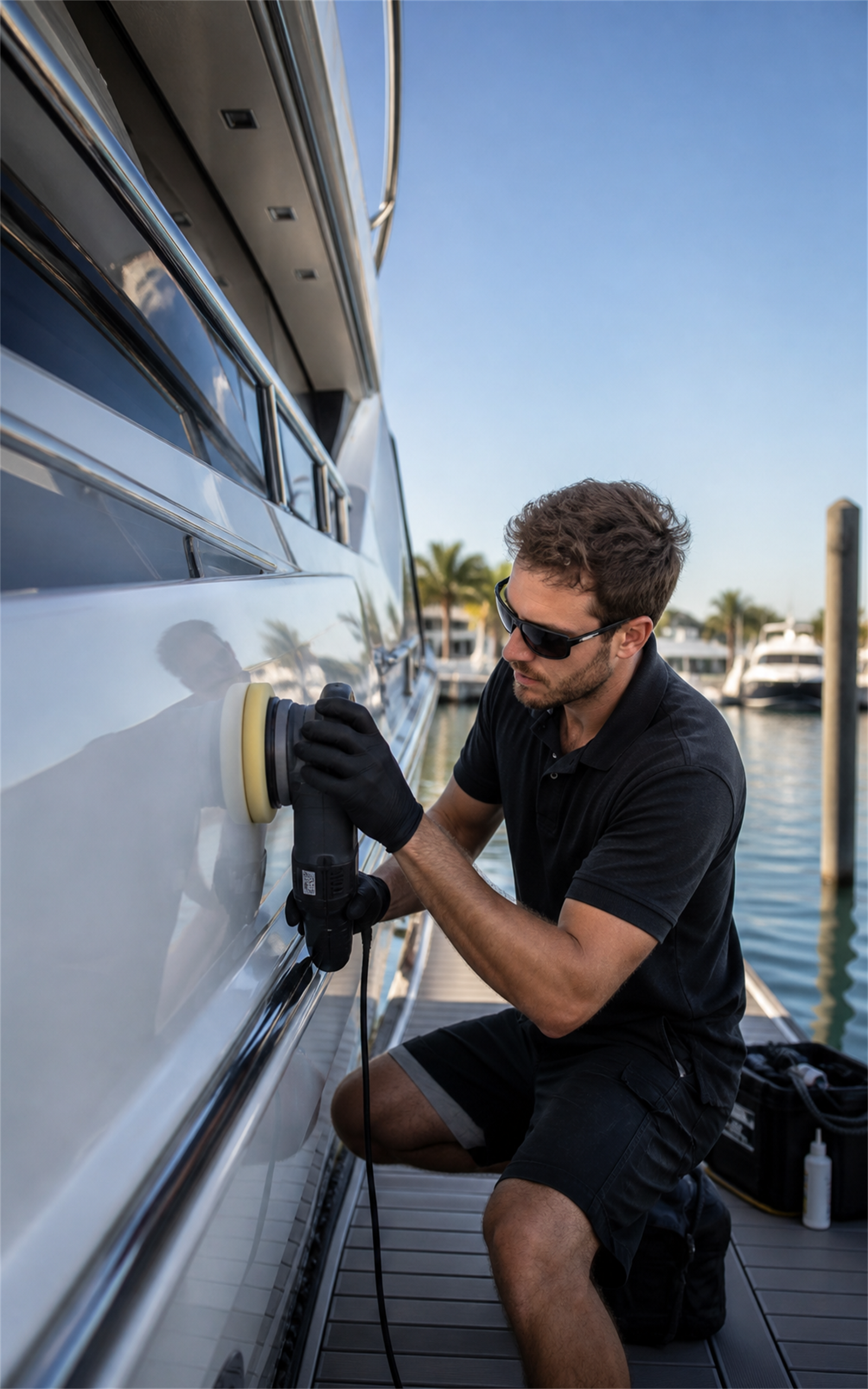
Vehicle appearance services with rigorous on-site standards—such as those in the boat detailing business guide—demonstrate how documented production sequences and quality checkpoints sustain trust. Headlight restoration applies the same discipline to a smaller surface with higher optical stakes.
Stock grit assortments matched to your tier definitions, dual-action and rotary tools with foam and wool pads, masking tape rated for automotive paint, lens prep solutions, approved UV sealants, microfiber, and portable lighting that reveals haze angles a garage bulb hides. Label consumable kits per tier so restocking and cost tracking stay accurate.
Establish job-site habits: photo documentation at intake and completion, both lenses corrected to the same standard, and no handoff until sealant cure minimums pass. Vehicle owners notice operators who protect paint, explain the process briefly, and return keys only when results hold up under sunlight—not just shade.
Practical takeaway: Write a one-page process card for your core restoration tier—every grit, polish, prep step, and sealant cure window. Run one paid job following it exactly and note where time or consumables differed from estimate before adjusting pricing.
Where you work shapes your equipment list, scheduling, and the clients you can serve efficiently. Mobile and shop models both succeed when workflow matches the environment—not when you copy another operator's setup without adapting it.
Mobile headlight restoration meets clients at driveways, dealership rows, fleet yards, and detail partner locations. Advantages include low fixed overhead, convenience for busy owners, and access to fleet volume. Challenges include power access, weather interruptions, dust control during sealant application, and travel time between stops.
Design a mobile kit around repeatable tier delivery:
A fixed bay offers controlled lighting, ventilation, consistent temperature for sealant cure, and the credibility some dealer accounts prefer. Overhead includes rent, utilities, and idle time when walk-in volume is slow. Shop setup suits batch work—multiple pairs per day with staging space between sand, polish, and coat steps.
Shop advantages multiply when you add complementary services or partner slots for detailers who lack correction equipment. Keep bay layout logical: intake photo station, wash and mask zone, correction area, sealant cure space with dust control.
Many operators launch mobile, then rent bay time for heavy oxidation jobs or rainy-season backlog. Others stay mobile but subcontract shop days to a detail studio in exchange for referral flow. Fleet-focused operators often standardize on-site yard days weekly rather than chasing individual driveways.
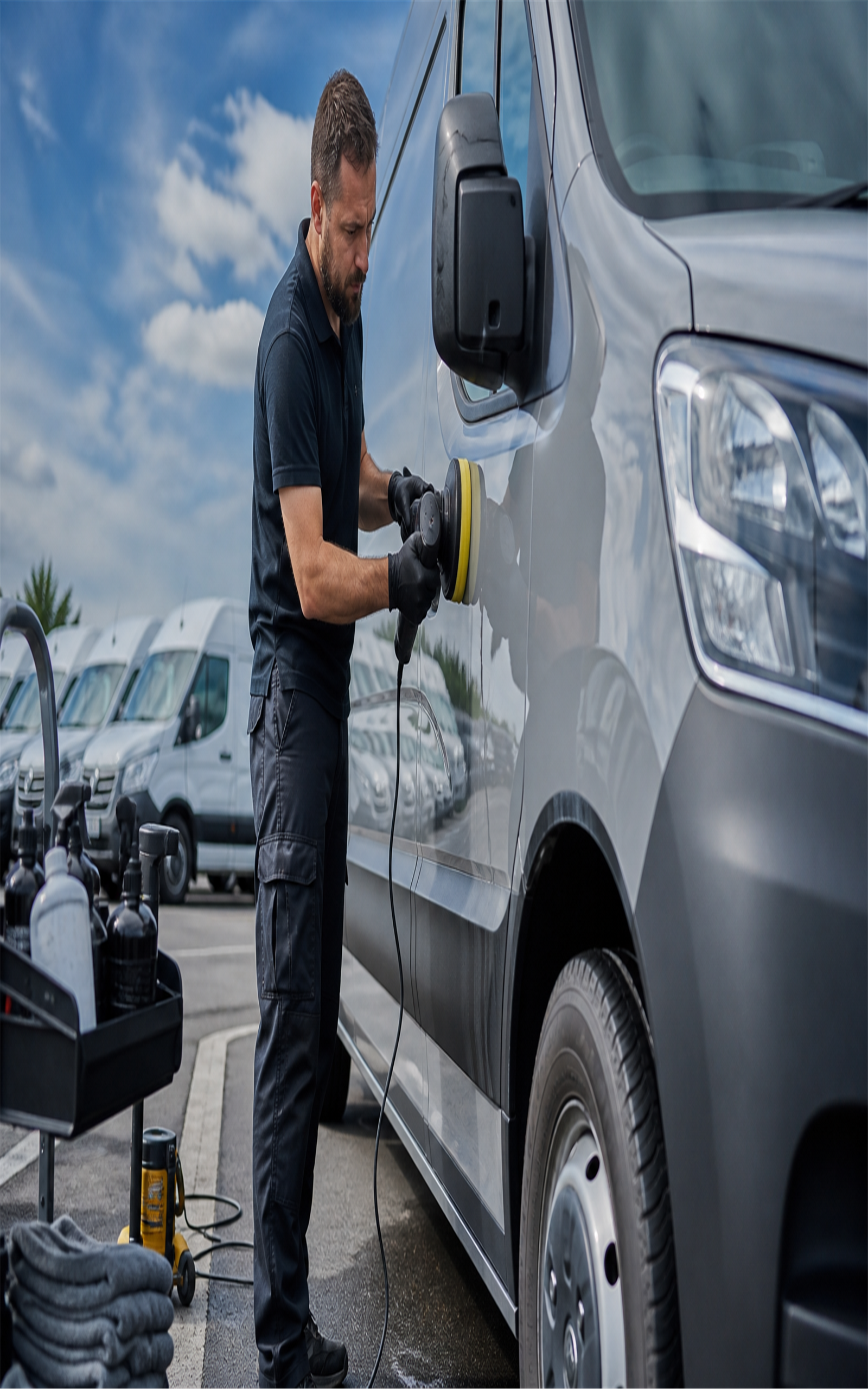
Commercial vehicle programs with recurring on-site demands—such as those described in the fleet detailing business guide—show how route-based scheduling and uniform process checklists scale appearance work across many units. Headlight restoration fits naturally as a fleet add-on when tiers and durability language are pre-approved by account managers.
Mobile intake should confirm power, water, shade availability, and vehicle access before dispatch. Shop intake should confirm appointment length, drop-off rules, and cure-time pickup windows. Both models need contact details, lens photos, condition grade, tier selected, durability disclosure signed, and payment terms documented before production starts.
Practical takeaway: List every step in your restoration process and mark whether each requires controlled environment, power, or water. If more than two critical steps fail in typical driveway conditions, plan shelter solutions or shop backup before marketing mobile same-day service.
Restoration improves clarity—it does not manufacture new lenses. How you explain durability timelines, maintenance needs, and physical limits determines callback rates and review quality more than any compound brand alone.
Clients often expect permanent results because marketing photos show dramatic before-and-after contrast. Your job is to translate process reality into plain language before payment:
Discuss these limits during intake, not at pickup when the client compares results to a brand-new lens on a showroom floor.
Written expectations prevent disputes months later. Include:
Align sales language with production reality. If you sell a premium sealant tier, your process card must show the matching product and cure steps—otherwise durability claims become liability instead of marketing.
Many consumer clients hire you because of failed safety inspections. Be precise: restoration improves lens clarity for visibility and cosmetic standards, but inspectors evaluate beam aim, housing integrity, and bulb function too. Document that passing inspection depends on factors outside lens haze alone when those apply.
When lenses are borderline, photograph condition grade and have the client acknowledge physical limits before work begins. Operators who refuse impossible jobs earn more long-term trust than those who buff through thin plastic and absorb callbacks.
Practical takeaway: Draft a half-page durability disclosure with expected timeframe range, aftercare rules, and warranty boundaries. Use it on your next five estimates—even informal ones—and refine wording based on client questions before scaling advertising.
Clients buy condition clarity and dependable finish—not vague per-lens guesses. Pricing should reflect the tier, oxidation grade, and sealant standard you documented, not a rate copied from a forum post in another climate.
Consider every cost category that applies to your model:
Measure condition grade carefully. Heavy oxidation pairs require more grit stages, more compound, and longer sealant work than light haze jobs that look similar in a thumbnail photo. Count both-lens symmetry time—even when only one lens seems bad, mismatched clarity creates complaints. Build a spreadsheet that converts your measured inputs into labor minutes and consumable quantities using your own production rates.
Consumer quotes usually price per pair with tier upgrades spelled out. Dealer and fleet pricing benefits from volume tiers: per-vehicle rate at defined lot minimums, scheduled yard days, and pre-approved condition grades that exclude replacement cases automatically.
Separate line items for standard restoration, premium sealant upgrade, and maintenance refresh help buyers choose exactly what they need. Avoid hiding sealant quality inside a single price when durability expectations differ by tier.
Include payment terms, deposit requirements for mobile dispatch, change-order triggers when condition grade exceeds intake photos, and fees for no-show power or water access on site. Field labor is schedule-locked—travel to a driveway where the client forgot to leave an outlet open is cost you cannot recover on another job.
Track actual minutes and consumable cost on every early job against your estimate. Adjust production assumptions and pricing templates based on real results rather than initial guesses. Accurate quotes come from documented job costs and professional intake, not competitor guessing.
Practical takeaway: Build a pricing spreadsheet with labor rates, consumable factors per condition grade, sealant cost, travel allowance, and overhead allocation. Complete it for your next three estimates, then compare projected costs to actuals after each job closes. Refine before scaling marketing.
Trust drives hiring decisions in automotive appearance work. Vehicle owners choose operators who assess honestly, explain durability clearly, and deliver consistent finish quality—not whoever posts the lowest price without process proof.
Avoid advertising without condition grading discipline behind it. Photos of corrected lenses, clear tier descriptions, and durability disclosure samples demonstrate professionalism better than discount messaging alone.
A sensible progression:
Adding helpers introduces quality control. Document process cards with photo examples, conduct joint handoffs on early jobs together, and review estimate-to-actual minute variance monthly. One inconsistent sealant application can damage the reputation that took seasons to build.
Track metrics that matter: estimate-to-actual minute variance, callback rate, repeat dealer bookings, fleet day utilization, and jobs completed at your agreed finish standard—not vanity metrics like total social followers. Fix assessment and sealant bottlenecks before marketing harder.
Practical takeaway: Land your first three jobs through direct outreach to detail partners, a small dealer, or fleet contacts who match your target profile—before spending on ads. Document every condition question they raise and refine your intake templates after each conversation.
Use this four-week outline to move from interest to a controlled first booking. Each week builds on the last for a headlight restoration business launch.
Confirm these essentials before you accept a booking or apply sealant on a paying client's vehicle.
A headlight restoration business is a professional automotive appearance service that assesses polycarbonate lens condition, removes oxidation and surface damage through defined process tiers, applies UV-protective sealant, and sets realistic durability expectations—not simply buffing headlights for neighbors without documented standards. Success depends on condition assessment before quoting, tier clarity, sealant quality, and communication about how long results last under sun exposure.
Inspect each lens under good light before you quote. Document oxidation level, yellowing, surface pitting, sanding scratches, moisture intrusion, cracked housings, and prior failed restorations. Take photos from multiple angles and note whether the lens needs a light polish, multi-stage wet sand, or replacement recommendation. A written condition grade prevents underbidding heavily degraded lenses and protects you when results have physical limits.
Start with distinct tiers—such as clarity refresh, full multi-stage restoration, and restoration with ceramic or UV sealant upgrade—that list specific sanding stages, compound steps, sealant type, and warranty language. Each tier should define what you correct, what you exclude, and when you recommend replacement instead. Clear tiers help buyers compare options and give your crew repeatable process checklists instead of open-ended buffing.
Polycarbonate lenses oxidize primarily from UV exposure. Sanding and polishing remove the damaged layer but leave fresh plastic unprotected until sealant is applied. A quality UV-blocking clear coat or ceramic sealant slows re-yellowing and extends the visible clarity your client paid for. Skipping sealant or using inferior products leads to callbacks and reputation damage when lenses fog again within months.
Mobile setup reduces overhead and meets clients at driveways, dealership lots, or fleet yards—but requires compact equipment, power access, weather planning, and controlled dust management. Shop setup offers consistent lighting, ventilation, and process control but adds rent and limits convenience upsells. Many operators launch mobile with a documented field workflow, then add shop capacity when repeat fleet or dealer volume justifies fixed overhead.
Explain that restoration improves clarity by removing surface oxidation—it does not make old plastic new forever. Share realistic timeframes based on your sealant product, local sun intensity, and garage parking habits. Document exclusions for lenses with deep pitting, internal moisture, or housing cracks. Written durability language and aftercare instructions prevent disputes when natural UV exposure eventually requires maintenance or replacement.
Build pricing from labor minutes per lens grade, consumables for sandpaper and compound, sealant cost per pair, travel for mobile work, overhead, callback reserve, and desired margin. Measure condition grade carefully, account for two-lens symmetry time and masking, and test prices in a spreadsheet using your production rates—not unverified competitor numbers. Adjust after comparing estimates to actual job costs.
Start with a defined client profile and controlled launch. Reach local buyers through search listings, dealer relationships, detail partner referrals, fleet yard outreach, and neighborhood word-of-mouth where appropriate. Professional condition grades, sunlight before-and-after photos, and clear durability language convert interest faster than vague low bids.
This headlight restoration business example was developed using eBook Business Builder—the workflow used to structure the guide, free lead magnet, offer assets, email series, and marketing content you see in the EBB Showroom below.
If you want to create your own eBook business around a topic you know, EBB walks you through research, writing, assets, and launch in a repeatable system. See how business assets fit together and launch marketing for your eBook business to understand the full EBB build model.
Start Building with eBook Business Builder →The flagship guide explains how to start a headlight restoration service—lens condition assessment, service tiers, UV sealant standards, mobile versus shop workflow, durability expectations, pricing, and client communication—in a structured eBook format.
Chapters walk readers through evaluating the opportunity, assessing lens condition and designing service tiers, building restoration process and UV sealant standards, choosing mobile versus shop setup, setting client expectations on durability, pricing from real job costs, winning first clients, and growing operations without sacrificing process quality.
First Jobs & Process Setup — a lead magnet that helps readers evaluate whether headlight restoration work fits their skills and identify sensible first steps before accepting bookings.
Many operators quote lens jobs without condition grades, sealant standards, or durability language that protects margins and client trust.
Foundational first steps, common early mistakes to avoid, and a simple action plan readers can use before committing to client bookings or service launches.
Buffs headlights informally but unsure how to grade lens condition and run a restoration business professionally.
Prepared with the fundamentals needed to assess lenses, design tiers, apply UV sealant consistently, and deliver restoration work with honest durability expectations.
Headlight Restoration Startup Program
A practical flagship guide for readers ready to move from interest to action—with clear first steps and professional process habits for dependable headlight restoration work.
Tools & References