
Find the Opportunity
Understand why marine detailing differs from auto work and where you fit in the market.
A practical starting point for detailers who want to launch a boat detailing service with clearer service packages, client intake, and marina workflow basics.
This page walks you through how to start a boat detailing business as a real marine service—not just applying car wash habits at the dock. You will learn why marine surfaces behave differently, how to build service packages, run structured client intake, choose marine-safe products, navigate marina workflows, market your service, manage finances, and prepare for growth.
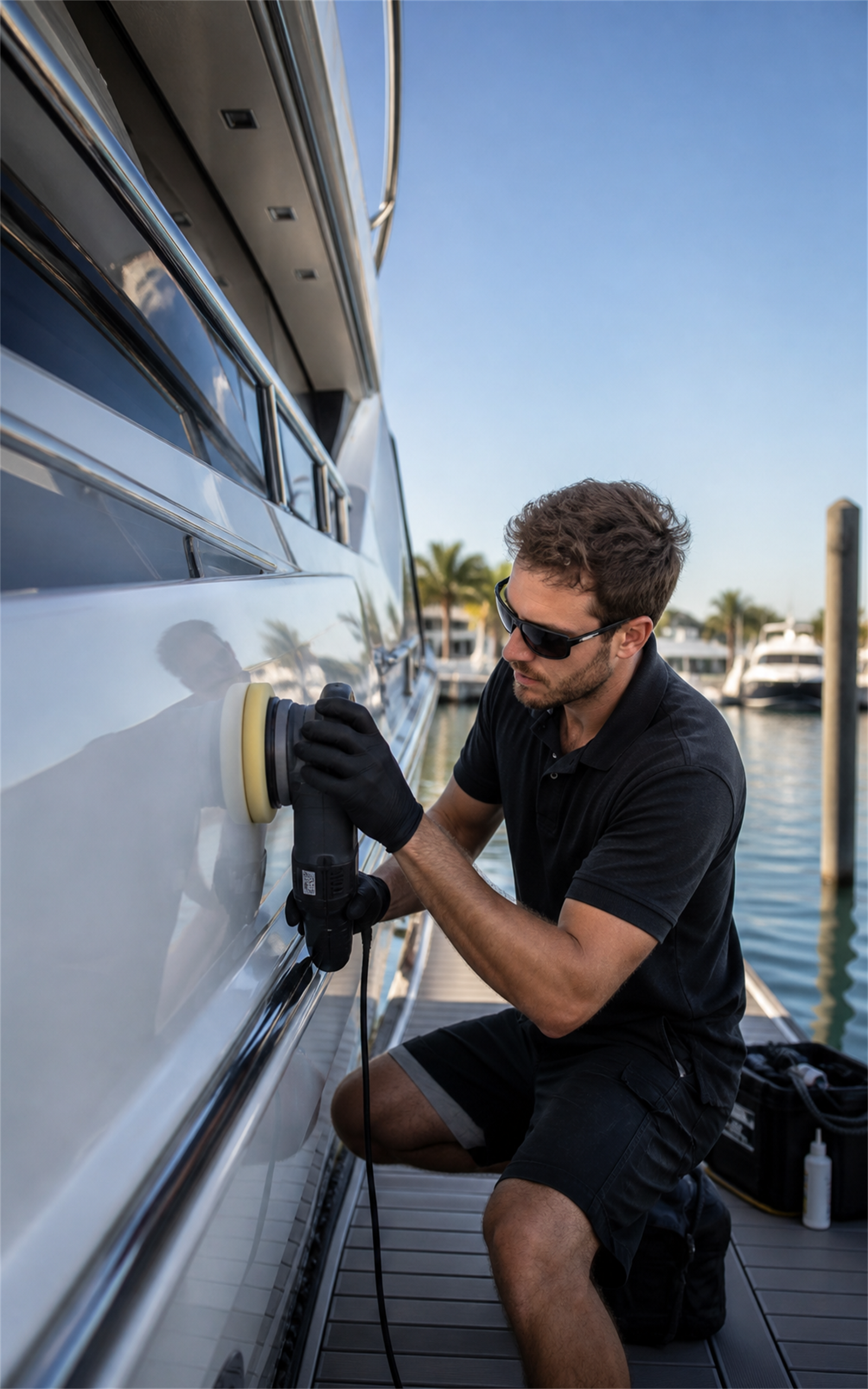
Understand why marine detailing differs from auto work and where you fit in the market.
Research local regulations and insurance, and build simple financial tracking habits.
Stock marine cleaners, protectants, tools, and specialty items for quality results.
Design service packages and a client intake process that captures boat owner needs.
Build a digital presence, engage locally, and partner with marinas and clubs.
Run marina workflows and client communication that protect quality and relationships.
Add seasonal services, explore new markets, and scale without losing finish quality.
[object Object]
[object Object]
[object Object]
Boat detailing is not a continuation of car detailing. Owners continue to hire when marine-safe products, surface assessment, and finish quality feel professional. Your first step is understanding why marine work demands its own approach.
Imagine standing at the edge of a marina, ready to detail a boat for the first time. You bring familiar car tools and techniques—and the wax clumps, streaks, and the surface does not shine the way you expected. That moment reveals a common misconception: the belief that car products and methods translate seamlessly to boats.
At the heart of marine detailing are materials that behave differently from automotive surfaces. Gel coat—a fiberglass resin forming the outer layer of many boats—is porous and more susceptible to damage from UV rays and saltwater exposure. Traditional car waxes can degrade quickly on gel coat or create a barrier that traps moisture and dirt underneath, leading to oxidation and dullness. Marine-specific products include UV inhibitors and are formulated for longer-lasting protection against the elements.
Boats operate in saltwater, which is corrosive. Salt settles into crevices and can degrade metal components if not handled properly. The marine environment also encourages algae and barnacles—both require different cleaning methods than you would use on a car. Recognizing this unique wear and tear lets you tailor cleaning and maintenance rather than defaulting to land-based habits.
[object Object]
[object Object]
Shift your perspective: instead of viewing boat detailing as an extension of car detailing, embrace it as a unique discipline with its own skills and products. Every boat you detail will present situations that demand marine-specific understanding.
Practical takeaway: List three key differences in products needed for marine versus car detailing—intended application, environmental conditions, and materials involved. Use that list to shape every service conversation and supply decision next.
Enthusiasm for detailing boats is a strong start, but local regulations, insurance, and financial tracking protect your business as bookings grow. Research requirements in your area rather than assuming small marine services are exempt.
Many aspiring boat detailers leap into the business without fully considering the legal landscape. It is a common misconception that one-person marine services are exempt from regulations. Local laws apply regardless of business size—ignoring them can lead to unnecessary headaches that jeopardize both your operation and peace of mind.
Familiarize yourself with the specific regulations that govern marine services in your area. This can include environmental protections, waste disposal requirements, and safety standards. If your detailing process involves chemicals, understand how to handle and dispose of them responsibly. Many regions have strict guidelines to protect local waterways from contamination, and failing to comply can lead to fines.
Consider the potential risks involved in detailing boats—accidental damage to a client's vessel, injuries sustained while working, or fallout from a chemical spill. Without the right insurance, these incidents could drain your finances and damage your reputation.
Consult with an insurance agent who specializes in small businesses or marine services. Discuss your specific needs and get quotes for the coverage types relevant to your operation.
Understanding profit margins is a critical first step. When you calculate how much you earn from each detailing job versus what you spend to complete it, you gain invaluable insight. As an illustration from the manuscript: if you charge $200 for a complete detailing job but spend $80 on supplies, your profit margin is $120. That math is simple—but many detailers neglect to track these numbers or underestimate expenses like travel to the marina and your time.
Create a straightforward income and expense tracking sheet. List each job and amount received on one side; document all costs associated with that job on the other. Total everything monthly. This practice shows where your money goes and prepares you for forecasting—identifying trends such as busier summer months so you can ramp up marketing in the spring.
Practical takeaway: Before your next booking, confirm you have started local regulation research, spoken with an insurance agent about marine service coverage, and set up a simple income-and-expense sheet for every job.
The right marine products transform a dull, weathered surface into a protected finish. Not all detailing products are interchangeable between cars and boats—and using the wrong wax or cleaner can lead to costly mistakes.
Marine wax is specifically formulated to withstand sun, salt, and water that boats face. Traditional car wax might not offer the same level of protection, leading to quicker degradation and a lackluster finish. Marine-specific products are designed with longevity in mind—they account for UV exposure, moisture, and algae growth.
[object Object]
[object Object]
[object Object]
[object Object]
Avoid being swayed by marketing hype. Not every product on the shelf needs to be in your kit. A high-quality marine wax may serve your needs just as well as multiple specialty waxes claiming to be the best. Focus on building a kit that is effective and cost-efficient.
Compile a shopping list of essential products: marine-specific cleaners and protectants, the tools you need for a flawless finish, and any specialty items aligned with the packages you plan to offer. Reflect on past experiences where a product was not suited for the job—those moments reinforce why marine-specific choices matter.
Practical takeaway: Build a master supply list for your most common package. Test it on a practice detail so you know exactly what to bring before your first marina client.
From sleek yachts to sturdy fishing vessels, each boat requires a different detailing approach. Clear service packages and structured client intake eliminate vague quotes and set expectations before you step on the dock.
Many aspiring boat detailers fall into the trap of offering a generic package for all clients. A family fishing boat may prioritize interior cleaning and fishing gear maintenance, while a yacht owner may focus on polish and shine for guests. Recognizing these distinctions lets you create packages that appeal to each demographic.
Start by asking questions that reveal what the boat owner values most:
[object Object]
[object Object]
[object Object]
Bundling services creates perceived value. A client who opts for both interior and exterior detailing may feel they are getting a better deal than purchasing each service separately. Consider seasonal packages such as a Spring Refresh or Winter Protection to encourage repeat business when seasons change.
A casual chat over coffee or a quick phone call is not enough to capture client needs. A well-crafted intake form captures essential information and manages expectations. Include contact information, boat type, and a checklist of services—but go deeper with open-ended questions.
Documentation builds trust. When a client returns and you can reference their previous services and preferences, a simple job becomes a lasting relationship. Solicit feedback after each service to improve your offerings and show clients you care about their satisfaction.
Practical takeaway: Publish at least three named packages with written inclusions and draft an intake form with open-ended priority questions before you quote your next marina client.
A beautifully detailed boat can be lost among competing choices without a solid marketing strategy. Today's boat owners search online, read reviews, and check social media—establishing a digital presence is essential.
Consider two boat detailing businesses in your area. One relies solely on flyers, word of mouth, and local ads. The other embraces social media, builds an engaging website, and interacts with potential customers online. In an age where information is a click away, the second approach is far more likely to capture attention.
Social media is a powerful tool for showcasing your work. Instagram and Facebook are visual platforms—perfect for before-and-after shots of detailing projects. Each post can tell a story, transforming a service into an engaging narrative. Respond to comments, answer questions, and create content that invites conversation.
Leverage testimonials from satisfied clients. Encourage them to share experiences on social media and tag your business. Their positive feedback serves as social proof that reassures potential clients about quality.
Do not neglect in-person connections. Attend local boat shows, join marine enthusiast groups, and engage with fellow business owners. Collaborate with marinas, yacht clubs, or marine supply stores—offering a discount for members or a referral bonus can incentivize partners to send clients your way.
Practical takeaway: Draft a marketing plan covering at least three digital platforms, post one before-and-after image this week, and identify one marina or yacht club to approach for a referral partnership.
A marina presents distinct challenges—water, weather, access restrictions, and other vessels. Professional delivery combines marina workflow discipline with client communication that turns one-time jobs into loyal relationships.
You cannot treat a boat the same way you would a car in a driveway. First assess access to each boat—marina layout and regulations mean some vessels are easy to reach while others require navigating tight spaces or waiting for other boats to move.
Technical skills—polish, wax, and clean—are essential, but exceptional customer service creates lasting impressions. When a client steps aboard, ask what they think: "How does this look to you?" or "Is there anything you would like to add or adjust?" These questions show you value their opinion.
Handle feedback with grace. If a client expected a more thorough cockpit cleaning, respond professionally: acknowledge the concern, note it for future services, and offer to address it when appropriate. Clients remember how you handle feedback.
Establish a follow-up strategy. Send a personalized email or text a few days after the service—thank them again, invite additional thoughts, and remind them of maintenance services they may need next, such as waxing or seasonal cleaning.
Practical takeaway: Sketch a marina workflow diagram for your next booking: access assessment, safety steps, quality checklist, and a follow-up message template to send within 48 hours.
Growth does not always mean more staff and greater expenses. Diversifying seasonal services, exploring new markets, and adapting to client feedback can keep revenue steady while protecting the quality owners expect.
Boats follow seasonal patterns. In spring and summer, owners want vessels pristine for weekend adventures—but fall and winter need not mean idle months. Consider winterizing boats, applying protective coatings, or offering indoor detailing for stored vessels. These seasonal services create new revenue without immediately hiring additional staff or investing heavily in new equipment.
Scaling is not just about adding services—it is about exploring new markets. A neighboring town with a vibrant boating community, or a partnership with local marinas offering services directly to members, can expand reach without unnecessary complexity.
Before expanding, engage in market research. Talk to fellow boaters, run simple surveys, or analyze local trends. Understanding customer needs guides your expansion strategy so you are not guessing in the dark.
Create a simple growth strategy document with these sections:
Embrace adaptive strategies. The boat detailing landscape can shift due to economic changes, customer preferences, or environmental regulations. If demand for eco-friendly detailing products increases, integrate those into your packages. Growth is not linear—learn from services that do not resonate and adapt based on real-time feedback.
Transition from informal financial tracking to structured records as you grow. Regularly review income and expenses, forecast busy seasons, and set realistic income projections. Financial clarity supports sustainable expansion without sacrificing the finish quality that earned your first referrals.
Practical takeaway: Draft a one-page growth strategy listing one seasonal service to test, one new market to research, and a timeline for introducing each within the next six months.
Use this four-week outline to move from car-detailing confidence to marina-ready service. Each week builds on the last using steps supported by the Boat Detailing Business guide.
Confirm these essentials before you accept a paid boat detailing job at the dock.
Boat detailing requires marine-specific products and techniques. Gel coat behaves differently from automotive paint, and boats face saltwater, UV exposure, algae, and barnacles that cars do not. Car waxes and all-purpose cleaners can damage marine surfaces or trap moisture, leading to oxidation and dullness.
Essential items include marine-specific cleaners, protectants formulated for UV and water exposure, quality microfiber cloths and marine-appropriate brushes, foam applicators for wax, and specialty products such as vinyl protectants or metal polish for fittings. Build your kit around the packages you plan to offer rather than buying everything at once.
The manuscript suggests three example tiers: an Essentials Package for casual boaters (basic wash and interior tidy-up), a Comprehensive Care Package for regular boaters (deep interior and exterior clean with waxing and upholstery treatment), and a Luxury Experience Package for yacht owners (meticulous polish and specialized wood and metal treatments). Tailor names and inclusions to your local market.
Informal conversations often miss crucial details—whether the client wants interior work, exterior work, or both, and which areas need special attention. A structured intake form captures boat type, service scope, priorities, and past experiences so you and the client align before work begins.
Research environmental protections, chemical handling and waste disposal rules, safety standards, and business licensing requirements in your area. For insurance, discuss general liability, professional liability, and workers' compensation if you plan to hire. Consult local business associations and a marine-aware insurance agent rather than relying on generic advice.
Assess boat access and marina traffic before scheduling, follow safety protocols including life jacket use, comply with marina waste disposal rules, and use a written quality checklist for gel coat, mold, and all surfaces. Build realistic timing—access issues often prevent treating marina jobs like driveway car details.
Create a simple income and expense sheet listing each job's payment and all associated costs—supplies, travel to the marina, and your time. Review totals monthly and use past trends to forecast busy seasons. As an illustration, a $200 job with $80 in supplies leaves a $120 margin before other costs.
Add seasonal services such as winterizing or protective coatings for off-peak months, explore neighboring boating communities or marina partnerships, and document a growth strategy with current offerings, potential services, target markets, and an implementation timeline. Adapt based on client feedback and shifts in demand—for example, eco-friendly products.
This boat detailing business example was developed using eBook Business Builder—the workflow used to structure the guide, free lead magnet, offer assets, email series, and marketing content you see in the EBB Showroom below.
If you want to create your own eBook business around a topic you know, EBB walks you through research, writing, assets, and launch in a repeatable system.
Start Building with eBook Business Builder →The flagship guide for this business explains how to start a boat detailing service — marine service packages, surface assessment, product selection, marina workflow, and client communication — in a structured eBook format.
[object Object]
A lead magnet for this business helps readers evaluate whether boat detailing fits their skills and identify sensible first steps before taking marina clients.
Many detailers apply auto methods without marine surface assessment, access planning, or service tiers that match boat sizes and conditions.
Foundational first steps, common early mistakes to avoid, and a simple action plan readers can use before committing to service launches or customer bookings.
Boat Detailing Startup Program
Readers who want a practical guide to launching a boat detailing service with clear first steps and professional marina service habits.
Tools & References