Find the Opportunity
Understand local market dynamics, competitor positioning, and where your wrap service fits.
A practical starting point for installers who want to launch a car wrapping service with clearer project scopes, client intake, and installation workflow basics.
This page walks you through how to start a car wrapping business as a professional installation service—not just wrapping vehicles on the side. You will learn market positioning, financial planning, quality materials, project scopes, client intake, installation workflows, client communication, marketing, legal foundations, portfolio building, and the habits that turn one-time wraps into repeat clients and referrals.
Understand local market dynamics, competitor positioning, and where your wrap service fits.
Build budgets around real costs and establish the legal foundation for client work.
Select quality vinyl, prep supplies, and installation tools matched to your workflow.
Define project scopes, timelines, and pricing clients can approve with confidence.
Run structured intake, market your work, and build a portfolio that earns trust.
Execute surface prep through post-install care with a repeatable installation checklist.
Maintain client communication, collect feedback, and refine operations over time.
[object Object]
[object Object]
[object Object]
Vehicle owners and businesses continue to invest in wraps when design, installation, and finish quality feel professional. Your first step is understanding the market you are entering—not just the craft of applying vinyl, but local competition, client expectations, and the positioning that sets your service apart.
Many newcomers assume that being a skilled installer guarantees business success. Installation ability is essential, but it is one piece of a larger puzzle. Like a talented chef who focuses only on cooking without considering the dining experience, marketing, and customer service, an installer who ignores business fundamentals may struggle to build a sustainable operation.
Research your local market before you launch. Identify competitors, note their strengths and weaknesses, and look for positioning gaps. If most shops in your area focus on commercial fleet wraps, you might target high-end consumer vehicles with custom designs. If you notice unmet demand for eco-friendly wrap options, that could shape your unique selling proposition—provided your local research supports it.
Resist the temptation to take every project when you are starting out. Delivering consistent, high-quality work attracts clients more effectively than cranking out wraps at volume. Quality means flawless execution, top-notch materials, and staying current with vinyl technology trends. Clients want products that last, resist fading, and withstand daily use.
[object Object]
[object Object]
Practical takeaway: List your local wrap competitors and note what each is known for—turnaround, design quality, fleet work, or specialty finishes. Use that snapshot to define where your service will differentiate before you publish prices or take bookings.
Strong installs alone do not guarantee a healthy wrap business. Planning means understanding costs, building budgets from day one, and addressing the legal responsibilities that protect you and your clients before the first vehicle enters your bay.
It is easy to overlook financial management when you are excited about your first project. Without a budget, costs for vinyl, tools, prep supplies, and your own labor time can pile up faster than anticipated. Budgeting is not only for established businesses—it is the blueprint for sustainable operations from the start.
Use cost clarity to set prices that cover expenses and leave profit margin—not prices copied from competitors without knowing your own numbers. Track actual income and expenses against estimates as you complete projects and adjust when margins fall short.
Before wrapping client vehicles, ensure your business is legally recognized. Research local license and permit requirements—regulations vary significantly by region. Obtain appropriate business licenses and liability insurance before accepting paid work. Insurance protects against claims if a vehicle is damaged during installation or if a client alleges paint damage from the wrap process.
Use clear contracts outlining scope of work, pricing, timelines, and warranties. Consider liability waivers that inform clients of installation risks such as paint sensitivity or wrap performance in extreme weather. Treat legal research as a starting checklist aligned with your location, not a substitute for verifying requirements locally.
Practical takeaway: Draft a budget for one anticipated wrap project—including materials, labor time, overhead share, and contingency—before your next quote. Pair it with a legal checklist covering licenses, insurance, contracts, and waivers you still need to research locally.
Your materials and prep routine are the foundation of every install. Choosing quality vinyl and the right prep supplies—not cutting corners on either—protects finish standards, client satisfaction, and your reputation in a competitive market.
Clients expect wraps built with products that last. Investing in quality vinyl and staying updated on material technology trends sets you apart from shops that prioritize volume over durability. The vinyl you choose should resist fading and withstand the wear of daily driving.
Installation quality begins before vinyl touches the vehicle. Thoroughly clean every surface where material will be applied, removing dirt, oil, and contaminants with a mild detergent or specialized vinyl cleaner and lint-free cloths. Skipping prep leads to bubbles, adhesion failures, and callbacks that erode trust.
[object Object]
[object Object]
Practical takeaway: Audit your current prep and install toolkit against the five workflow stages—surface prep, layout planning, application, quality control, and post-install care. Replace or add items before accepting a project that tests your limits.
Clients approve projects they understand. Clear scopes, realistic timelines, and pricing grounded in your costs turn wrap inquiries into signed work—without the frustration that comes from vague agreements.
Poorly defined scopes lead to dissatisfied clients and stressed installers. When a client envisions an elaborate design with a tight deadline, agreeing without understanding workload complexity can force you to sacrifice quality or miss the date entirely. Define boundaries early: what will be done, how it will be done, and what the deliverables are.
Share your timeline breakdown with clients and invite their input. When they see the steps and time required, they are often more understanding—and you avoid promising turnaround you cannot deliver. Each project is unique; resist assuming every wrap follows the same schedule.
Set prices based on a thorough understanding of your expenses rather than intuition or competitor rates alone. Underpricing erodes margins and makes it harder to maintain the quality clients expect. Your scope template and budget should work together so every quote reflects real cost coverage plus sustainable profit.
Practical takeaway: Create or refine your project scope template this week. Use it on the next inquiry to confirm deliverables, timeline phases, client responsibilities, and budget before scheduling install time.
Quality wraps alone will not fill your schedule. Structured client intake, visible marketing, and a portfolio that proves your finish standards connect your service with vehicle owners and businesses ready to book.
Treat project intake as a critical conversation, not a paperwork exercise. Ask open-ended questions—"What vision do you have for your vehicle?"—to uncover motivations and design direction beyond a simple color preference. Document details thoroughly in a project intake questionnaire covering contact information, vehicle make and model, desired wrap style and materials, budget, timeline, and existing branding guidelines.
Create a welcoming environment for intake, whether in your shop or through a professional virtual meeting setup. Clarity from the first conversation reduces misunderstandings later and builds the trust that turns clients into advocates.
Marketing is essential in a skilled trade. Craftsmanship alone does not attract clients if no one sees your work. Combine local networking—trade shows, meetups, and community events—with an online presence on platforms like Instagram and Facebook where wrap photos capture attention. Build a website as your digital storefront with services, portfolio, and contact options.
A portfolio acts as a silent salesperson—especially in a visually driven industry. Invest in high-resolution photos with natural lighting and clean backgrounds showing multiple angles and vehicle types. Collect testimonials after projects by asking clients what they valued about the service and the final result. Integrate quotes into your portfolio, website, and social channels to reinforce credibility.
Practical takeaway: Draft your intake questionnaire and select five best wrap photos for a starter portfolio this week. Launch one marketing channel—social profile or local networking event—and connect every inquiry to your intake process.
Every successful wrap depends on preparation as much as application. A repeatable installation workflow—from surface prep through post-install care—protects finish quality and the reputation you build with each vehicle.
Many newcomers believe installation starts when vinyl touches the car. That misconception leads to rushed work that skips vital steps and compromises the final product. Treat preparation as an integral part of the entire workflow, not a box to check quickly.
Create a personal installation checklist covering every stage from prep through client handoff. Customize it for your workspace and the challenges you have encountered. A structured approach prioritizes quality over speed and makes each successful install a reference clients will recommend.
Practical takeaway: Write your installation checklist before the next paid project. Run through every stage on a practice panel or test section so install day follows a documented routine—not memory alone.
The wrap reveal is not the end of the client relationship. Regular communication, feedback loops, and continuous improvement turn satisfied clients into repeat bookings and referrals—and keep your business competitive as the market evolves.
Once a project starts, it is tempting to focus only on the install and let communication slide. That gap creates anxiety for clients and strains relationships even when the final wrap looks excellent. Regular updates reaffirm that their investment is in capable hands and transform a transaction into a collaborative experience.
Success is a moving target. After each project, send a brief survey or follow-up call asking what clients loved and what could improve. Look for patterns—if multiple clients mention unclear communication, refine your update strategy. If demand grows for eco-friendly materials, evaluate whether offering those options fits your market.
As you hire help, train staff to embrace the same improvement mindset. Growth works best when your current operation delivers consistent scope clarity, finish quality, and client communication before you expand service types or volume.
Practical takeaway: Schedule a follow-up message one week after every wrap and review one improvement goal each quarter—communication cadence, intake clarity, or install checklist refinement—instead of expanding before quality is consistent.
Use this four-week outline to move from installer mindset to launch-ready wrap business. Each week builds on the last using steps supported by the Car Wrapping Business guide.
Confirm these essentials before you accept a paid car wrapping project.
A car wrapping business is a professional installation service that scopes projects, preps vehicle surfaces, applies vinyl wraps, and communicates with clients through completion—not simply wrapping cars informally. Success depends on project intake, defined scopes, prep standards, dependable timelines, finish quality, and client communication from first inquiry through post-install care.
Installation skill is essential, but the manuscript emphasizes that talent alone does not guarantee business success. You also need market understanding, quality material choices, brand identity, financial planning, client intake habits, and communication routines that support professional service delivery.
Cover client contact information, vehicle make and model and color, desired wrap style and materials, budget considerations, timeline for completion, and any existing design elements or branding guidelines. Treat intake as a conversation that captures vision and expectations—not just a form to fill out.
Use a scope template with a project overview, clear deliverables such as full or partial wrap, a phased timeline from design approval through final review, client responsibilities like design approvals, and a budget outline. Share the timeline breakdown with clients so expectations stay aligned.
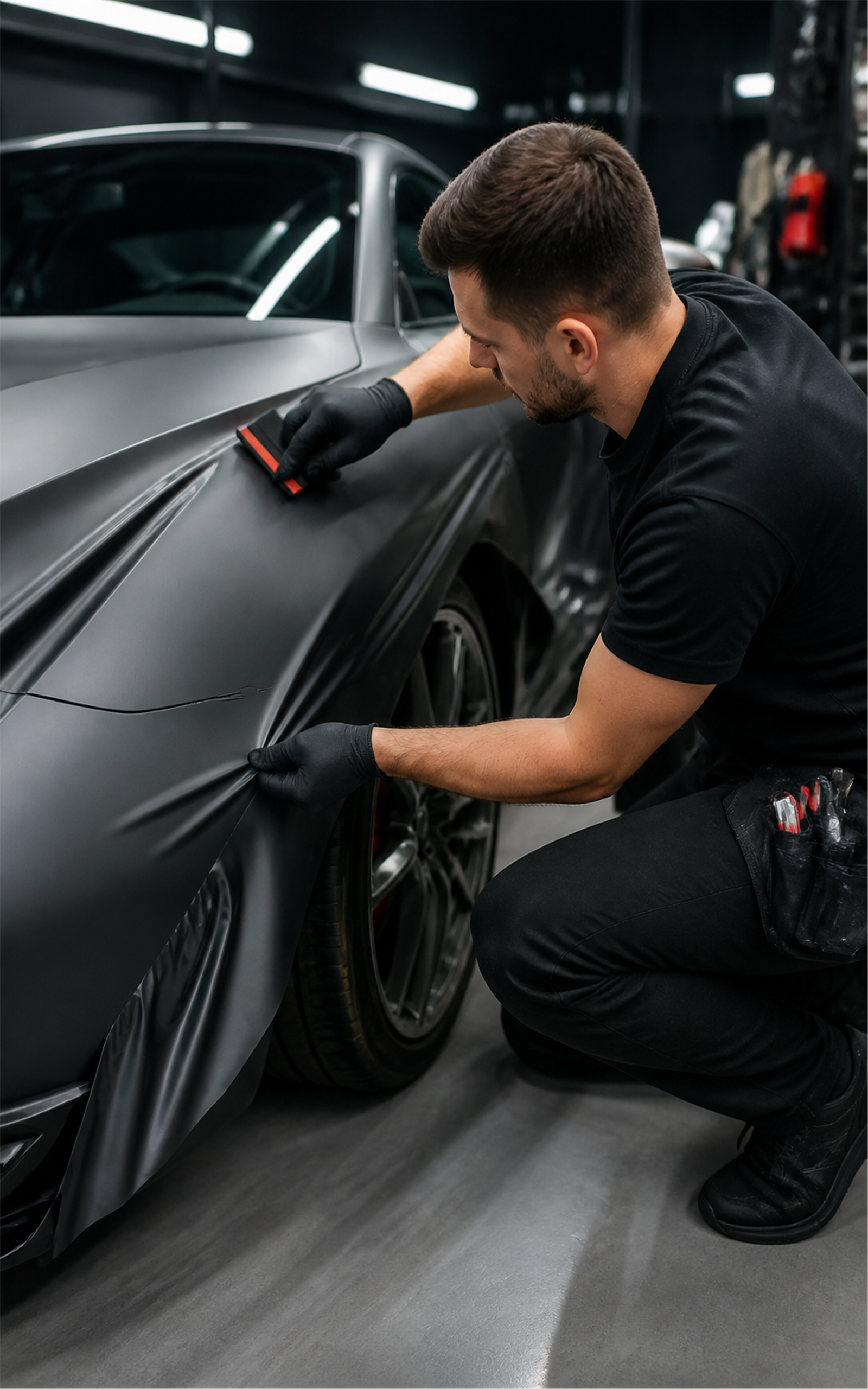
Follow five stages: surface preparation, layout planning, vinyl application with heat and squeegee technique, quality control inspection for bubbles and misalignments, and post-installation client care instructions. Preparation is part of the full workflow—not a step to rush through.
Calculate costs across materials, labor time, overhead, and contingency funds first. Set prices that cover those expenses and leave sustainable profit margin. Avoid basing rates only on competitor pricing or intuition without understanding your own numbers.
Research and obtain appropriate business licenses, secure liability insurance before accepting paid work, use contracts outlining scope pricing and timelines, and consider liability waivers that inform clients of installation risks. Requirements vary by region—verify specifics locally rather than relying on generic advice.
Combine structured intake with visible marketing. Network at local events, showcase wraps on social media and a website, build a portfolio with high-quality photos and testimonials, and maintain regular communication during every project so satisfied clients refer others.
This car wrapping business example was developed using eBook Business Builder—the workflow used to structure the guide, free lead magnet, offer assets, email series, and marketing content you see in the EBB Showroom below.
If you want to create your own eBook business around a topic you know, EBB walks you through research, writing, assets, and launch in a repeatable system.
Start Building with eBook Business Builder →The flagship guide covers car wrapping startup fundamentals—market positioning, project intake, scope templates, installation workflows, client communication, financial management, marketing, legal considerations, and continuous improvement—in a structured eBook format.
[object Object]
A lead magnet helps readers evaluate whether car wrapping fits their installation skills and identify sensible first steps before taking client projects.
Many installers quote wraps without surface prep standards, design approval steps, or timeline policies that protect finish quality.
Foundational first steps, common early mistakes to avoid, and a simple action plan readers can use before committing to service launches or customer bookings.
Car Wrapping Startup Program
A practical flagship guide for readers ready to move from interest to action—with clear first steps and professional service habits for car wrapping installs.
Tools & References