Find the Opportunity
Shift from hobby baking to an entrepreneurial identity with a clear mission and niche.
A practical starting point for bakers who want to launch a custom cake business with clearer pricing, design intake, and production scheduling basics.
This page walks you through how to start a cake business as a real consultation-driven service—not just decorating cakes for friends. You will learn entrepreneurial mindset, pricing fundamentals, client consultation, production workflow, packaging and presentation, local marketing, legal and financial planning, and the habits that turn one-time orders into repeat celebrations.
Shift from hobby baking to an entrepreneurial identity with a clear mission and niche.
Research legal responsibilities and build financial tracking habits that support sustainability.
Invest in packaging and presentation that elevates perceived value and brand cohesion.
Price custom cakes from costs, markup strategy, and the value clients place on your work.
Consult clients effectively and market your cake business through local community channels.
Streamline order fulfillment with customized workflows, delegation, and bottleneck awareness.
Retain celebration clients, manage finances intentionally, and scale without losing quality.
[object Object]
[object Object]
[object Object]
Turning passion into profit requires more than extra hours in the kitchen. Your first step is embracing an entrepreneurial identity—recognizing what makes your baking distinct and articulating the mission that guides every custom order.
Many aspiring cake entrepreneurs stumble at the transition from hobbyist to business owner. They assume that because baking for friends has been joyful, running a business will feel the same. Baking for pleasure is an expression of creativity; baking for profit intertwines artistry with calculated costs, deadlines, and customer expectations.
The initial confusion often sounds like, "I've been doing this for fun—how hard can it be to turn it into a business?" The truth is your passion remains essential, but the way you operate must shift dramatically. It is not just about making cakes anymore; it is about making a living.
Start with a deep self-assessment. What unique flavors, styles, or techniques do you bring to the table? Maybe you excel at intricate fondant designs, or perhaps gluten-free cakes that taste indistinguishable from traditional recipes are your specialty. Recognizing these strengths lets you carve out a niche that reflects who you are as a baker—not a generic menu trying to serve everyone.
[object Object]
[object Object]
Once you identify your strengths, articulate your business vision through a mission statement. It serves as a guiding star when challenges arise. Reflect on what you want your cake business to achieve. Is it simply to make delicious cakes, or to foster joy in your community and create memories through your baking? A mission might be as direct as: "To create delightful custom cakes that bring people together in celebration."
Practical takeaway: Write a one-sentence mission statement and list three baking strengths that differentiate your work. Use both as filters when deciding which custom orders to accept.
Operating a cake business carries legal and financial responsibilities that vary by location. Planning means researching what applies in your area and building expense-tracking habits before hidden costs erode your margins.
When you turn baking into a business, legal compliance and financial clarity become part of the foundation—not optional extras. Many aspiring home bakers assume legal requirements are too daunting or unimportant for small operations. That mindset can lead to fines, business closure, or lost customer trust when requirements are overlooked.
Regulations vary dramatically depending on your location. What is essential in one state or country may differ elsewhere. Start by researching local business licenses—you will likely need one to operate legally. Food safety laws dictate how food businesses must prepare, handle, and store products. Depending on your jurisdiction, you might need a food safety course or a food handler's permit.
General liability insurance can protect against potential lawsuits from accidents or ingredient-related claims. As a business owner, you will also need to report income and potentially collect sales tax on your products. Keeping accurate records supports compliance and helps you track growth over time.
[object Object]
[object Object]
Financial management sits alongside legal planning. Tracking every expense—flour, eggs, cake boards, food coloring, sprinkles—is essential for maintaining a healthy financial outlook. Small costs layered across multiple orders add up quickly. If you use three eggs per cake across five orders, that dozen costing a few dollars matters. Forgetting cake boards, coloring, and sprinkles can leave you unknowingly underpricing custom work.
Practical takeaway: List three local resources you will use to research business licenses and food safety requirements. Start a budget tracker before your next custom order—not after.
Beautiful cakes deserve context. Thoughtful packaging and presentation enhance perceived value, reinforce your brand identity, and turn delivery into an experience clients remember and share.
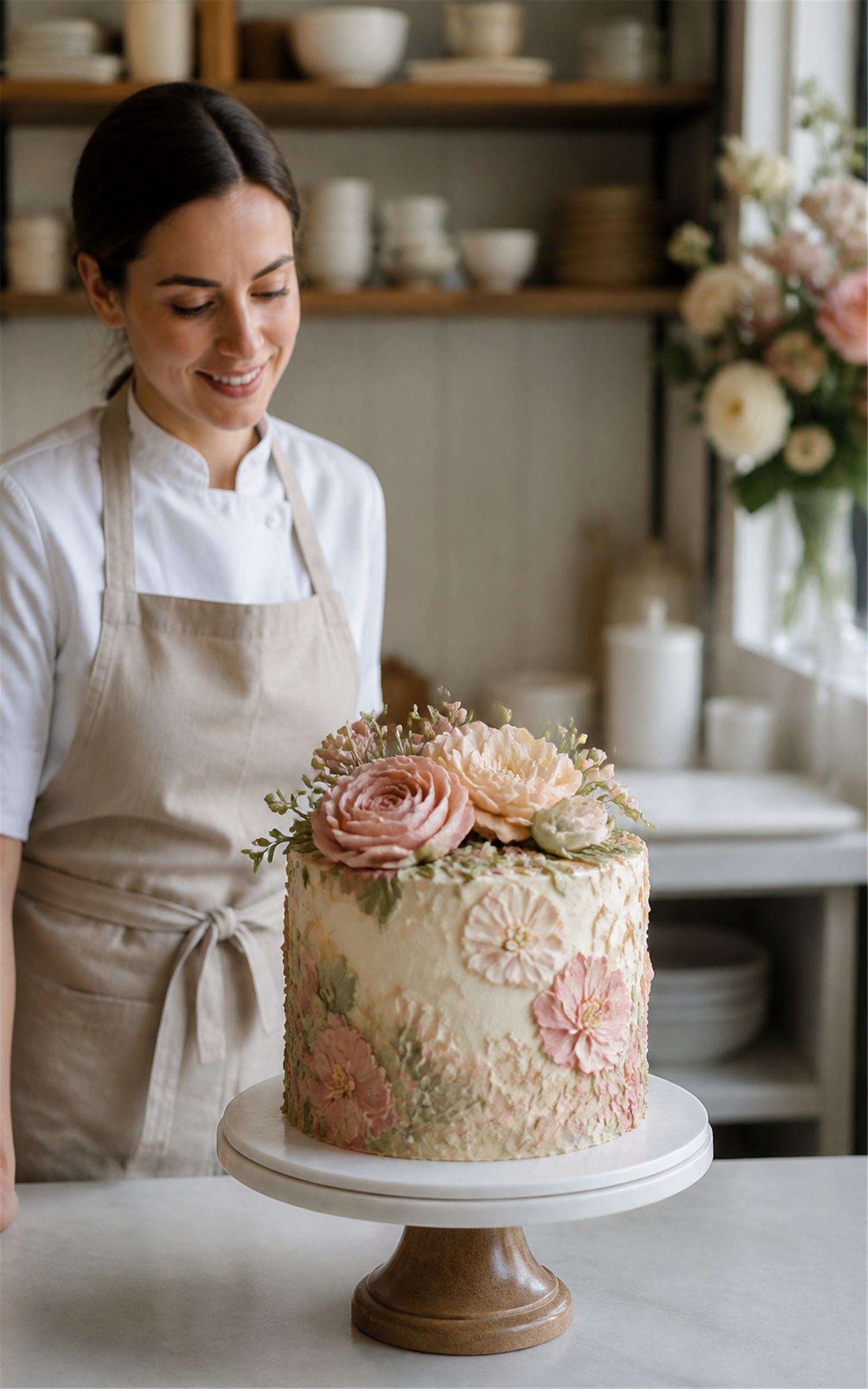
Many bakers believe that if a cake is beautiful enough, it will sell itself. While stunning design is essential, cakes do not exist in a vacuum—they need presentation that matches their quality. A beautifully crafted cake in a plain cardboard box can feel disappointing. The same cake in a branded box with your colors and logo transforms delivery into anticipation and excitement.
Branding is how customers perceive your business. Every element—from logo to packaging—contributes to that narrative. When packaging reflects your brand's values and aesthetics, it creates a cohesive experience that builds loyalty and trust. Customers associate quality packaging with quality cake.
Well-presented cakes also reduce the tension clients feel when purchasing custom work. An impressive package reinforces that they made the right choice—you are selling confidence in the cake, not just the cake itself.
[object Object]
[object Object]
Practical takeaway: Prototype packaging for your best-selling or signature cake style. Test whether the design protects the cake in transport and feels aligned with your brand before scaling production.
When a custom cake inquiry arrives, excitement often gives way to a pressing question: how much should I charge? Pricing from real costs and perceived value transforms baking from a hobby into a sustainable business.
Many bakers, especially when starting, underprice their creations hoping to attract clients. That approach undervalues craftsmanship and can lead to burnout. Understanding how to price effectively means knowing what it truly costs to create each cake—not just flour and eggs, but utilities, packaging, and equipment wear.
COGS encompasses all direct costs associated with producing your cakes: ingredients, packaging, and equipment wear. Before mixing, tally ingredients, utilities used during baking and cleaning, and the box or board that holds the cake safely. That total becomes your pricing foundation.
The manuscript illustrates markup with a chocolate ganache cake example: if COGS totals $20 and you apply a 50% markup, the selling price would be $30. Treat that figure as a worksheet illustration—not a universal benchmark for every market or cake style.
Apply a markup percentage to COGS so you cover costs and earn profit. Balance markup strategies with competition analysis—review what other bakers in your area charge for similar cakes, but do not simply match their prices. If your cakes are more intricate or use higher-quality ingredients, let your prices reflect that difference.
Value-based pricing focuses on the perceived value to the customer rather than cost alone. For custom orders, personalization and detail are often what clients seek—and what they are willing to pay for.
[object Object]
[object Object]
Practical takeaway: Create a price chart for at least three cake types using your actual ingredient and packaging costs. Review where you have underpriced in the past and adjust before your next quote.
Clients rarely arrive with a fully formed cake vision. Winning custom orders means mastering design intake conversations and making your work visible in the community where celebrations happen.
When a couple discusses their wedding cake, your role extends beyond baking skills—you are helping create a memory. Clients often need guidance to express their vision. Active listening goes beyond hearing words; it means engaging with feelings, reading body language, and responding thoughtfully so clients feel comfortable sharing ideas.
Draft a client questionnaire tailored to your cake business. Include essential design elements, flavor options, and a few personal questions that help you connect—like favorite desserts or how the clients met.
Marketing does not require a hefty advertising budget. Word of mouth is organic, genuine, and effective—personal recommendations travel further than most paid ads. Create memorable experiences: handwritten thank-you notes, tasting events, or surprise treats with orders encourage clients to share their experience.
Social media extends word of mouth visually. Instagram and Facebook suit food businesses well. Share high-quality cake images, behind-the-scenes process videos, and customer testimonials. Post consistently, use local hashtags for your community, and engage through stories and reels with baking tips that position you as an approachable expert.
Practical takeaway: Finalize your client questionnaire and choose one social platform plus one local networking target this week. Every inquiry should meet a clear path from consultation to confirmed order.
Busy seasons turn excitement into chaos when every order is handled the same way. A customized workflow—mapped bottlenecks, clear steps, and smart delegation—keeps quality high and delivery promises intact.
As holidays, wedding season, or birthday rushes approach, orders pile up and the thrill can quickly become overwhelm. Treating every cake order identically leads to confusion—an elaborate wedding cake needs consultation, design approval, and possibly a tasting session, while a simple birthday cake follows a shorter path.
A bottleneck is where work slows or stops. Reflect on past busy periods: did mixing take too long, decorating bog down, or delivery logistics create stress? If mixing is the slowdown, prep mixes in advance or invest in a more efficient mixer. If delivery is the challenge, map routes to minimize travel time.
Visualize each step from order intake through delivery. How do customers place orders—form, call, or message? Define steps for gathering ingredients, baking, decorating, packaging, and delivery. Wedding cakes may require additional consultation and approval stages that simple birthday cakes skip.
As orders grow, task delegation becomes essential. A family member or trusted friend might help with packaging or deliveries. Part-time help during peak seasons lets you focus on what you do best—creating beautiful, delicious cakes. Pinpoint the most time-consuming tasks and ask whether someone else could take them off your plate.
Practical takeaway: Draw a workflow chart for your two most common order types before the next busy season. Test it on a practice week and adjust time blocks before accepting stacked deadlines.
One remarkable cake does not guarantee the next order. Follow-up, loyalty habits, financial discipline, and intentional scaling turn single celebrations into referrals and a business that grows without losing its soul.
After delivering a stunning custom cake, the client's joy feels like mission accomplished. Yet many clients do not return without further engagement. Building lasting relationships leads to increased sales and referrals—especially in custom baking where personal recommendations carry significant weight.
Send a personalized follow-up email thanking the customer and asking how the cake was received. Encourage feedback on flavor, design, and overall experience. That touchpoint opens the door to future orders and shows you value their opinion beyond the transaction.
The manuscript suggests offering 15% off a next cake after a third purchase as one loyalty example. Treat that structure as an illustration you can adapt—not a mandatory pricing rule.
Scaling is a mindset shift, not just baking more cakes. Signs you may be ready include regularly turning down orders, increasing customer wait times, or feeling stretched too thin. Successfully managing a small operation does not automatically mean you are equipped for growth—you need a vision, a plan, and willingness to adapt.
Growth may require hiring part-time bakers, investing in commercial-grade equipment, or implementing standardized recipes and decorating procedures so every cake meets the same standards. Draft a one-year growth plan with goals, milestones, and timelines—whether expanding your product line, opening a storefront, or reaching a personal revenue target you define for yourself.
[object Object]
[object Object]
Practical takeaway: Schedule a follow-up message one week after every delivery and draft a one-year growth plan with three milestones. Review one milestone each quarter instead of expanding without a plan.
Use this four-week outline to move from hobby baker to structured cake business operator. Each week builds on the last using steps supported by the Cake Business guide.
Confirm these essentials before you accept a celebration cake commission.
A custom cake business is a consultation-driven service where clients hire you for milestone celebrations—not simply buying a pre-made cake from a display case. Success depends on design intake, fair pricing, reliable production schedules, professional packaging, and communication from first inquiry through delivery.
Embrace an entrepreneurial identity by assessing your unique strengths, writing a mission statement, and changing how you operate. Baking for profit requires calculated costs, met deadlines, and managed customer expectations—even when your passion for the craft stays the same.
Start with Cost of Goods Sold—ingredients, packaging, utilities, and equipment wear—then apply a markup that covers costs and earns profit. Consider competition and value-based pricing for intricate custom work. The manuscript's $20 COGS with 50% markup yielding a $30 price is an illustration for your own chart, not a universal rate.
Use active listening and open-ended questions to uncover design preferences, flavors, themes, and dietary needs. Document ideas in a questionnaire or intake form, build rapport around the celebration story, and summarize what you heard before the conversation ends.
Identify workflow bottlenecks, create separate process charts for different order types (birthday versus wedding cakes), and delegate packaging or delivery tasks when possible. Evaluate and adjust your workflow after each peak period.
Presentation enhances perceived value and reinforces brand identity. Quality packaging protects cakes in transport, reduces client anxiety about their purchase, and turns delivery into a memorable unboxing experience worth sharing.
Requirements vary by location. Research local business licenses, food safety laws, potential food handler certifications, general liability insurance, and tax obligations including income reporting and possible sales tax. Consult local government resources or a small business advisor rather than assuming home baking is exempt.
Send personalized follow-up messages after deliveries, ask for feedback, note flavor preferences for future outreach, and consider a simple loyalty incentive. Happy clients who feel remembered are more likely to reorder and refer you to friends planning their own celebrations.
This cake business example was developed using eBook Business Builder—the workflow used to structure the guide, free lead magnet, offer assets, email series, and marketing content you see in the EBB Showroom below.
If you want to create your own eBook business around a topic you know, EBB walks you through research, writing, assets, and launch in a repeatable system.
Start Building with eBook Business Builder →The flagship guide covers cake business startup fundamentals—entrepreneurial mindset, pricing, client consultation, production workflow, packaging, marketing, legal awareness, retention, financial management, and scaling—in a structured eBook format.
[object Object]
A lead magnet helps readers evaluate whether custom cake work fits their skills and identify sensible first steps before accepting celebration orders.
Many talented decorators underprice custom work, skip design intake, or accept timelines that make quality cake production unsustainable.
Foundational first steps, common early mistakes to avoid, and a simple action plan readers can use before committing to equipment or clients.
Cake Startup Program
A practical flagship guide for readers ready to move from interest to action—with clear first steps and professional consultation and production habits for custom cake businesses.
Tools & References