
Find the Opportunity
Understand who hires tree services and why arborist scope clarity wins hazardous jobs.
A practical starting point for arborists who want to launch a tree service with clearer job scopes, client intake, and safe removal or pruning workflow basics.
This page walks you through how to start a tree service business as a professional arboriculture operation—not just cutting trees for neighbors without hazard assessment or scope clarity. You will learn who hires tree services, how tree work differs from landscaping, how to define what you will and will not do, how to investigate licensing and business setup locally, how to build an equipment and safety workflow matched to your menu, how to price from real job costs, how clients find you, and how to deliver dependable results property owners trust.
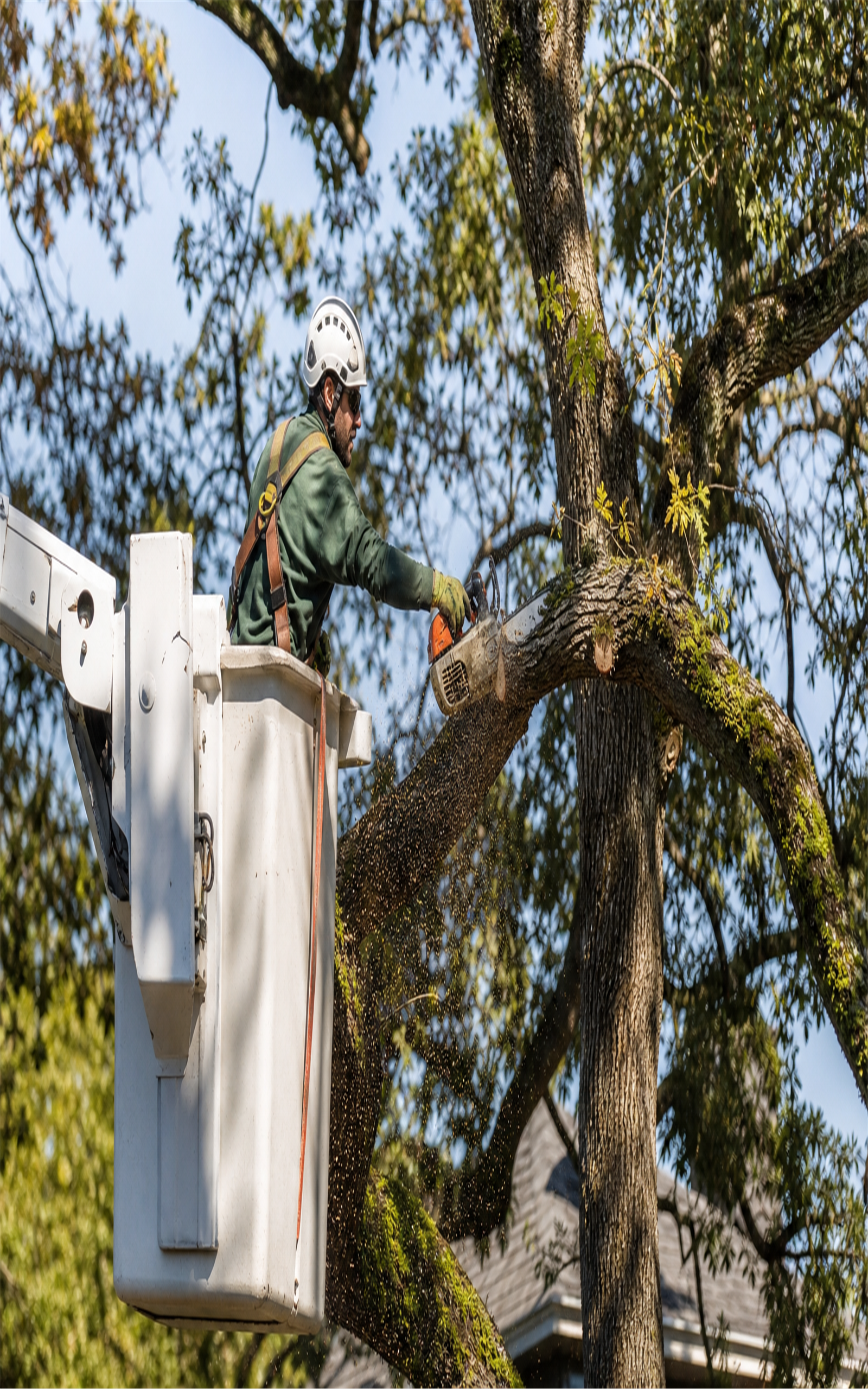
Understand who hires tree services and why arborist scope clarity wins hazardous jobs.
Decide what you accept, refer out, and document on every tree assessment.
Investigate local rules and insurance before marketing or accepting paid work.
Build a staged equipment plan and repeatable on-site production routines.
Quote tree jobs from measured labor, rigging time, disposal, and equipment wear.
Reach homeowners and property managers with a controlled launch.
Improve assessment accuracy and add capacity only when safety workflows hold.
A tree service business sells defined arboriculture work under written scope boundaries—not informal chainsaw labor wherever a homeowner points. You assess trees and site conditions on site, decide what fits your skills, equipment, and licensing limits, quote from real costs, carry the rigging and safety gear your menu requires, and finish work clients can sign off on. Buyers pay for clarity about what will be done, how debris will be handled, when you will arrive, and what happens when hidden decay or utility conflicts appear after work begins.
That distinction matters. Being comfortable with a chainsaw is not the same as running a tree service business. Many capable climbers accept jobs without hazard assessment, underprice rigging and disposal time, or drift into work near power lines, over structures, or beyond the equipment they actually own. Homeowners and property managers continue to hire tree services when storm damage creates urgency, dead limbs threaten roofs, clearance is needed before a sale, or overgrown trees block light—but only when they believe the operator will assess honestly, work safely, stay within agreed scope, and communicate about what requires a specialist or utility coordination.
Tree work also differs materially from landscaping. A landscaping business typically operates at ground level with mowers, trimmers, and planting tools. Tree service production often involves aerial work, controlled lowering, chipper operations, stump grinding, and hazard mitigation where a mistake carries serious injury or property damage risk. Equipment investment, insurance premiums, training requirements, and job assessment depth are not interchangeable between the two models—even when the same client hires both over time.
This guide walks you through how to start a tree service business with professional habits: finding your opportunity, defining arborist scope boundaries, investigating licensing and business setup, building your equipment and safety workflow, pricing from real job costs, winning first clients, and growing with the operational discipline that defines a credible local service. By the end, you should understand what the business is, how it differs from adjacent outdoor trades, what you need to prepare, and what to verify locally before accepting your first booking.
Homeowners and property managers hire tree services when trees become hazards, nuisances, or sale blockers—dead limbs over driveways, storm-damaged canopies, clearance for construction, or overgrown specimens too large for DIY. Your first step is understanding who you serve and what they expect from a professional arboriculture operation—not assuming chainsaw skill alone creates demand.
Tree service businesses succeed when clients understand the job before cutting starts: which trees or limbs are in scope, debris and stump handling, timeline, access needs, drop-zone requirements, cleanup included, and what you will refer to utility contractors or crane specialists. Buyers are not simply purchasing hours—they are purchasing confidence that defined tree work will be finished without the job ballooning into an unplanned full-property clear-cut or an incident on their roofline.
Different clients bring different expectations, decision speed, and repeat potential. Choose one primary profile for launch:
Often hire when limbs threaten structures, driveways, or play areas—or when a tree fails partially after wind or ice. They compare on safety credibility, clear written scope, and insurance documentation—not always on the lowest bid alone.
Need predictable response after storms and documented clearance on common areas. Standardized service menus, photo documentation, and repeatable assessment workflows support recurring vendor relationships once trust is established.
Prioritize fast turnaround on selective removal or clearance before listings or builds. Clear scope documents, utility awareness, and reliable scheduling matter more than ornamental pruning finesse on first contact.
Observe your local market: who do existing tree companies and arborists serve well, and where do clients still express frustration—vague quotes with no site visit, crews without visible PPE, jobs that expand beyond the original tree count, or operators who disappear after spring storm rush? Your opportunity often sits in operational clarity and safety communication as much as in climbing ability.
Seasonality shapes demand in most markets. Spring and summer bring pruning and clearance projects; autumn may increase deadwood requests; winter storm events create urgent removal backlogs. Operators who plan equipment maintenance, crew availability, and cash flow around these cycles—not just fair-weather scheduling—stay solvent when demand spikes or weather shuts down production for days.
Adjacent outdoor businesses with overlapping client bases—such as those in the landscaping business guide, lawn care business guide, and pressure washing business guide—show how defined scope and professional intake sustain service revenue. Tree work sits at the high-risk end of exterior property services; knowing when to handle a task yourself versus refer to a utility arborist, crane operator, or stump specialist is part of the business model.
Practical takeaway: Write one paragraph describing your ideal first client and the job type you want most—selective pruning, small-tree removal, or storm cleanup within equipment limits. List three questions they will ask before hiring—and make sure your future intake process answers them.
Before you quote tree jobs, decide what you accept, what you refer out, and how you document both on every assessment. Clients need tree lists and task definitions they can understand—not open-ended "tree guy hours" that expand whenever someone points at another specimen in the backyard.
Homeowners often conflate outdoor trades. Your intake and marketing should state clearly what tree service includes and what belongs elsewhere:
Pruning, crown reduction within arboricultural limits, deadwood removal, selective takedown, stump grinding, hazard mitigation, and debris processing from defined trees—using arborist assessment, rigging, and chipper or haul-away workflows.
Bed refresh, mulch installs, turf maintenance, shrub shaping at ground level, and general planting—work covered in the landscaping business guide. Accepting landscaping tasks without the right equipment and pricing model dilutes your arborist positioning.
Referring bed work to a landscaper while you own tree scope—and receiving pruning referrals in return—builds a healthier local network than accepting every outdoor request with one chainsaw and a pickup truck.
Each category on your menu should list specific inclusions, exclusions, and referral triggers:
Crown cleaning, deadwood removal, clearance pruning away from structures within agreed limits, and young-tree structural pruning. Best when species, target clearance, and access are confirmed on site before quoting.
Controlled dismantling or straight felling when drop zone and targets allow, limbing, bucking, and haul-away or chip-on-site per written scope. Refer crane removals, severely compromised trees over occupied structures, and work beyond your rigging plan.
Stump grinding to agreed depth, backfill or leave wood chips per estimate, and site cleanup within drop zones. Define whether root chase, surface-root grinding, or replanting prep is included or excluded.
Utility-line clearance within regulated zones, municipal tree permits requiring certified arborist signatures you do not hold, crane-only removals, emergency extrication entangled in structures, and pesticide treatment for systemic tree disease unless you hold applicator credentials.
Not every request fits a tree service model at your current capacity. Use intake questions to filter jobs early:
Written scope prevents the most common tree service disputes:
Field businesses that scope carefully before quoting—like those described in the handyman business guide—reduce callback friction because clients understand inclusions before work starts. Tree work follows the same rule at higher stakes: a written tree list prevents arguments about whether stump grinding, haul-away, or an extra backyard pine was included.
Practical takeaway: Draft a one-page service menu with at least six task types you accept and five categories you refer out. Read it aloud—if a homeowner would still ask "can you also mulch the beds?", add clearer landscaping referral language before publishing prices.
Tree work regulations vary widely by jurisdiction. Some areas allow broad arboriculture under a general contractor or business license; others require tree work permits, certified arborist credentials, or specialty registration for removals above certain sizes or near utilities. Your investigation framework matters as much as your rigging kit—verify locally before marketing paid services.
Create a checklist and confirm each item with your local contractor licensing board, forestry or urban forestry office, utility coordination authority, and insurance agent. Requirements differ by country, state, county, and city—do not assume rules from another market apply to you:
Align your service menu with what your jurisdiction allows under your credentials and equipment:
Ground-level and aerial pruning, deadwood removal, selective takedowns with adequate drop zones, stump grinding, and chip-or-haul debris handling—when local rules permit, utilities are cleared or de-energized per procedure, and permits are obtained where required.
Energized line clearance, crane picks over occupied structures, municipal street-tree work without authorization, herbicide injection for disease control without applicator license, and removals where decay makes rigging plans unreliable without engineered solutions.
Keep a referral list of utility arborists, crane services, and licensed applicators you trust. Saying "that line is too close for our clearance zone—I will refer a qualified utility contractor" builds more long-term trust than attempting work your policy, training, and local law exclude.
Separate business banking, written contracts or estimate terms, a basic bookkeeping routine, and documented payment policies protect you as much as insurance does. Decide whether clients pay deposits on large removals, how change orders are approved when hidden decay expands scope, and what happens when weather or utility delays push the schedule.
The SBA guide to launching a business helps with general registration and planning steps, but it does not replace local tree work permitting or utility clearance rules. Start your research early—some registrations and certificate of insurance requests from property managers take weeks, and operating without required credentials can invalidate claims after an incident.
Practical takeaway: Complete your licensing investigation checklist with dated notes from official sources—not forum posts. Do not publish prices or accept deposits until general liability coverage at appropriate limits and required registrations are confirmed for your service menu.
A tree service runs on three foundations: equipment matched to your accepted scope, safety systems that never depend on luck, and a job workflow that turns assessments into finished work without near misses or wasted mobilizations. Under-equipped arrivals and improvised rigging erode margins—and create incident risk—faster than any competitor's lower bid.
Landscaping operators in the lawn care business guide invest in mowers and trimmers. Tree service production requires a different capital stack. Buy core gear first; add aerial lifts, large chippers, or stump grinders when repeated jobs justify the cost:
Track equipment replacement and maintenance cost in your pricing model. Chain sharpening, rope retirement schedules, chipper knife wear, and grinder teeth are production cost—not silent overhead you absorb to win a low bid.
Tree work injuries are disproportionately severe compared to ground-level trades. Build habits that do not depend on who is on crew that day:
Clients notice safety behavior. Hard hats, clear drop-zone tape, and professional briefing language differentiate you from informal cutters—and reduce liability when neighbors or tenants are present.
Professional tree work follows a repeatable sequence:
Property owners and managers notice details beyond the cut itself:
Intake should collect gate codes, narrow-access constraints, neighbor relations, pets, and who approves change orders when decay is worse than photos suggested. Surprises on arrival—locked access, unmarked utilities, or undisclosed fence disputes—are schedule killers on jobs where rigging setup already consumed the margin.
Practical takeaway: Run one practice assessment and mock job briefing—even on your own property or a training site—using your full workflow checklist. Note any gap caused by missing rigging, PPE, or intake questions, and fix those before your next quote.
Clients buy scoped tree completion and safe production—not vague guesses that expand when three backyard maples become six and the chipper clogs on oversized material. Pricing should reflect the full cost of the documented tree list, not a day rate copied from a competitor you cannot verify.
Consider every cost category that applies to your model:
Small pruning jobs carry disproportionate mobilization and briefing cost. A single ornamental prune twenty minutes from your yard is not priced like twenty minutes in the shop. Build minimum visit fees or half-day blocks that cover mobilization honestly—clients prefer transparent minimums over artificially low tree counts that balloon with trip and setup charges later.
Per-tree fixed quotes work when assessment is thorough and species, size, access, and targets are documented. Day-rate or crew-day pricing suits storm cleanup with multiple specimens sharing one mobilization—define how many trees or material volume fit a day and what triggers additional billing.
Separate line items for removal, stump grinding, haul-away, and optional add-ons help buyers understand the quote. Property managers especially appreciate invoices that map cleanly to tree lists and photo documentation for their records.
Include payment terms, deposit requirements on large removals, change-order process, and what happens when concealed decay, bee nests, or fence conflicts appear after cutting begins. Tree labor is weather- and rigging-locked; hours waiting on client utility scheduling or neighbor drop-zone clearance are cost you cannot recover on another job the same day.
Track actual crew hours, chipper time, and disposal cost on every early job against your estimate. Adjust production assumptions and pricing templates based on real results rather than initial guesses. The landscaping business guide emphasizes the same discipline: accurate quotes come from documented job costs and professional intake, not competitor guessing.
Practical takeaway: Build a pricing spreadsheet with crew rates, equipment factors, disposal allowances, and overhead allocation. Complete it for your next three assessments, then compare projected costs to actuals after each job closes. Refine before scaling marketing.
Trust drives hiring decisions in tree work—often more than in lower-risk trades. Homeowners and property managers choose operators who assess honestly, carry visible insurance and safety habits, and arrive when promised—not whoever sends the vaguest low estimate without a site visit.
Avoid advertising beyond your rigging capability. Photos of completed jobs with visible PPE, clear accept-and-refer language, and written tree lists demonstrate professionalism better than discount messaging alone.
Home-service businesses with similar client-trust dynamics—such as those in the pressure washing business guide—show how documented scope, professional intake, and repeat referral systems sustain service revenue. The operational pattern translates: clients hire services they believe will show up, communicate, and finish as promised—tree work simply demands higher proof of safety discipline.
Practical takeaway: Land your first three jobs through direct outreach to homeowners or property managers who match your target profile—before spending on ads. Document every assessment question they raise and refine your templates after each conversation.
Growth means adding jobs and capacity only when assessment accuracy, equipment readiness, and safety briefings stay consistent—not accepting every removal because your calendar has room or storm season created a backlog you cannot execute safely.
A sensible progression:
Adding crew introduces quality and safety control challenges. Document rigging standards with photo examples, conduct joint briefings on early jobs together, and review estimate-to-actual hour variance monthly. One inconsistent drop zone or skipped PPE moment can damage the reputation that took seasons to build—and create liability far beyond a landscaping callback.
Track metrics that matter: estimate-to-actual hour variance, incident and near-miss count, callback rate, repeat property-manager bookings, referral source, and jobs completed per week at your agreed safety standard—not vanity metrics like total leads. Fix assessment and equipment gaps before marketing harder.
Know when to stay in your lane versus partner. A thriving tree service often refers bed refresh to a landscaper and receives pruning referrals from a lawn care operator who will not touch canopy work. Growth through referral depth in a tight service area frequently beats scattered low-margin jobs across a wide radius.
Practical takeaway: After your first ten completed jobs, identify your most common assessment miss and your strongest referral source. Fix the intake or equipment issue before adding a second climber or expanding your service radius.
Use this four-week outline to move from interest to a controlled first booking. Each week builds on the last for a tree service business launch.
Confirm these essentials before you accept a booking or load rigging gear for your first paid tree job.
A tree service business is a professional arboriculture operation that accepts defined tree care tasks under written scope boundaries—not informal chainsaw work without hazard assessment, insurance, or clear client agreements. Success depends on knowing what you will and will not do, assessing trees and site conditions before quoting, carrying appropriate safety equipment and rigging, and communicating timelines and risks clients can trust.
Landscaping businesses focus on beds, turf, planting, and general outdoor enhancement at ground level. Tree service work involves arboriculture: pruning, removal, stump grinding, hazard mitigation, and often aerial production with chainsaws, rigging, and chipper operations near structures and utilities. Equipment, insurance, training, and licensing requirements differ significantly. This guide addresses tree-specific assessment, safety, and workflow—not routine lawn or bed maintenance.
Requirements vary by country, state, county, and city. Some jurisdictions require contractor registration, tree work permits, or certified arborist credentials for certain tasks. Utility clearance and work near power lines often require specialized training and partnerships. Verify requirements with your local contractor licensing board, forestry office, and insurance agent before accepting paid work.
List the task types you accept—such as crown thinning, deadwood removal, small-tree takedowns within equipment limits, and stump grinding—and the work you decline or refer out, including utility-line clearance, crane removals, and work beyond your rigging capability. Document scope on every estimate: debris disposal, access requirements, stump treatment, cleanup included, and what triggers a change order when hidden decay or structural defects appear.
Build a core kit matched to your accepted scope: professional chainsaws, climbing and rigging gear or aerial lift access as appropriate, PPE including helmet, eye protection, cut-resistant chaps, and hearing protection, ropes and blocks for controlled lowering, chipper or haul-away plan, and stump grinder if grinding is in your menu. Add bucket trucks, cranes, or large chippers only when repeated jobs justify the cost. A staged equipment plan aligned to your service menu keeps startup costs controlled while supporting safe production.
Build pricing from labor hours, equipment depreciation, disposal fees, rigging setup time, insurance-weighted overhead, callback reserve, and desired margin. Assess each tree on site before quoting, account for minimum mobilization economics on small jobs, and test prices in a spreadsheet using your production rates—not unverified competitor numbers. Adjust after comparing estimates to actual crew hours and disposal costs.
Follow a repeatable sequence: inquiry and scope screening, on-site tree assessment, written proposal, pre-job confirmation, job briefing and hazard review, production per checklist with rigging plans, cleanup and quality review, and client walkthrough. Intake should capture access details, utility proximity, drop zone clearance, and change-order approval before cutting starts. Consistent workflow reduces incidents, callbacks, and margin loss on complex jobs.
Start with a defined client profile and controlled launch. Reach local buyers through search listings, storm-season referrals, property-manager relationships, and adjacent trade partnerships where appropriate. Professional tree lists, visible safety habits, insurance certificates, and reliable scheduling convert interest faster than vague low bids without a site assessment.
This tree service business example was developed using eBook Business Builder—the workflow used to structure the guide, free lead magnet, offer assets, email series, and marketing content you see in the EBB Showroom below.
If you want to create your own eBook business around a topic you know, EBB walks you through research, writing, assets, and launch in a repeatable system. See how business assets fit together and launch marketing for your eBook business to understand the full EBB build model.
Start Building with eBook Business Builder →The flagship guide explains how to start a tree service—arborist scope boundaries, licensing investigation, equipment and safety planning, assessment workflow, pricing, and client communication—in a structured eBook format.
Chapters walk readers through evaluating the opportunity, defining what you accept and refer out, distinguishing tree work from landscaping, investigating licensing and business setup, building equipment and safety workflows, pricing from real job costs, winning first clients, and growing operations without sacrificing assessment discipline.
First Jobs & Assessment Setup — a lead magnet that helps readers evaluate whether tree service work fits their skills and identify sensible first steps before accepting bookings.
Many operators accept tree jobs without hazard assessment, licensing awareness, or equipment planning that protects margins, safety, and client expectations.
Foundational first steps, common early mistakes to avoid, and a simple action plan readers can use before committing to client bookings or service launches.
Handles tree work informally but unsure how to define arborist scope and run a tree service professionally.
Prepared with the fundamentals needed to screen jobs, investigate licensing, assemble equipment, and deliver scoped tree work safely on schedule.
Tree Service Startup Program
A practical flagship guide for readers ready to move from interest to action—with clear first steps and professional service habits for dependable arboriculture work.
Tools & References