Find the Opportunity
Understand who hires motorcycle detailers and why bike-safe clarity wins riders.
A practical starting point for detailers who want to launch a motorcycle detailing service with clearer service packages, rider intake, and bike-safe workflow basics.
This page walks you through how to start a motorcycle detailing business as a professional powersports service—not car wash habits sprayed onto chrome and chain guards. You will learn who hires motorcycle detailers, how to define bike-safe service packages, how to choose products for paint, chrome, and sensitive components, how to investigate licensing and business setup, how to build a mobile detailing workflow, how to price from real job costs, how riders find you, and how to deliver finishes owners trust on their bikes.
Understand who hires motorcycle detailers and why bike-safe clarity wins riders.
Decide what you clean, protect, and exclude on every estimate.
Investigate local rules and insurance before marketing paid services.
Stage a bike-specific kit and repeatable cool-engine production routines.
Quote detailing jobs from measured labor, products, and travel time.
Reach riders, dealers, and clubs with a controlled launch.
Improve scoping accuracy and add capacity only when workflows hold.
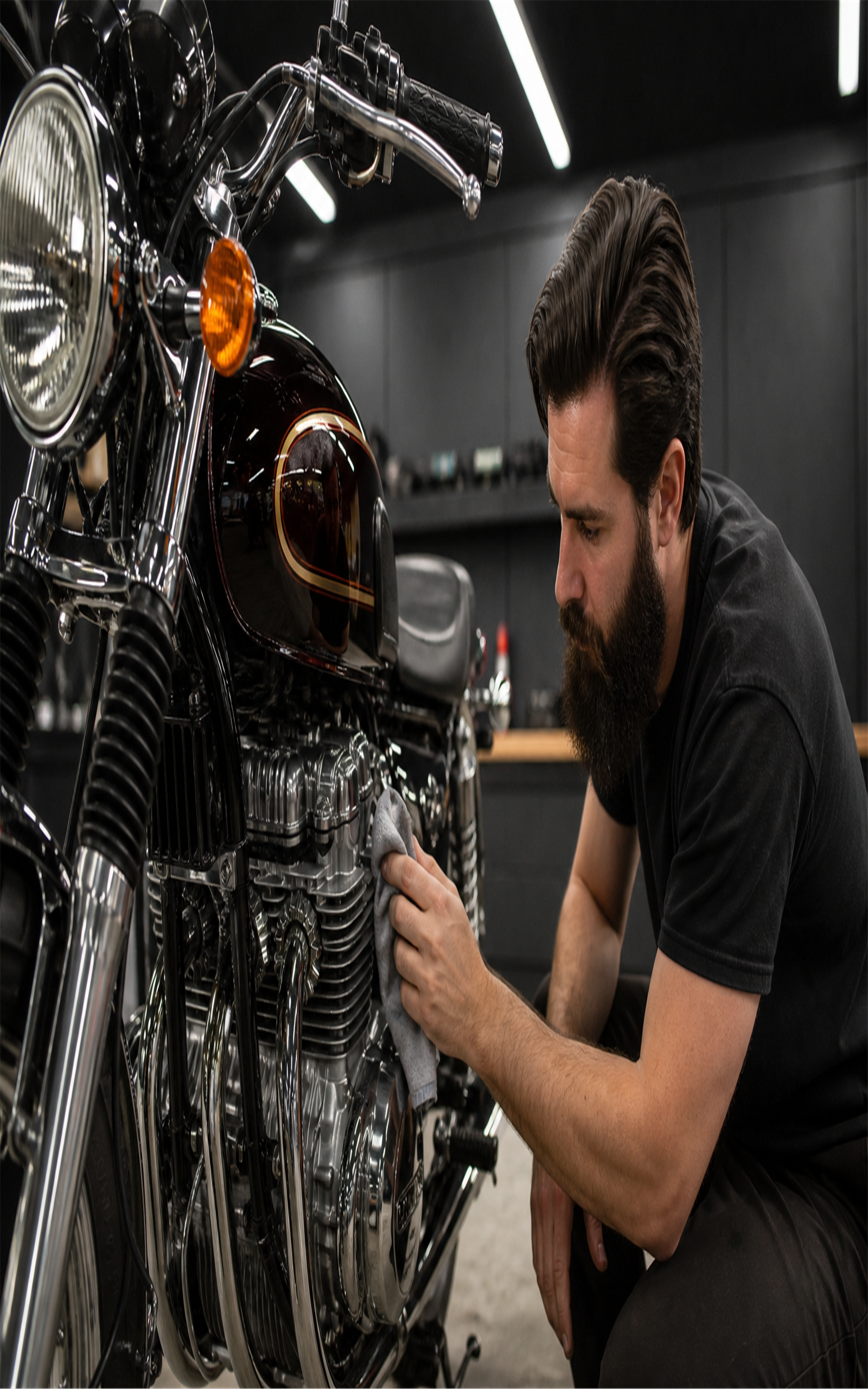
A motorcycle detailing business sells defined cleaning, protection, and light cosmetic restoration for two-wheeled vehicles—not generic vehicle washing with a hose and automotive soap. You assess each bike's finish types and condition, decide what fits your packages and skill limits, quote from real costs, carry products matched to chrome, paint, rubber, and textile surfaces, and deliver results riders can inspect bolt by bolt. Buyers pay for confidence that their tank paint, matte panels, chrome exhaust, chain area, and electronic components will be treated with motorcycle-aware techniques—not shortcuts copied from a sedan detail.
That distinction matters. Washing your own bike in the driveway is not the same as running a motorcycle detailing business. Many capable operators underprice travel and setup, use automotive chemicals near braking surfaces, or accept jobs without documenting what they will and will not touch around hot exhausts, sensors, or braided lines. Riders continue to hire detailers when bug season, winter storage prep, or pre-show presentation demands more than a bucket wash—but only when they believe the operator understands bikes, communicates package inclusions clearly, and will not leave slippery dressing on grips or residue on rotors.
This guide walks you through how to start a motorcycle detailing business with professional habits: finding your opportunity, defining bike-safe service packages, investigating licensing and business setup, building your product kit and detailing workflow, pricing from real job costs, winning first clients, and growing with the operational discipline that defines a credible mobile service. By the end, you should understand what the business is, what you need to prepare, and what to verify locally before accepting your first booking.
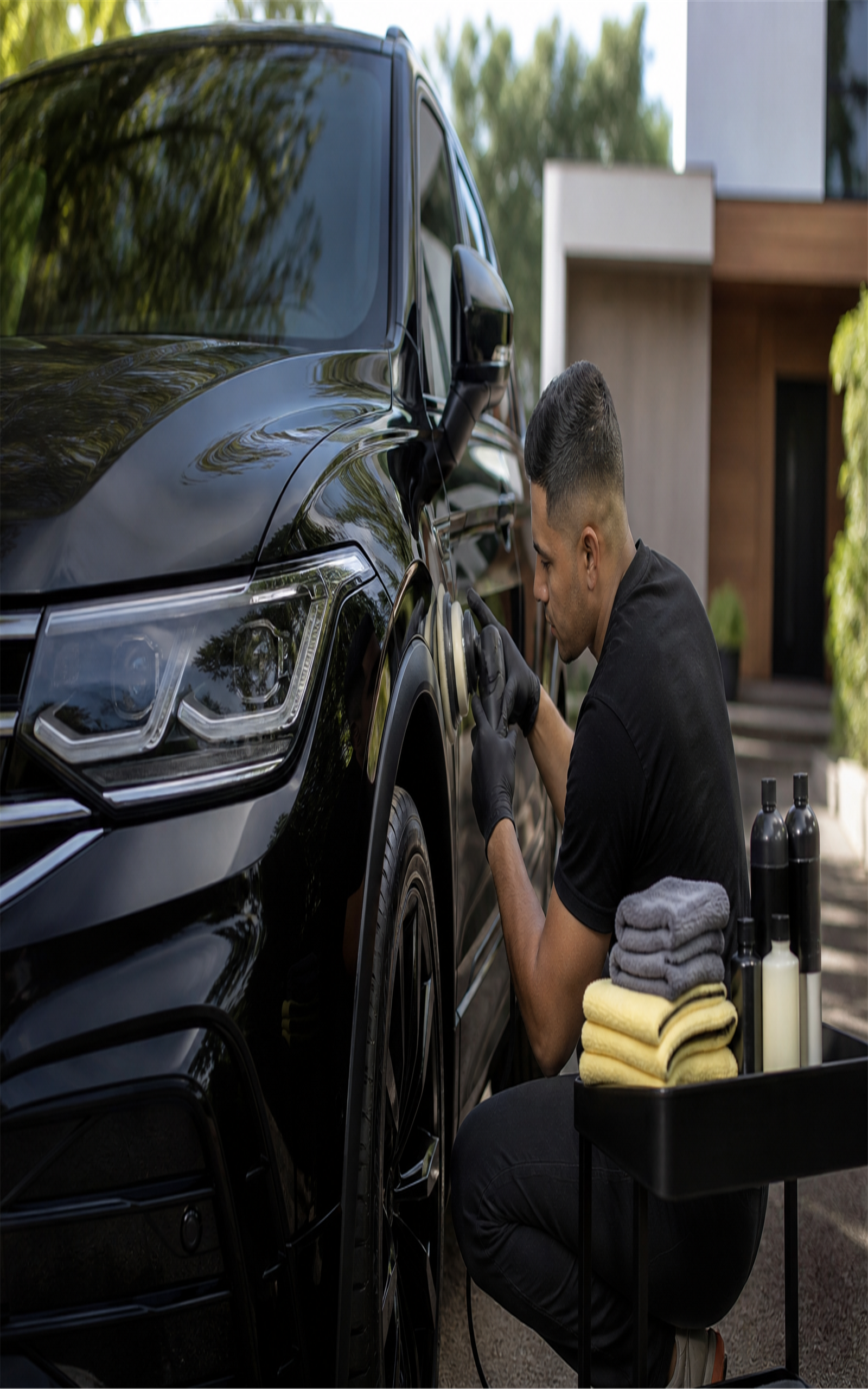
Riders, collectors, and dealers hire motorcycle detailers when a bike needs more than a quick rinse—seasonal deep cleans, chrome restoration, pre-sale presentation, or storage prep that protects paint and metal through months off the road. Your first step is understanding who you serve and what they expect from a professional bike detailer—not assuming car detailing experience alone creates demand.
Motorcycle detailing businesses succeed when clients understand the job before work starts: package tier, finish types covered, whether wheels and chain areas are included, water access needs, timeline, and what you exclude around mechanical or electrical components. Buyers are not simply purchasing hours—they are purchasing confidence that their bike will look better without damage to chrome, matte paint, anodized parts, or sensitive components they cannot easily replace.
Different clients bring different expectations, bike types, and repeat potential. Choose one primary profile for launch:
Often hire for seasonal refreshes, bug and road-grime removal, and wheel cleaning after wet months. They compare on reliability, bike-safe methods, and clear package pricing—not always the lowest rate alone.
Invest in premium details, chrome correction, and protection before shows or storage. They notice overspray on calipers, water spots in tank crevices, and dressing on foot pegs—precision matters more than speed.
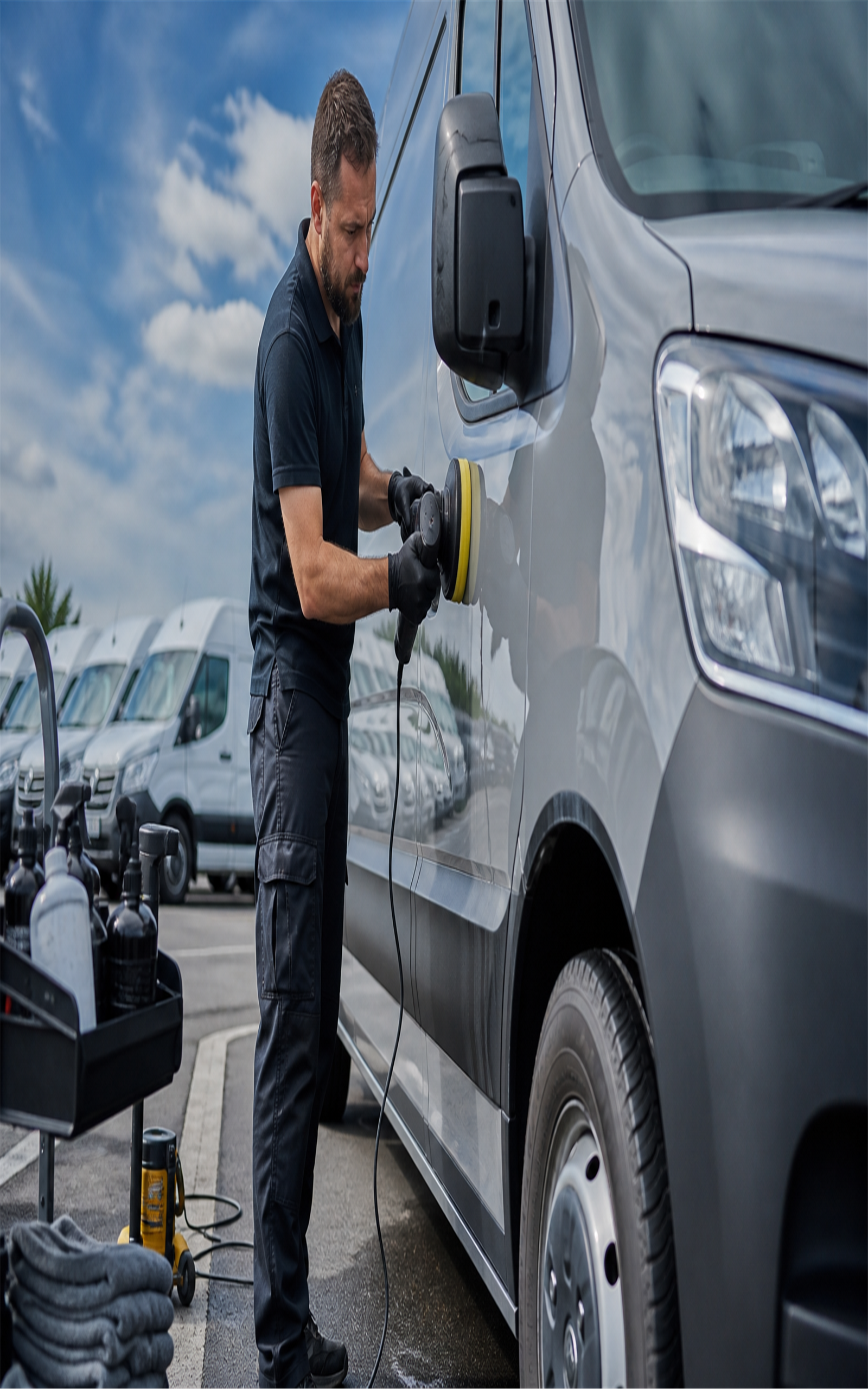
Need consistent presentation standards for used inventory, rental fleets, or delivery prep. Standardized menus and repeatable workflows support recurring contracts once trust is established—similar to operators in the fleet detailing business guide.
Observe your local market: who do existing detailers serve well, and where do riders still express frustration—car wash operators who ignore chains, mobile services that high-pressure spray near bearings, or vague quotes that do not account for cruiser size versus compact sport bikes? Your opportunity often sits in motorcycle-specific operational clarity as much as in cleaning skill.
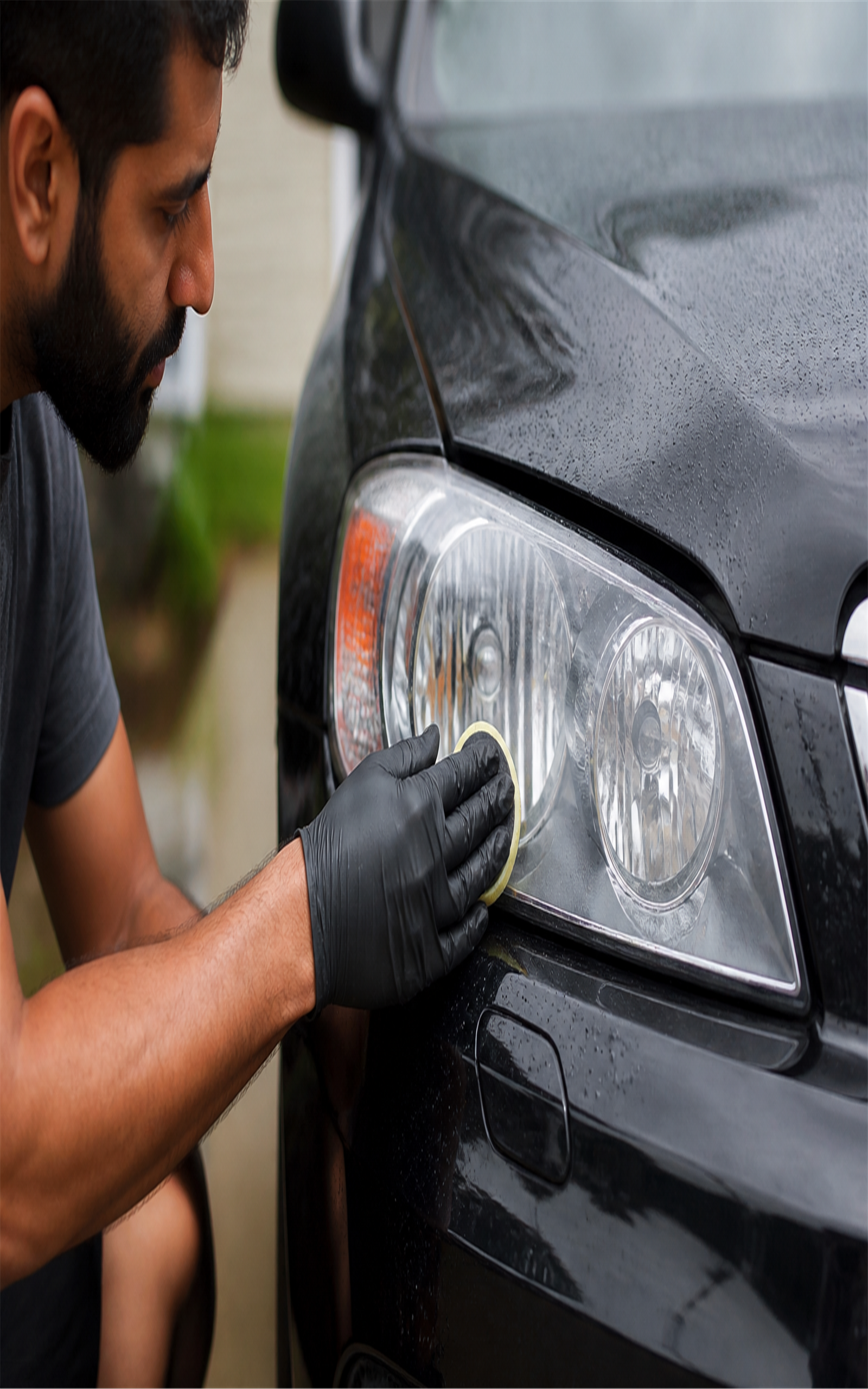
Adjacent vehicle-service businesses with overlapping client bases—such as those in the mobile detailing business guide, mobile car wash business guide, and headlight restoration business guide—show how defined packages and professional intake sustain service revenue. Motorcycle detailing requires the same discipline with different surface knowledge: knowing when a task belongs to a mechanic, a painter, or a detailer protects your reputation on high-value bikes.
Practical takeaway: Write one paragraph describing your ideal first client and the bike type you want most—commuter refresh, collector show prep, or dealer inventory standards. List three questions they will ask before hiring—and make sure your future intake process answers them.
Before you quote motorcycle detailing jobs, decide what each package includes, what you exclude, and how you document both on every estimate. Riders need tier lists they can compare—not open-ended "detail hours" that expand whenever someone points at engine fins or saddlebag interiors.
Each tier on your menu should list specific inclusions, exclusions, and referral triggers:
Cool-engine exterior wash with motorcycle-safe soap, hand dry, light wheel face cleaning, and tire sidewall wipe. Best for regular maintenance when paint and chrome are in fair condition. Excludes heavy decontamination, chain deep cleaning, and engine degreasing unless add-ons are selected.
Wash, decontamination where appropriate, wheel and spoke cleaning, chrome polish on accessible surfaces, paint protection application, plastic and rubber dressing on non-grip areas, and seat or textile cleaning within agreed scope. Document whether chain, sprocket, and exhaust polishing are included or add-ons.
Extended correction on paint swirls within agreed limits, multi-stage chrome refinement, longer-lasting sealant or coating-style protection where your skills and products support it, and interior storage or saddlebag cleaning if offered. Best for collectors and pre-storage clients willing to pay for meticulous finish work.
Mechanical repair, chain adjustment, carb or EFI service, electrical diagnostics, engine internal cleaning requiring disassembly, crash damage repair, and paint respray. Naming these upfront protects clients and keeps you inside insurance and skill boundaries.
Not every request fits a motorcycle detailing model. Use intake questions to filter jobs early:
Written scope prevents the most common motorcycle detailing disputes:
Document whether you work on centerstands or paddock stands, who supplies them, and how you protect garage floors from water and product runoff. Surprises on arrival—hot engine, no water, undisclosed matte wrap—destroy margins on jobs priced as standard gloss-bike packages.
Practical takeaway: Draft a one-page service menu with at least three package tiers and five categories you refer out. Read it aloud—if a rider would still ask "does that include the chain?", add clearer language before publishing prices.
Motorcycle detailing regulations vary by jurisdiction. Some areas treat mobile cleaning as a general service business; others restrict chemical runoff, commercial activity in residential zones, or mobile operations near waterways. Your investigation framework matters as much as your product kit—verify locally before marketing paid services.
Create a checklist and confirm each item with your local business licensing office, environmental agency, and insurance agent. Requirements differ by country, state, county, and city:
Exterior wash and dry, paint decontamination within agreed limits, chrome and metal polish on accessible surfaces, wheel cleaning, plastic dressing on non-contact areas, leather and textile cleaning, and light cosmetic restoration when skills and products support it—when local rules permit mobile water use.
Mechanical repair, fluid changes, tire mounting, electrical work, and any task requiring manufacturer service tools or shop facilities. Refer these or partner with qualified mechanics even when the client asks you to "just degrease the whole engine while you're here."
Separate business banking, written estimate terms, a basic bookkeeping routine, and documented payment policies protect you as much as insurance does. Decide whether clients pay deposits on premium packages, how add-ons are approved on site, and what happens when hidden corrosion or clearcoat failure appears mid-job.
The SBA guide to launching a business helps with general registration steps, but it does not replace local environmental and mobile-service rules. Start research early—some registrations take weeks, and operating without required coverage can invalidate claims when a bike is damaged in your care.
Practical takeaway: Complete your licensing investigation checklist with dated notes from official sources—not forum posts. Do not publish prices or accept deposits until general liability coverage and required registrations are confirmed for mobile motorcycle detailing in your service area.
A motorcycle detailing business runs on two foundations: products and tools matched to bike surfaces, and a workflow that turns estimates into finished results without damage to chrome, paint, chains, or electronics. Automotive shortcuts and high-pressure habits erode margins and reputation faster than any competitor's lower rate.
Buy core motorcycle-safe equipment first; add specialty products when repeated jobs justify the cost:
Track product cost per job in your pricing model. Premium chrome polish, sealants, and microfiber consumption are production cost—not overhead you absorb silently to win a low quote.
Motorcycle detailing fails when operators treat bikes like closed-body cars:
Practical takeaway: Pack a go-kit for your most common wash-and-detail package and run one practice job—or your own bike—through your full workflow checklist. Note any product gap or skipped intake question—and fix those before your next quote.
Riders buy package outcomes and dependable scheduling—not vague hourly guesses that expand when spokes, saddlebags, and bug-encrusted fairings take longer than expected. Pricing should reflect the full cost of the documented service tier, not a rate copied from a car detailer in another market.
Small bikes still carry mobilization cost. A compact sport bike an hour from your base is not priced like a twenty-minute lot wash. Build minimum visit fees or package floors that cover travel honestly—riders prefer transparent package pricing over artificially low rates that balloon with surcharges later.
Document pricing modifiers you apply consistently:
Include payment terms, deposit requirements on premium packages, on-site add-on approval, and what happens when concealed damage appears—for example, clearcoat failure under polish or pitted chrome that cannot be restored within the quoted tier. Detailing labor is schedule-locked; hours waiting on a hot engine or missing water access are cost you cannot recover on another job.
Track actual hours and product cost on every early job against your estimate. Adjust package prices and production assumptions based on real results rather than initial guesses.
Practical takeaway: Build a pricing spreadsheet with labor rates, product factors per package, travel allowances, and overhead allocation. Complete it for your next three estimates, then compare projected costs to actuals after each job closes. Refine before scaling marketing.
Trust drives hiring decisions in motorcycle detailing. Riders choose operators who speak bike language, respect sensitive components, and deliver package results as promised—not whoever posts the cheapest car wash special.
Avoid advertising without bike-safe discipline behind it. Photos of completed details, clear exclude-and-refer language, and reliable arrival windows demonstrate professionalism better than discount messaging alone.
Practical takeaway: Land your first three jobs through direct outreach to riders, dealers, or clubs who match your target profile—before spending on ads. Document every intake question they raise and refine your templates after each conversation.
Growth means adding jobs and capacity only when package accuracy, product readiness, and rider communication stay consistent—not accepting every bike because your calendar has room.
Adding helpers introduces quality control. Document package standards with photo examples, conduct joint walkthroughs on early jobs together, and review estimate-to-actual hour variance monthly. One greasy grip or scratched matte panel can damage the reputation that took seasons to build.
Track metrics that matter: estimate-to-actual hour variance, callback rate, repeat dealer bookings, referral source, and bikes completed per week at your agreed standard—not vanity metrics like total leads. Fix scoping and product-kit gaps before marketing harder.
Practical takeaway: After your first ten completed jobs, identify your most common scope miss and your strongest referral source. Fix the intake or product issue before adding a second technician or expanding your service radius.
Use this four-week outline to move from interest to a controlled first booking. Each week builds on the last for a motorcycle detailing business launch.
Confirm these essentials before you accept a booking or load products for your first paid motorcycle detail.
A motorcycle detailing business is a professional service that cleans, protects, and restores motorcycles using bike-specific techniques and products—not car wash habits applied to two wheels. Success depends on understanding chrome, painted tanks, matte finishes, chain and exhaust areas, electronics, and other sensitive components riders trust you not to damage.
Motorcycles expose more mechanical components, use different paint and chrome finishes, and require careful handling around chains, hot exhausts, sensors, and braided lines. High-pressure washers, aggressive degreasers, and automotive waxes can damage bike surfaces or leave residue on braking components. Motorcycle detailing requires lower-pressure rinsing, motorcycle-safe cleaners, and step sequences that protect sensitive areas car detailers rarely encounter.
Build a staged kit around your service menu: pH-neutral bike wash, dedicated wheel and chain-safe cleaners, microfiber mitts and drying towels, soft brushes for spokes and fins, chrome polish, paint sealant or wax matched to gloss and matte finishes, plastic and rubber dressings that avoid slippery grips, and leather or textile cleaners for seats and saddlebags. Add specialty products only when repeated jobs justify the cost.
List specific inclusions per tier—basic wash and dry, full detail with decontamination and protection, or premium packages with chrome correction and longer-lasting sealants. Document exclusions: engine teardown, mechanical repair, chain adjustment, and any work requiring a lift unless you hold appropriate credentials. Written package boundaries prevent jobs from expanding into unprofitable or unsafe territory.
General liability insurance covering property damage is essential when working on high-value motorcycles at homes, dealerships, or events. Discuss coverage for customer bikes in your care, mobile operations, and any employees with an agent familiar with automotive or powersports service businesses. Requirements vary by jurisdiction—verify locally before accepting paid bookings.
Build pricing from measured labor, travel, product cost, bike size and condition, and the margin that makes the business sustainable. Scope each bike before quoting: cruiser versus sport tourer, matte paint, heavy bug splatter, neglected chrome, or add-ons like saddlebag interiors. Minimum visit fees cover mobilization honestly—riders prefer transparent package pricing over vague hourly rates.
Follow a repeatable sequence: rider inquiry and bike screening, on-site or photo assessment, written proposal, pre-job confirmation, cool-engine production per checklist, quality review, and walkthrough with the owner. Intake should capture bike type, finish types, sensitive areas, water access, and whether the chain or exhaust was recently ridden before work starts.
Start with a defined rider profile and controlled launch. Reach local buyers through search listings, dealership and club relationships, event visibility, and before-and-after photos that show chrome and paint results—not generic car wash marketing. Professional package documents, bike-safe language, and reliable scheduling convert interest faster than discount-only ads.
This motorcycle detailing business example was developed using eBook Business Builder—the workflow used to structure the guide, free lead magnet, offer assets, email series, and marketing content you see in the EBB Showroom below.
If you want to create your own eBook business around a topic you know, EBB walks you through research, writing, assets, and launch in a repeatable system. See how business assets fit together and launch marketing for your eBook business to understand the full EBB build model.
Start Building with eBook Business Builder →The flagship guide explains how to start a motorcycle detailing service—bike-safe packages, product selection, rider intake, mobile workflow, pricing, and client communication—in a structured eBook format.
Chapters walk readers through evaluating the opportunity, defining service tiers and exclusions, investigating licensing and business setup, building your product kit and detailing workflow, pricing from real job costs, winning first clients, and growing operations without sacrificing finish quality.
First Bikes & Product Setup — a lead magnet that helps readers evaluate whether motorcycle detailing fits their skills and identify sensible first steps before accepting bookings.
Many operators start with car detailing habits that risk chrome, matte paint, chains, and braking components on motorcycles they have never properly scoped.
Foundational first steps, common early mistakes to avoid, and a simple action plan readers can use before committing to client bookings or product purchases.
Washes bikes informally but unsure how to define packages and run a motorcycle detailing business professionally.
Prepared with the fundamentals needed to screen jobs, assemble bike-safe products, and deliver scoped details on schedule.
Motorcycle Detailing Startup Program
A practical flagship guide for readers ready to move from interest to action—with clear first steps and professional service habits for dependable motorcycle detailing work.
Tools & References