Find the Opportunity
Identify your crochet niche and align your skills with market demand.
A practical starting point for makers who want to launch a crochet business with clearer product lines, pattern workflow basics, and repeatable production habits.
This page walks you through how to start a crochet business as a focused handmade brand—not just crocheting for pleasure. You will learn niche identification, curated product lines, production scheduling, diversified sales channels including craft fairs, Instagram marketing, online shop setup, customer engagement, financial basics, scaling through delegation, and celebrating your journey.
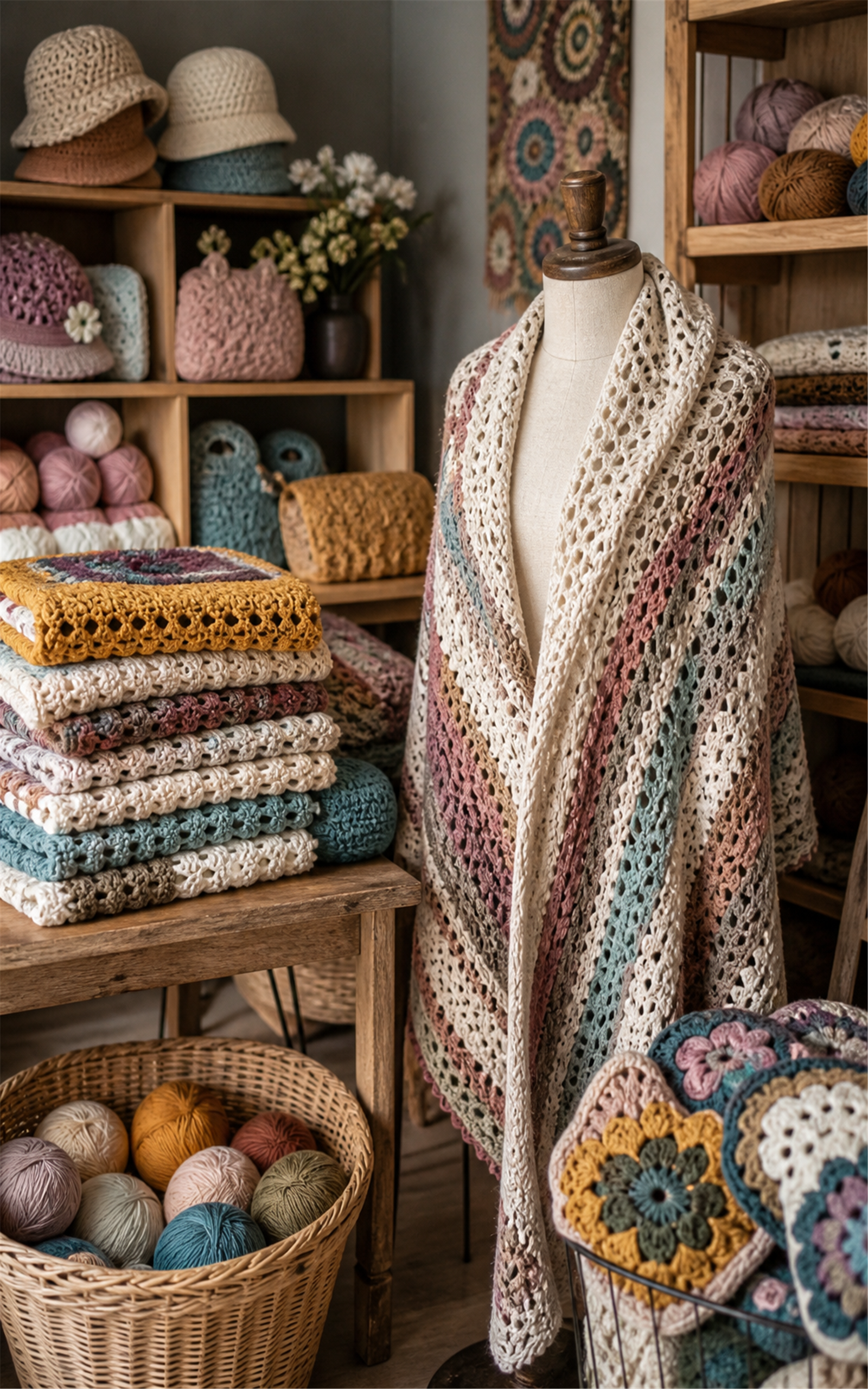
Identify your crochet niche and align your skills with market demand.
Build a three-month budget and expense tracking habits before margins disappear.
Set up a simple online shop on an e-commerce platform with clear product descriptions.
Define five focused product concepts with descriptions and pricing aligned to value.
Diversify sales across craft fairs, online marketplaces, and social media.
Run weekly production schedules and quality control that protect your brand reputation.
Engage customers through feedback loops, delegate tasks, and scale with intention.
[object Object]
[object Object]
[object Object]
At a bustling craft fair, the booth that draws you in usually has a clear purpose—not a random pile of everything crocheted. Your first step is finding the niche where your skills and customer demand intersect.
Many crocheters enter the market believing variety alone attracts buyers. The reality is more nuanced: a crocheter specializing exclusively in eco-friendly baby toys from organic cotton yarn can tailor marketing and connect with environmentally conscious parents far more effectively than a general shop offering hats, blankets, and toys without focus.
List the three styles or item types you love creating most—modern home decor, whimsical animal hats, amigurumi toys, or cozy accessories. Research market demand through online platforms, social media, and local craft fairs to see what sells and where gaps exist.
[object Object]
[object Object]
Practical takeaway: Write down your top three crochet styles and research market demand for each. Choose one niche direction to build your first product line around.
Creativity often overshadows the numbers, but understanding finances before your first sale protects the passion that drives your crochet business.
Many new makers assume finances can wait until money arrives. Neglecting costs leads to discovering you are not making a profit—or worse, losing money on every piece. Financial awareness from the start supports sustainability.
List material costs—yarn, hooks, patterns, packaging—and estimate projected sales based on market research. A budget sets realistic expectations and keeps creative dreams afloat amid business practicalities.
Record every transaction and categorize expenses to spot overspending. Profit margin is the difference between selling price and making cost. The manuscript illustrates a scarf sold at $30 with $10 materials and $5 other expenses yielding $15 margin—treat that as a worksheet example for your own pricing, not a universal rate.
Practical takeaway: Set up a simple three-month budget listing yarn, packaging, and anticipated sales. Track every expense this week and calculate profit margin for one finished piece.
You do not need a complex custom website to start selling. E-commerce platforms built for makers let you launch a professional shop without drowning in technical details.
Many aspiring sellers believe they need a complex website before making their first sale. Platforms like Etsy, Shopify, and Big Cartel provide user-friendly interfaces, built-in customer bases, and streamlined payment processing designed for artisans.
Simplicity is your ally. A well-organized, straightforward shop lets your crochet work shine without distracting technical complexity.
Practical takeaway: Choose one e-commerce platform and create a shop with at least three product listings including descriptions, photos, and a return policy before your first craft fair or online promotion.
More products do not automatically mean more sales. A curated lineup of five distinct concepts with clear descriptions helps customers connect—and streamlines your production.
Offering hats, scarves, blankets, and toys without focus overwhelms buyers the way an overstuffed store does. A thoughtful selection emphasizing quality and coherence makes choosing easier and builds stronger customer connections.
Each concept needs a description and suggested price point reflecting materials, time, and what your target market will pay. Research similar products to position competitively while ensuring profit.
Practical takeaway: Draft five product concepts with descriptions and price points aligned to your niche. Share with three potential customers and refine based on their reactions.
Relying solely on online sales misses the tactile experience of craft fairs where buyers touch your work and ask questions. The strongest crochet businesses combine in-person and digital channels.
The manuscript describes a crocheter selling at local fairs and online through a marketplace—dual channels reaching different customer preferences. Online marketplaces like Etsy provide broad discovery; craft fairs offer direct interaction, immediate feedback, and relationships online sales cannot replicate.
Treat your account as a portfolio with high-quality photos, process snippets, and niche hashtags like #EcoFriendlyCrochet for sustainable yarn specialties. Plan content with a simple calendar and engage with the crochet community through likes, comments, and collaborations.
Practical takeaway: Research two sales channels and create a pros-and-cons list for each. Set up Instagram with five portfolio posts and identify one local craft fair to apply to.
Production does not start when the first order arrives—it begins with scheduled making hours and quality checks that protect your brand before sales roll in.
Without a production plan, custom orders lead to late nights, missed deadlines, and fading joy in the craft. Scheduling specific hours each week for scarves, hats, and amigurumi brings clarity and lets inventory grow steadily.
Assign time blocks per product line—Monday and Wednesday for scarves, Tuesday for hats, Thursday for amigurumi. This structure lets you focus deeply on each project without unfinished tasks nagging at every session.
Each finished item reflects your brand. Evaluate work before it ships—stitch consistency, finishing, and overall standards. Rushing to meet demand without quality checks damages the reputation craft fairs and online reviews build.
Send follow-up messages thanking buyers and inviting feedback through a simple survey. The manuscript references research suggesting acquiring a new customer can cost significantly more than retaining one—treat that as general industry context, not a verified statistic for your business. Engagement turns transactions into community.
Practical takeaway: Map a weekly production schedule assigning hours to each product in your lineup. Create a simple customer feedback survey to send after purchases.
When craft fair demand exceeds what one pair of hands can make, scaling through delegation and product diversification keeps quality high without sacrificing your passion.
Scaling is not just for large corporations. During a busy holiday season, one crocheter hired friends from her community to help fulfill large orders—maintaining quality while expanding capacity through collaboration rather than sheer exhaustion.
Success encompasses growth, learning, and customer impact—not just the bottom line. Create a vision board with images, quotes, and goals. Jot reflections on what you have learned and what you want to achieve next year.
[object Object]
[object Object]
Practical takeaway: Identify one task you can delegate or simplify this month. Create a vision board with three milestones from your journey and three goals for the year ahead.
Use this four-week outline to move from hobby crocheter to structured business operator. Each week builds on the last using steps supported by the Crochet Business guide.
Confirm these essentials before you sell crochet pieces in person or through your online shop.
A crochet business is a focused handmade brand where you sell curated product lines through craft fairs, online shops, and social media—not simply gifting items to friends. Success depends on niche clarity, production scheduling, quality control, diversified sales channels, and customer engagement.
A niche helps customers find you and makes marketing focused. The manuscript contrasts a general shop with a crocheter specializing in eco-friendly baby toys—the focused approach connects with a specific audience more effectively. Start with a clear direction and evolve as you learn.
Draft five distinct product concepts with clear descriptions rather than an overwhelming variety. Focused lines streamline production, reduce buyer confusion, and let you tell a cohesive brand story through your pieces.
No. E-commerce platforms like Etsy, Shopify, and Big Cartel provide user-friendly shop setup, built-in audiences, and payment processing. Start simple with clear descriptions and quality photos rather than building a complex site from scratch.
Diversifying channels is recommended. Craft fairs offer tactile experiences, direct feedback, and community connections that online platforms cannot replicate. Many successful crocheters combine in-person fairs with online marketplace presence.
Assign specific weekly hours to each product in your lineup—scarves on certain evenings, hats on others. Production planning starts before sales arrive, not after orders pile up. Include quality checks before every piece ships.
Calculate material costs, time, packaging, and overhead, then set prices reflecting what your target market will pay. The manuscript's scarf example with $30 sale price and $15 margin is an illustration for your own calculations, not a universal rate.
Identify tasks to delegate—packaging, social media, sourcing—and consider hiring fellow crocheters during peak seasons. Product diversification into complementary items and seasonal planning help scale without sacrificing quality.
This crochet business example was developed using eBook Business Builder—the workflow used to structure the guide, free lead magnet, offer assets, email series, and marketing content you see in the EBB Showroom below.
If you want to create your own eBook business around a topic you know, EBB walks you through research, writing, assets, and launch in a repeatable system.
Start Building with eBook Business Builder →The flagship guide covers crochet business startup fundamentals—niche identification, product lines, production planning, sales strategies, marketing, online shop setup, customer engagement, financial basics, scaling, and reflection—in a structured eBook format.
[object Object]
A lead magnet helps readers evaluate whether a crochet business fits their skills and identify sensible first steps before investing in yarn inventory or booth fees.
Many skilled crocheters offer unfocused product mixes, skip production scheduling, or assume a complex website is required before making their first sale.
Foundational first steps, common early mistakes to avoid, and a simple action plan readers can use before committing to craft fair applications or shop setup.
Crochet Business Startup Program
A practical flagship guide for readers ready to move from interest to action—with clear first steps and professional niche, product line, and craft fair sales habits for crochet businesses.
Tools & References