
Choose Your Guitar
Pick an acoustic that fits your body, budget, and song goals.
This guide simplifies the process of learning to play the acoustic guitar for complete beginners by breaking down chords in a fun and engaging way.
This page walks you through how to play the guitar as a beginner—not by drowning in theory first, but by choosing the right instrument, learning a small set of open chords, building strumming rhythm, and playing real songs you recognize. You will learn what gear you actually need, how chords work on the fretboard, how to transition between G, C, and D cleanly, how to keep time while strumming, how to pick beginner-friendly songs, and how to practice in a way that builds confidence week after week.
Pick an acoustic that fits your body, budget, and song goals.
Understand how chords work and read simple chord diagrams.
Form G, C, and D cleanly and transition between them.
Keep steady time with downstrokes, upstrokes, and patterns.
Play recognizable three-chord songs from start to finish.
Build a routine that survives busy weeks and sore fingers.
Expand your songbook, play with others, and set next goals.
Learning guitar starts with a simple promise: press the right strings in the right places, strum in rhythm, and you can play songs people recognize. That is not the same as mastering music theory or shredding solos—but it is enough to enrich daily life through music, sing along with friends, and feel progress within weeks instead of years.
Most beginners quit not because they lack talent, but because they start without structure. They buy a guitar that fights their hands, watch scattered video tips, jump between random chords, and conclude their fingers are too slow. The fix is not more willpower—it is a clearer path: one instrument suited to your body, a small chord vocabulary, repeatable transition drills, and songs chosen to match what you can already play.
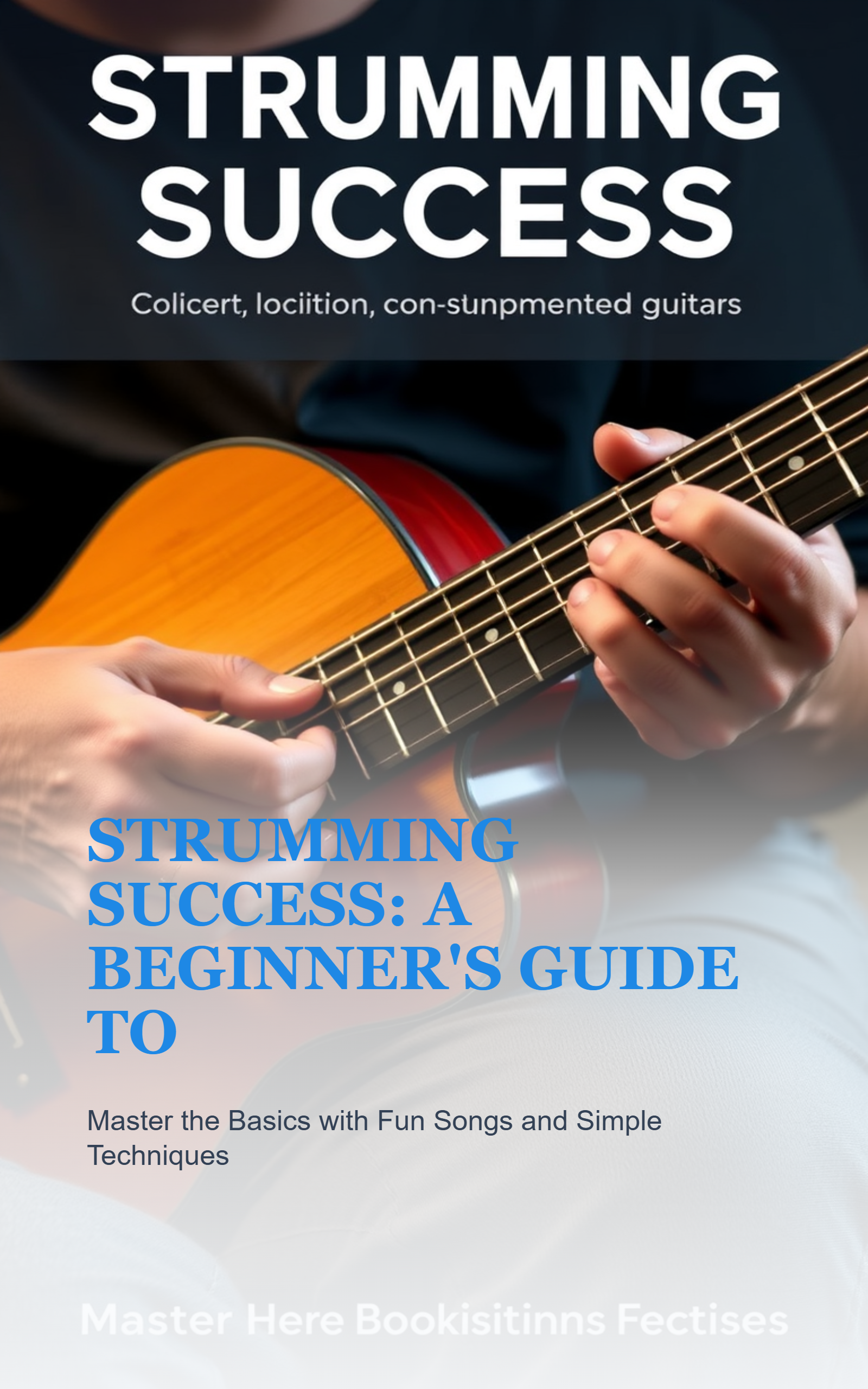
This guide walks you through that path using the same framework as Strumming Success: A Beginner's Guide to Playing Guitar—choosing your guitar, understanding chord basics, mastering your first chords, building strumming rhythm, playing your first songs, developing practice habits, and planning how to keep growing. By the end, you should know what to buy, what to practice first, and how to measure real progress without waiting for perfection.
Your first guitar should make chord learning easier—not harder. The wrong size, string tension, or setup turns every practice session into a fight against buzzing strings and sore wrists before you ever play a song.
Walk into a music store and every guitar looks similar: six strings, a body, a neck. The differences that matter for beginners are scale length, neck width, string type, and setup quality. A full-size dreadnought acoustic with heavy steel strings can overwhelm smaller hands. A properly sized guitar with comfortable action—the height of strings above the frets—lets you press chords with less force and hear clean notes sooner.
The classic choice for folk, pop, country, and singer-songwriter music. Brighter tone, slightly firmer string tension. Look for a comfortable neck profile and consider lighter gauge strings (.011–.052) when starting.
Softer strings and wider neck—easier on fingertips for pure beginners. Best if you plan to play fingerstyle classical or flamenco-influenced music. Less common for mainstream strummed pop songs but gentle on hands.
Ideal for younger players, smaller adults, or anyone whose reach struggles on a full-size neck. Short-scale models reduce stretch between frets without sacrificing standard tuning.
A clip-on tuner matters more than a expensive strap. Beginners who practice out of tune train their ears incorrectly. Start with thin to medium picks (.60–.88 mm), a metronome app, and a phone stand for chord charts. You do not need an amplifier, pedals, or a dozen gadgets—those come after your first songs sound recognizable.
Used guitars can be excellent value if a knowledgeable friend or shop technician inspects them. Watch for warped necks, cracked bridges, and frets so worn that notes choke out. A $200 well-setup used guitar often beats a $400 instrument with high action sitting in a closet.
Practical takeaway: Play three guitars in your budget range before deciding. Hold a G-chord shape on each and note which neck lets your fingers land without strain. Buy the one you will pick up daily—not the one that looks best on a wall.
Chords are the vocabulary of guitar songs. Before you memorize shapes, understand what a chord is: several notes played together that support a melody or strumming pattern. You do not need to read standard notation to play them—chord diagrams tell you where to place fingers.
A chord diagram shows the guitar neck vertically: the left edge is the thickest string (low E), the right edge is the thinnest (high E). Dots mark where fingertips press. Numbers indicate which finger—index is 1, middle 2, ring 3, pinky 4. An O above a string means play it open; an X means do not strum that string.
Start by comparing two chords side by side—notice which fingers stay on the same string when you change chords. That overlap is your anchor. Beginners who treat every chord as unrelated shapes change slower than those who notice shared fingers.
Use open strings plus fretted notes in the first three frets. G, C, D, E minor, and A major cover thousands of songs. This is where beginners live for the first months—and often years—of enjoyable playing.
One finger bars across multiple strings, moving shapes up the neck. Powerful but physically demanding. Defer barre chords until open-chord transitions feel automatic and your index finger builds strength without wrist pain.
Two-note shapes common in rock. Easier than full barres but limited harmonically. Useful if electric rock is your goal—still learn open chords first for strummed acoustic songs.
Scales train single-note melody and improvisation—valuable later. Chords let you accompany vocals and play full songs immediately. A beginner who knows three chords and one strumming pattern experiences music as a participant, not a spectator. Theory deepens naturally once your hands know what sounds right.
Listen to songs you love and notice repetition. Most pop and folk tracks loop four to eight chords. Your job early on is recognizing those loops in chord charts, not analyzing harmonic function. When you are ready for deeper theory, you will already have context from songs your fingers know.
Structured skill learning—whether music or another discipline—benefits from breaking complex material into repeatable units. Guides like the coding tutor business guide emphasize the same principle for teaching: isolate one concept, practice until automatic, then combine. Guitar chord learning follows that pattern—one shape, then transitions, then rhythm, then full songs.
Practical takeaway: Print or bookmark chord diagrams for G, C, and D. Before practicing transitions, spend one session naming each string you strum and confirming every note rings clearly when plucked individually.
G, C, and D major open chords form the backbone of beginner guitar. Your goal is not perfect speed—it is clean notes and smooth enough transitions to strum through a song without stopping every two beats.
G major — multiple fingerings exist; choose one and stay consistent. A common version uses ring finger on the high E string (3rd fret), middle on low E (3rd fret), and index on the A string (2nd fret). Strum all six strings. Muted notes usually mean a finger is leaning on a neighboring string—adjust angle so fingertips arch vertically.
C major — ring finger on the A string (3rd fret), middle on the D string (2nd fret), index on the B string (1st fret). Strum from the A string downward unless your arrangement needs the low E. The low E often buzzes or clashes—many beginners omit it intentionally at first.
D major — index on high E (2nd fret), ring on B (3rd fret), middle on G (2nd fret). Strum the top four strings. This compact shape is forgiving but transitions to G or C require planned finger movement—practice those pairs separately.
Record a thirty-second video of your chord changes weekly. You will notice improvements your live playing hides—elbow position, wrist angle, fingers flying off too far between chords. Small posture fixes often unlock cleaner sound faster than more repetition alone.
Practical takeaway: Pick one transition—G to C—and practice it two minutes daily for a week before adding D. Log whether you can complete eight clean changes in a row at 60 BPM. That measurable win matters more than attempting full songs prematurely.
Chords tell you what to play; strumming tells you when. Beginners who ignore rhythm sound like they know shapes but not music. Your strumming hand keeps time even when chord changes lag—that consistency is what makes a song recognizable.
Hold any chord—mute strings lightly if buzzing distracts you—and strum downward on every beat for four counts. Tap your foot on each downstroke. Count aloud: one, two, three, four. When that feels steady at 70 BPM, add upstrokes on the "and" between beats: down on numbers, up on ands. This down-up foundation supports every pattern you learn later.
Four downs per bar—simplest pattern for first songs. Use when chord changes still need mental bandwidth. Many campfire versions of popular songs work perfectly here.
Classic folk and pop feel. Practice on one chord until the pattern is automatic, then add chord changes on the first beat of each bar only.
Relax the fretting hand slightly to choke strings while the strumming hand keeps moving. Adds groove once basic patterns feel comfortable.
Never stop your strumming hand to find a chord. Keep the pattern moving—even if you miss a chord on beat one and land it on beat two. Listeners forgive a late chord more than a halted rhythm. If a song section needs a fast change, simplify: strum twice per chord instead of a full bar.
Use a metronome or drum loop app. Set tempo slower than the original recording—often fifty to seventy percent speed—and play along. Increase five BPM only when you complete a section without rhythm breaks. Playing along with recordings also trains ear timing better than practicing in silence.
Accent beat one slightly. Strum closer to the soundhole for warmth, closer to the bridge for brightness. These subtle choices make the same three chords feel like music instead of exercises. Listen to the original artist's strumming hand on a simple song—you will often hear patterns simpler than they sound.
Practical takeaway: Practice strumming patterns on a single chord for five minutes before combining with transitions. Rhythm independence—steady strumming while fingers catch up—is the skill that separates choppy beginners from players who sound musical.
A song is the proof your practice worked. Choose pieces that use G, C, and D exclusively—or with one easy addition like E minor—and accept simplified strumming until you play through without stopping.
Songs like "Wonderwall," "Knockin' on Heaven's Door," "Horse with No Name," and countless folk standards use beginner-friendly progressions. Match the chart to your skill: if F or B minor appears, save that song for later or find a capo version in G-friendly keys.
Humming the melody while strumming exposes timing gaps. If chord changes collapse when you add voice, simplify strumming to downstrokes only. Many beginners alternate: one pass strumming only, next pass humming, then combine. The goal is participation in music you love—not a polished performance on day one.
Keep a "songs I can play" list. Three songs at beginner level beats thirty half-learned fragments. Returning to finished songs builds confidence before you tackle new chord vocabulary. Each completed song proves the method works and gives you repertoire for friends, campfires, or quiet practice motivation.
Practical takeaway: Choose one song this week using only G, C, and D. Play the chorus five times daily at slow tempo before attempting the full track. Mark the date you play it start-to-finish—that milestone fuels the next month of practice.
Talent is overrated; consistency is not. Fifteen focused minutes daily transforms beginners faster than occasional two-hour sessions where fatigue builds bad habits. Design practice you can repeat on busy weekdays—not an ideal routine you abandon by week three.
Chromatics or simple finger exercises at low pressure. Goal: wake up hands, not exhaust them. One chord held and plucked string-by-string also works.
One transition pair or one strumming pattern. Use a metronome. Stop when quality drops—note tomorrow's starting tempo.
Apply today's skill to a song section. Play along with a recording or loop the hardest four bars only.
Play something you already know well. End sessions feeling success, not frustration—that emotional anchor brings you back tomorrow.
Fingertip soreness is normal for one to three weeks. Calluses form with regular short contact—not marathon sessions that blister skin. If wrists or joints hurt sharply, check posture: guitar neck angled up, shoulder relaxed, thumb behind the neck—not wrapping over the top like a baseball bat grip on day one.
Frustration spikes when expectations outpace process. Log small wins: "C to G, eight clean changes at 66 BPM" beats vague "practice more." When progress stalls for two weeks despite consistent sessions, one lesson with a teacher—or structured feedback from a patient friend—often identifies one posture fix that unlocks the next stage.
Practical takeaway: Schedule practice on your calendar like any appointment. Define tomorrow's single focus tonight—"D to G transitions at 70 BPM"—so you sit down with purpose instead of noodling randomly for ten minutes and wondering why progress feels slow.
Your first songs are a milestone, not a finish line. Growth means expanding chords gradually, playing with others, and setting goals that stay enjoyable—not chasing every technique on the internet at once.
Add E minor and A major—both appear constantly alongside your existing chords. Then explore a capo, which lets you play G-shaped chords in higher keys to match original recordings without new fingerings. Barre chords come later when your index finger and wrist strength support them; rushing barres early frustrates more beginners than it helps.
Expand strumming: fingerpicking patterns, percussive slaps, and varied dynamics. Learn one new pattern per month rather than ten at once. Each pattern applied to a song you know reinforces rhythm vocabulary without overwhelming chord memory.
Jam sessions teach timing no metronome alone provides. Start with another beginner: one strums, one sings—or trade four-bar sections. Online communities and local open mics welcome quiet accompaniment if you know three chords in time. Listening matters as much as playing: follow the rhythm section, leave space, and resist soloing over others.
Revisit fundamentals monthly. Even intermediate players warm up with open chords and simple transitions. The players who keep guitar in their lives for decades treat basics as permanent allies—not childish steps to skip.
Strumming Success maps this growth across ten chapters—from setup through songbook expansion, playing with others, and long-term goals. Use this page as your overview; the full book deepens each stage with exercises, song examples, and strategies for common roadblocks.
Practical takeaway: Write three goals for the next ninety days—one song list target, one technique target, one social target (play for someone). Review monthly and adjust tempo expectations, not commitment. Sustainable growth beats bursts of intensity followed by months of silence.
Use this four-week outline to move from unboxed guitar to playing recognizable chord progressions. Each week builds on the last for steady beginner progress.
Confirm these essentials before you commit to daily practice and your first song.
Yes. Most successful beginner guitar players start with zero formal music training. Choose an approachable acoustic guitar, learn a small set of open chords first, and practice in short focused sessions rather than absorbing theory before you play anything. You do not need to read sheet music to play dozens of popular songs using chord charts and strumming patterns.
For most beginners who want to strum songs and sing along, a steel-string or nylon-string acoustic is the most direct path. Acoustic guitars need no amplifier and encourage clean chord technique because finger pressure matters. Choose electric if your primary goal is rock lead playing—but basic chord skills transfer across both.
Fifteen to twenty-five minutes of focused daily practice beats one long weekend session. Beginners build muscle memory through repetition, and short sessions keep fingers from tiring before you finish a clean chord change drill. Stop when quality drops—tired practice reinforces sloppy habits.
Start with G, C, and D major open chords. Together they unlock hundreds of folk, pop, and rock songs. Add E minor and A major once transitions between G, C, and D feel manageable. Clean, slow transitions matter more than speed at this stage.
Sore fingertips are normal for the first one to three weeks as calluses form. Press firmly behind the frets, not with maximum force. Short daily sessions help without blistering. If joint or wrist pain appears, check posture and guitar height—poor ergonomics causes problems calluses alone will not fix.
Tap your foot or count aloud before you strum. Start with downstrokes on every beat, then add upstrokes on off-beats once downstrokes feel steady. Use a metronome at sixty to seventy BPM and prioritize staying with the click over playing fast.
Self-teaching works for chord-based song playing when you follow a structured path and record yourself. Consider a teacher when progress stalls for weeks, posture causes pain, or you want feedback on technique you cannot see. Even four to six lessons can correct issues that slow months of solo practice.
Many beginners play a simplified three-chord song within three to six weeks of consistent daily practice. Start with songs using G, C, and D only, play along with a slow recording, and accept that your first version may use two strums per chord change—that still counts as playing a real song.
This guitar learning guide example was developed using eBook Business Builder—the workflow used to structure the guide, free lead magnet, offer assets, email series, and supporting content you see in the EBB Showroom below.
If you want to create your own eBook business around a topic you know, EBB walks you through research, writing, assets, and launch in a repeatable system. See how business assets fit together and launch marketing for your eBook business to understand the full EBB build model.
Start Building with eBook Business Builder →Strumming Success: A Beginner's Guide to Playing Guitar — 10 chapters designed to move readers from overwhelmed beginner to confident player of basic chords and songs.
Chapters walk readers through choosing a guitar, understanding chord basics, mastering first chords, playing a first song, strumming patterns, chord progressions, overcoming challenges, expanding the songbook, playing with others, and setting goals for continued growth.
Choosing Your First Guitar and Setting Up for Success
To familiarize readers with different types of guitars and how to prepare them for playing. By the end of this chapter, you will confidently choose the right guitar and set it up for practice.
The Building Blocks of Your Guitar Journey
To introduce the concept of chords and their importance in playing music. By the end of this chapter, you will recognize basic chords and understand their application.
Transitioning Between Basic Chords with Ease
To guide readers on transitioning between their first set of chords seamlessly. By the end of this chapter, you will fluidly transition between G, C, and D chords.
Applying Chords to Music You Love
To encourage students by applying learned chords to real songs. By the end of this chapter, you will play "Wonderwall" using only three chords.
Finding Your Rhythm with Ease
To introduce various strumming patterns for beginners. By the end of this chapter, you will confidently use different strumming patterns.
Building Songs with Familiar Patterns
To show how different chords combine to form progressions. By the end of this chapter, you will create your own chord progressions.
Taming Frustration During Your Learning Journey
To address common frustrations beginner guitar players face. By the end of this chapter, you will have strategies to overcome challenges.
Adding Variety to Your Playing with New Tunes
To encourage readers to branch out and expand their repertoire. By the end of this chapter, you will learn new songs to practice with.
The Joy of Collaborative Music-Making
To highlight the benefits of playing guitar with others. By the end of this chapter, you will understand how to join jam sessions.
Mapping Out Your Musical Journey
To help readers set achievable and motivating goals for continued guitar growth beyond the first songs and practice wins.
Getting Started with Your Guitar — a lead magnet built from the same beginner promise as the book.
Beginner guitar players often arrive frustrated after trying scattered advice. The real issue is not talent—it is starting without guidance on chords and a repeatable path.
Overwhelmed by the idea of learning chords and unsure which guitar to buy.
Prepared with fundamentals to tune daily, form first chords, and practice with a simple action plan.
Strumming Success Program
For beginner guitar players who want a practical, confidence-building path into acoustic guitar—without getting lost in theory first.
5-Day Email Series
Welcome—this book was created for beginner guitar players who want a clearer path built around practical chord learning and real songs.
Why progress stalls when learning feels random—and how Understanding Chord Basics reframes the starting point.
Mastering Your First Chords explains how small, repeatable transitions create confidence faster than chasing perfection.
Playing Your First Song turns the method into a tangible win readers can feel immediately.
Overcoming Common Challenges gives readers a realistic plan for staying consistent after the first excitement fades.
Tools & References